#45 - Beyond the Chatter: Nondual Awareness for Real-World Resilience with Dr. Braticevic
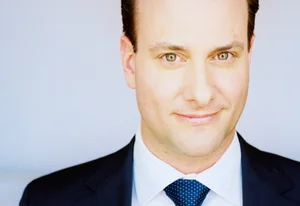
Today’s guest is Dr. Braticevic
Most people fight anxiety, burnout, and polarized “us vs. them” thinking with surface fixes. Dr. Braticevic is tackling the root problem: over-identification with the mind’s default narrative and a fragmented view of health. She shows how a prevention-oriented, nondual approach—treating mind as embodied, emergent, and relational—builds sustainable mental health and better collaboration.
In today’s conversation Milena Braticevic explores how her path from tech entrepreneur through clinical depression to a PhD in Integral Health reshaped her understanding of the mind. She explains the default mode network—the inner story machine—and why training attention, journaling, and emotion regulation interrupt rumination. She lays out nondual awareness as a practical paradigm shift: experiencing reality more directly, strengthening belonging, and working with nature rather than against it. Together you connect these ideas to heart-rate variability, growth mindset under uncertainty, and daily rituals that restore energy and clarity.
You will learn why the mind is embodied, emergent, and relational—and how that changes your approach to sleep, movement, nutrition, and relationships. You will learn simple ways to spot when the default mode network is driving anxiety and how to pivot into focused presence. You will learn how journaling surfaces unconscious patterns, how visualization reshapes automatic responses, and why positive emotions (gratitude, hope, joy) compound performance and connection. You will also learn how nondual awareness reframes “How does this affect me?” into “How do I relate and collaborate?”—a shift that supports psychological safety at work.
You will discover that calm, clarity, and creativity aren’t traits—you can train them by toggling between effort and deliberate relaxation, measured physiologically through heart-rate variability. You will discover that practicing nondual awareness reduces worry loops and widens your field of options in moments of stress.
Feeling trapped in worry, isolation, or burnout—especially during uncertainty. Dr. Braticevic offers a prevention-first playbook to renew energy daily, relate more skillfully, and work from an authentic, non-reactive state.



Key take aways:
The mind is embodied, emergent, and relational.
Notice default-mode chatter; redirect attention gently.
Journal to surface patterns; visualize new responses.
Train calm: breathe, relax, extend exhale; track HRV.
Ask: “How do I relate and collaborate here?”
“The mind is embodied, emergent, and relational.”
Today’s Expert Guest - Dr. Braticevic
Dr. Milena Braticevic holds a PhD in Integral Health (California Institute for Human Science) and is the founder of Nondual Perspectives, where she delivers mental-resilience and psychological-safety programs for organizations and universities, including the University of Toronto School of Continuing Studies. Her prevention-oriented work focuses on reducing anxiety and depression and strengthening collaboration and creativity.
Dr. Braticevic integrates rigorous research with lived experience and practical tools. She translates nondual awareness into accessible micro-practices—attention training, journaling, emotion regulation, and nature-based recovery—within a prevention-oriented model of mental health. Her published research reports reductions in anxiety/depression and gains in critical thinking and collaboration when nondual awareness is cultivated in young adults.
Run a daily 5-minute “Awareness Loop”:
Notice default-mode chatter (label the story).
Sense the body (breath, posture, muscle tension).
Choose one regulating action (slow exhale; brief nature break; gratitude note).
Journal one sentence on what changed.
Repeated reps build non-reactivity and restore energy fast.
Follow Dr. Braticevic on Instagram & Linked In.
Check out her website.
This podcast contains advice and information relating to health and wellness. It should be used to supplement rather than replace the advice of your doctor or another trained health professional. If you know or suspect that you have a health problem, seek your physician’s advice before embarking on any medical program or treatment. All efforts have been made to assure the accuracy of the information contained in this podcast / interview / article as of the date of publication. The author and publisher disclaim liability for any medical or other outcomes that may occur as a result of applying the methods suggested in this material.