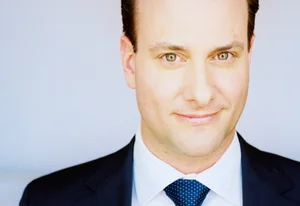
#57 - Heart Rate Variability and Real Recovery with Dr. marco Altini
Today’s guest is HRV4Training Founder Dr. Marco Altini
Marco is solving the “data confusion” problem: people are surrounded by wearable metrics and made-up scores, but don’t know what’s actually measured, what’s estimated, and what’s meaningful over time. His work helps people use reliable physiological signals (HR, HRV, temperature) longitudinally to manage stress, avoid bad training decisions, and improve performance and health.
In today’s conversation Marco Altini explores how wearable tech has shifted us from one-time lab snapshots to long-term physiology tracking in real life. He explains what wearables can measure accurately at rest (like heart rate and HRV), what they’re estimating (like sleep stages and readiness), and why the most valuable insights come from trends vs your own baseline. Marco also breaks down HRV as a practical stress marker, how wearables can flag “something’s off” (like infection), and the simple morning routine that makes HRV data useful.
You will learn what modern wearables measure well at rest (HR/HRV) and why movement still challenges accuracy. You will learn the difference between measured signals versus algorithmic estimates (sleep stages, readiness), and how to avoid being fooled by a single score. You will learn what HRV is (beat-to-beat variation), why it reflects autonomic stress load, and how to interpret changes day-to-day and across training blocks. You will learn why infection detection is usually non-specific (it flags stress, not the exact virus) but still useful for decision-making. You will learn how to start a consistent, one-minute morning HRV routine that produces actionable trends.
You will discover that the real superpower of wearables isn’t perfect accuracy—it’s longitudinal tracking: comparing today’s physiology to your history to spot meaningful change early.
Marco helps listeners solve the challenge of making better decisions under uncertainty—when training, work stress, sleep disruption, travel, or early illness is pushing the body toward overload—so they can adjust before stress becomes chronic.



Key take aways:
Track trends—don’t obsess over a single daily number.
Measure first thing: before coffee, email, or movement.
Compare HRV to your baseline, not other people.
Focus on measurements, not “made-up” readiness scores.
“Something’s off” is useful—even if it’s not specific.
“What matters is really the changes with respect to your own historical data.”
Today’s guest is HRV4Training Founder Dr. Marco Altini
Marco Altini is a scientist, developer, and endurance coach based in Amsterdam. He holds a PhD (cum laude) in Data Science, plus MSc degrees (cum laude) in Computer Science Engineering and Human Movement Sciences (High-Performance Coaching). He founded HRV4Training in 2012 and has 15+ years of experience modeling physiological data, with 50+ publications spanning health technology, stress, and performance.
Marco’s approach is distinct because he’s relentlessly practical about physiology data: he prioritizes validated measurements (HR/HRV/temperature) and emphasizes context + trends over flashy interpretations. He’s also worked as a Data Science Advisor at Oura and describes contributing to next-generation sleep algorithm development—giving him an insider view of what wearables can do well, and where they can mislead users.
One key actionable takeaway: Do a 1-minute HRV check every morning for 14 days: same time, same position, before stimulation (coffee/email), and track your weekly average. Then add one line of context each day (sleep, training load, alcohol, travel, illness) so HRV becomes a decision tool—not just a number.
Follow Dr. Altini on Instagram & Linked In.
14. Check out his website.
This podcast contains advice and information relating to health and wellness. It should be used to supplement rather than replace the advice of your doctor or another trained health professional. If you know or suspect that you have a health problem, seek your physician’s advice before embarking on any medical program or treatment. All efforts have been made to assure the accuracy of the information contained in this podcast / interview / article as of the date of publication. The author and publisher disclaim liability for any medical or other outcomes that may occur as a result of applying the methods suggested in this material.