Co-Parenting With the Internet - Jake Ernst on Digital Distraction and Mental Health
Jake Ernst is focused on solving a modern, high-stakes problem: technology and algorithm-driven platforms are replacing real human attachment and co-regulation, contributing to distraction, distress, and disconnection—especially for kids and teens, but increasingly for adults too.



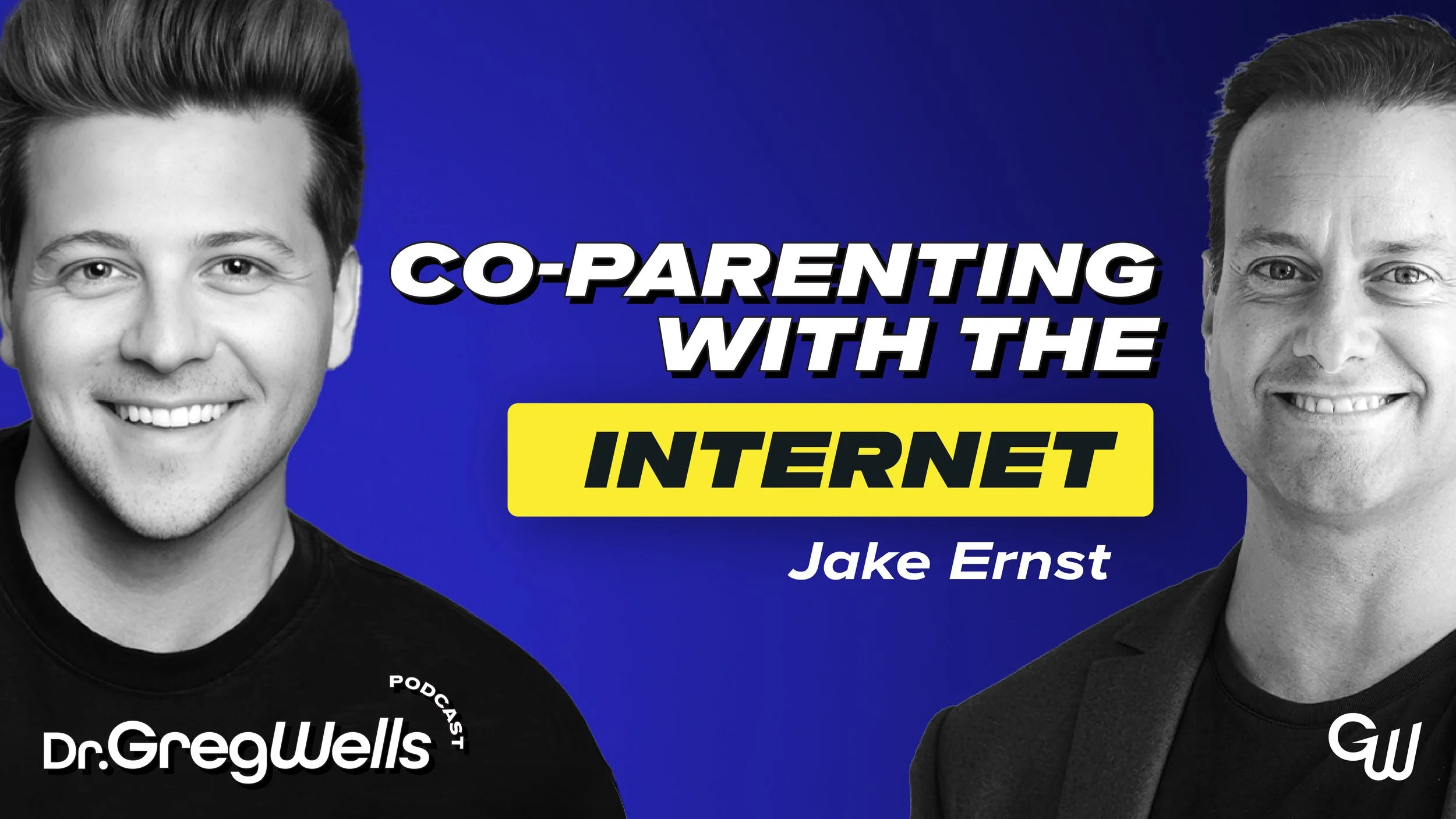
In today’s conversation Jake Ernst explores how modern tech is reshaping our brains, relationships, and family life—and why many parents are effectively “co-parenting with the internet.” He breaks down the rising pattern of distraction, distress, and disconnection, and explains how screen-mediated communication can undermine the social and emotional signals we need to feel truly connected. Jake and Dr. Greg then pivot to solutions: digital hygiene, restoring face-to-face connection, and helping kids build the real-world skills that screens can quietly erode.
You will learn why Jake believes technology is “working exactly as designed” to capture attention—and what that costs families and teams. You’ll learn his practical framework for understanding tech’s impact on mental, emotional, and social health (MESH), plus why “co-regulation” is the foundation of resilience and self-regulation. You’ll also learn concrete household guardrails (like “digital dark” and phone-free bedrooms), and how to replace screen time with real-world connection so change actually sticks.
You will discover that the healthiest people in the next decade may be those who can own their attention—instead of donating it to algorithms designed to keep you scrolling.
Jake helps solve a challenge nearly everyone feels right now: how to reduce the pull of screens without becoming extreme, punitive, or unrealistic—and how to rebuild connection and regulation at home (and in your own nervous system).
Key take aways:
You’re not parenting alone—you’re co-parenting with the internet.
Kids are the thermometer; behavior is communication.
No phones in bedrooms after 10 p.m.
Replace screen time, or the “detox” won’t last.
Own your attention. Protect it like a resource.
“Parents are not just raising kids by themselves… they’re also co-parenting with the internet.”
Today’s Expert Guest is Social Worker Jake Ernst
Jake Ernst, MSW RSW, is a relational therapist, speaker, writer, registered social worker, and psychotherapist based in Toronto. He is the Clinical Director at Straight Up Health, a family mental health clinic, where he supports young people and families and provides clinical supervision to a team of therapists. He’s also the host of the weekly podcast This Isn’t Therapy and writes the newsletter Just Trying To Help about managing stress and building better relationships in modern life.
Jake’s work is distinct because it’s relational-first: instead of treating stress and mental health as purely individual problems to “self-manage,” he emphasizes connection, attachment, and co-regulation as the foundation of wellbeing. He translates relational neuroscience into practical guidance for modern life—especially around chronic screen use, family dynamics, and rebuilding real connection in a world engineered for distraction.
One key actionable takeaway (the biggest idea)
Run a simple 7-day experiment: own your attention on purpose.
Make bedrooms phone-free after 10 p.m. (“digital dark”)
Check screen-time daily (adult + teen)
Replace the habit with something real-world (walk, sport, in-person hang, reading)
Jake’s point: boundaries work best when they’re paired with connection and replacement—not just restriction.
Follow Jake Ernst on Instagram & Linked In.
Check out his website.
This podcast contains advice and information relating to health and wellness. It should be used to supplement rather than replace the advice of your doctor or another trained health professional. If you know or suspect that you have a health problem, seek your physician’s advice before embarking on any medical program or treatment. All efforts have been made to assure the accuracy of the information contained in this podcast / interview / article as of the date of publication. The author and publisher disclaim liability for any medical or other outcomes that may occur as a result of applying the methods suggested in this material.