Alpha Waves and Learning: How to Unlock Your Brain's Full Potential
After one of my talks, a young woman came to me asking for advice on how she could improve her focus and concentration at school. I gave her a copy of “The Ripple Effect” and talked to her about how rest and exercise change your brain chemistry. When she got home, she did something simple, but powerful: she turned off all her electronics, sat by a window petting her cat, and read. She memorized a key section of my book in a single sitting—something she'd been unable to do before.
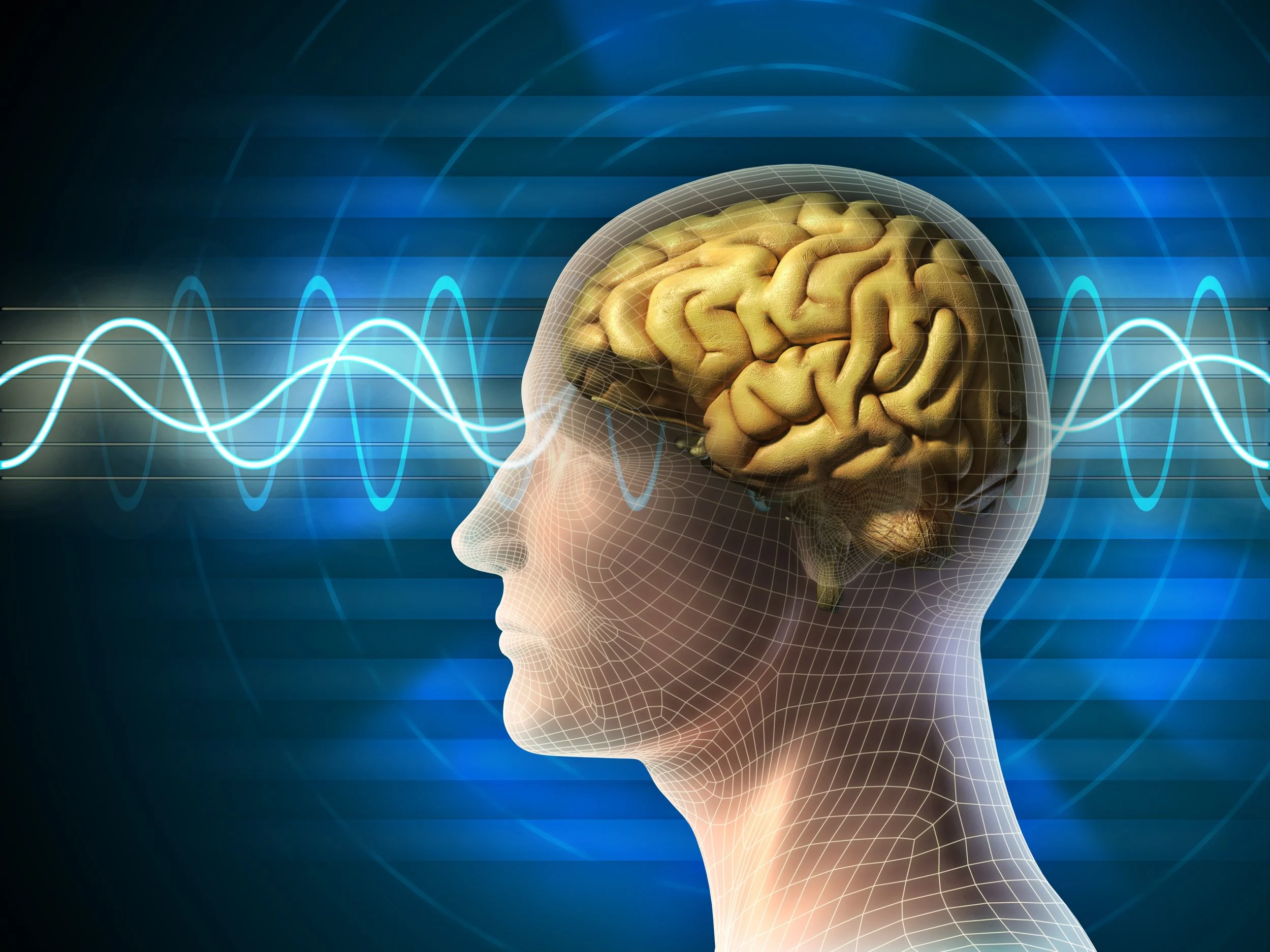
What changed? Using rest combined with the gentle movement of petting her cat, she shifted from constant stress (beta brainwaves) into a calm, reflective state (alpha brainwaves). Instead of cramming while anxious, she created the conditions where learning actually happens.
The Beta Brainwave Crisis: Why Constant Stress Blocks Learning
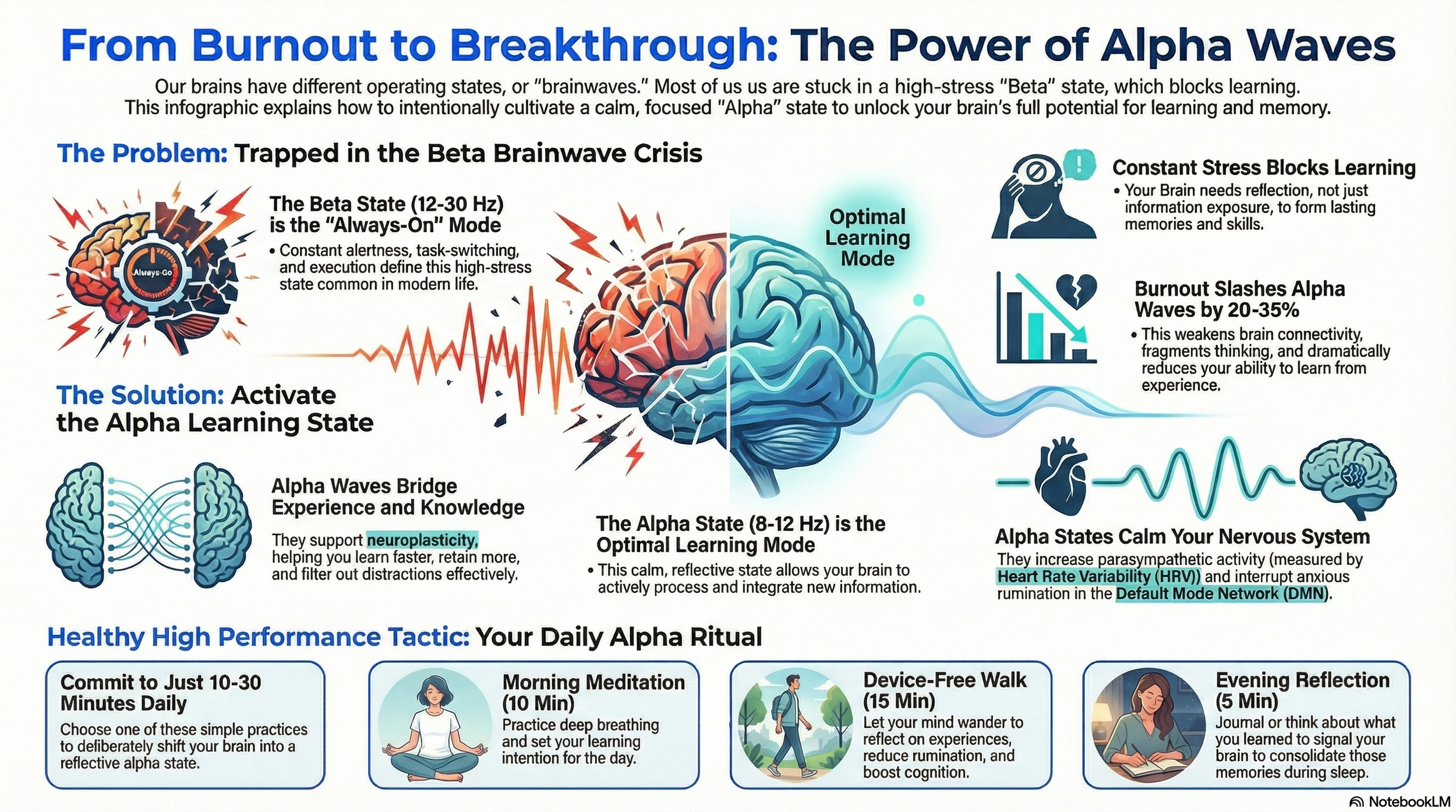
Most of us are trapped in beta brainwave states (12-30 Hz), constantly alert, executing tasks, responding to notifications, but never taking time to reflect.
Here's the problem: constant activation prevents learning. Learning requires reflection, not just exposure. Your brain needs time to make sense of experiences and form connections. Without alpha time, we're like students cramming information without ever reviewing it: nothing sticks, burnout increases, and we lose the ability to learn from our experiences.
In fact, research has found that people suffering from “burnout” have 20-35% less alpha wave activity across their whole brain. They also experienced reduced connectivity between brain regions, because the strong alpha waves which normally coordinate thinking became fragmented and weaker [1].
Alpha Brainwaves: The Optimal State for Learning and Memory
Alpha waves (8–12 Hz) occur during reflection, meditation, yoga, tai chi, slow breathing exercises, walking in nature, staring at water, or simply sitting quietly. They emerge when you are aware of your own thoughts, grounded in your body, and able to process experiences without needing to act immediately.
Alpha oscillations shift the brain from merely receiving information to actively processing and integrating it, supporting the neuroplasticity that underlies lasting change [2]. Alpha acts as a control signal, helping the brain decide what to focus on, what to suppress, and when to switch between different modes of learning and memory. When alpha is well tuned—balancing engagement and inhibition—you learn faster and retain information more effectively [2]. In this optimal state you are calm but alert, focused but not over‑aroused. Alpha states form the bridge between simply experiencing something and truly learning from it.
Eliminating Rumination: How Alpha States Break the Anxiety Loop
Chronic stress gets us stuck in rumination: repetitive, anxious thoughts about the past or future that prevent us from being present and learning. These ruminative states hijack the default mode network (DMN), and are associated with enhanced beta-wave activity between brain regions in associated with self-reflection and emotional regulation [3], [4].
Alpha brainwave practices (meditation, breathwork, nature immersion, listening to music) interrupt rumination by calming the sympathetic nervous system and activating the parasympathetic "rest-and-digest" response. One study demonstrated that during resting states and listing to music, alpha power increased in frontal areas while parasympathetic activity (measured through heart rate variability) also increased [5]. This mental shift reduces anxiety naturally and frees up cognitive resources for learning, problem-solving, and creative thinking.
Reflection, Connection, Alpha Waves, and Mental Health
When stuck in beta mode, we become disconnected from ourselves, our values, and the people we care about. We're constantly reacting rather than responding with intention, and deep connection is almost impossible when your brain is in constant survival mode. Alpha states restore this connection by giving us the mental space to check in with ourselves, reflect on what matters most, and engage authentically with others. Mind–body practices that elevate alpha waves, such as meditation, tai chi, or breathing exercises, not only calm stress hormones and inflammation but also consistently improve mood, resilience, and overall mental well‑being [6].
How to Build Daily Alpha Time for Optimal Learning
Adding more alpha time into your day doesn’t require a major commitment. Just 30 minutes of alpha time daily creates measurable improvements in learning, memory, mood, and mental clarity. Here's how:
Morning meditation (10 minutes): Sit quietly after waking, close your eyes, and practice deep breathing while mentally reviewing what you're grateful for and what you want to learn today. Research has found that when presented with a task, those who practice mindfulness meditation have enhanced alpha wave activity associated with filtering out distractions [7].
Walking without devices (15 minutes): Leave your phone behind. Let your mind wander and reflect on your experiences. Getting outdoors activates alpha states and reduces rumination, and moderate movement can enhance this state: one study found that those who took a 10 minute walk scored better on cognitive tests than those who sat outdoors for the same amount of time [8].
Evening reflection (5 minutes before bed): Sit quietly and reflect on your day. What did you learn? What connections can you make? This simple practice signals to your brain which experiences to prioritize for consolidation during sleep, so they are more likely to stick and support tomorrow’s learning.
Extend this practice by taking time out in nature on the weekend. Spending time outdoors (without devices) activates alpha states and gives your brain extended periods to process and integrate experiences, with the added benefit of a boost to your mental health.
How to Enhance Learning Outcomes
You now understand that learning requires alpha brainwave states where reflection, awareness, and mental rest create the conditions for your brain to grow. In the next article, we'll dive into the mechanisms of learning itself and how repetition, relevance, reconsolidation, and sleep enhance retention, enhance learning outcomes to transform experiences into lasting knowledge and skills.
1% TIP: CREATE YOUR DAILY ALPHA RITUAL
Not ready to commit to 30 minutes a day? Choose one 10-minute block each day to enter alpha brainwave states deliberately:
Morning option: Sit quietly after waking, close your eyes, and practice deep breathing (inhale for 4, hold for 2, exhale for 6) while mentally reviewing what you're grateful for and what you want to learn today.
Afternoon option: Go for a 10-minute walk without your phone, letting your mind wander and reflect on your experiences.
Evening option: Before bed, journal for 5-10 minutes about what you learned today and what it means for tomorrow.
This simple practice shifts your brain from constant execution (beta) to reflective learning (alpha), improving memory consolidation, reducing rumination, and restoring your connection to yourself and others.
References
[1] J. Chmiel and A. Malinowska, “Neural Correlates of Burnout Syndrome Based on Electroencephalography (EEG)-A Mechanistic Review and Discussion of Burnout Syndrome Cognitive Bias Theory.,” J. Clin. Med., vol. 14, no. 15, Jul. 2025, doi: 10.3390/jcm14155357.
[2] D. Pascucci, M. Q. Menétrey, E. Passarotto, J. Luo, M. Paramento, and M. Rubega, “EEG brain waves and alpha rhythms: Past, current and future direction,” Neurosci. Biobehav. Rev., vol. 176, p. 106288, 2025, doi: https://doi.org/10.1016/j.neubiorev.2025.106288.
[3] L. Benschop et al., “Electrophysiological scarring in remitted depressed patients: Elevated EEG functional connectivity between the posterior cingulate cortex and the subgenual prefrontal cortex as a neural marker for rumination.,” J. Affect. Disord., vol. 281, pp. 493–501, Feb. 2021, doi: 10.1016/j.jad.2020.12.081.
[4] H. Wang et al., “The power spectrum and functional connectivity characteristics of resting-state EEG in patients with generalized anxiety disorder,” Sci. Rep., vol. 15, no. 1, p. 5991, 2025, doi: 10.1038/s41598-025-90362-z.
[5] T. Kawashima, H. Shiratori, and K. Amano, “The relationship between alpha power and heart rate variability commonly seen in various mental states,” PLoS One, vol. 19, no. 3, p. e0298961, Mar. 2024, [Online]. Available: https://doi.org/10.1371/journal.pone.0298961
[6] S.-C. Lee, P.-H. Tsai, K.-H. Yu, and T.-M. Chan, “Effects of Mind-Body Interventions on Immune and Neuroendocrine Functions: A Systematic Review and Meta-Analysis of Randomized Controlled Trials.,” Healthc. (Basel, Switzerland), vol. 13, no. 8, Apr. 2025, doi: 10.3390/healthcare13080952.
[7] N. W. Bailey et al., “Experienced meditators show greater forward traveling cortical alpha wave strengths.,” Ann. N. Y. Acad. Sci., vol. 1550, no. 1, pp. 173–190, Aug. 2025, doi: 10.1111/nyas.15401.
[8] A. W. Bailey and H.-K. Kang, “Walking and Sitting Outdoors: Which Is Better for Cognitive Performance and Mental States?,” Int. J. Environ. Res. Public Health, vol. 19, no. 24, Dec. 2022, doi: 10.3390/ijerph192416638.