From Exhausted to Energized: 4 Tools for Maximum Daily Energy
Rest is essential. You know that now. But here's what most people miss: rest creates capacity, but strategic activation creates performance. Recovery alone won't cut it in high-stakes moments. You need energy. You need clarity. You need to perform. Four science-backed tools give you that power, boosting energy and stamina whenever you need it most. Here's how to deploy them.
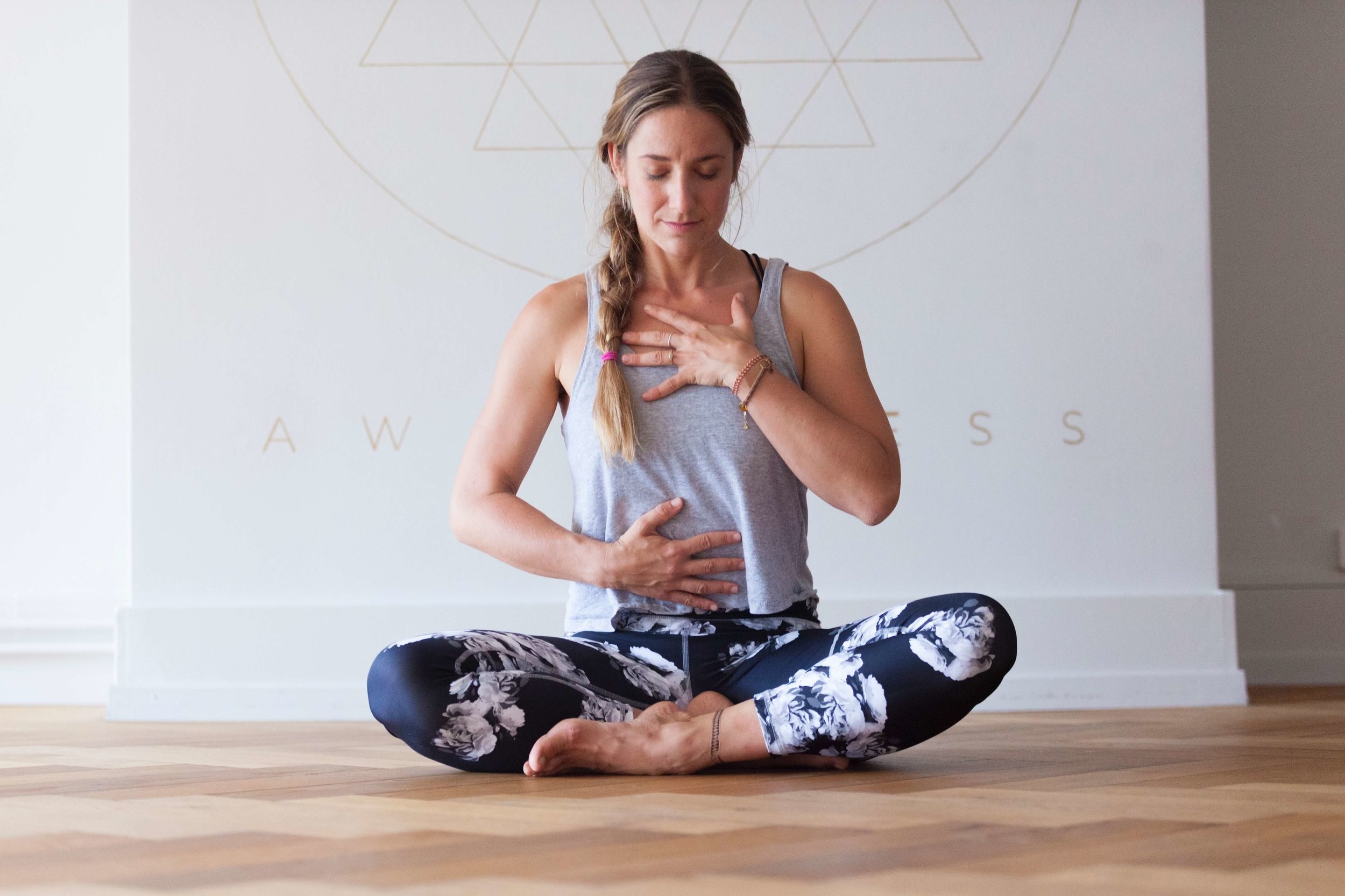
Tool 1: Strategic Breathwork for Instant Energy and Mental Clarity
Your breath directly controls noradrenaline, a neurochemical that drives alertness, focus, and energy. When noradrenaline is balanced, your attention sharpens and your thinking clarifies. Too little and you feel sluggish; too much and you become anxious. Breathing gives you precise control.
For instant energy, use rapid breathing techniques like the yoga bellows breath (Bhastrika) or the Wim Hof method: 30-60 seconds of controlled hyperventilation followed by a breath hold increases dopamine by 250% and noradrenaline by 530%. This triggers an immediate energy surge, heightened alertness, and mental clarity lasting hours.
When you need sustained focus without the spike, use slower breathing: inhale for 4 counts, exhale for 6 counts. This stabilizes noradrenaline in the optimal range, sharpens attention, and enhances concentration [1]. Slow breathing increases alpha brainwave activity associated with focused relaxation and decreases theta activity linked to mind-wandering [1].
Use rapid breathing before meetings, presentations, or high-stakes moments. Use slow breathing to maintain steady focus during deep work.
Tool 2: Heat Exposure for Recovery and Energy Reset
After intense work or exercise, your nervous system is still in sympathetic overdrive. Sauna bathing shifts you into parasympathetic recovery, triggering deep relaxation while releasing endorphins that elevate mood. The heat activates your parasympathetic nervous system, lowering cortisol and adrenaline while boosting the feel-good neurochemicals that counteract fatigue.
Critically, the recovery phase after sauna is when the magic happens. Heart rate variability (HRV) improves significantly during the cooling period post-sauna, signaling a shift toward parasympathetic dominance and reduced sympathetic activity [2]. This creates a genuine physiological reset that restores energy and prepares you for the next challenge.
Use 15-20 minutes in the sauna after 2-3 hours of intense cognitive work or physical effort. The parasympathetic activation allows recovery to compound, so your energy reserves rebuild rather than deplete.
Tool 3: Cold Exposure for Energy, Resilience and Dopamine
Cold does the opposite of heat. A 30-second to 3-minute cold shower or face immersion triggers an immediate spike in dopamine, norepinephrine, and epinephrine—the neurochemicals of alertness, energy, and focus [3].
After cold exposure, norepinephrine and dopamine remain elevated for hours, creating sustained energy and mental clarity [4]. Cold also increases positive emotions and feelings of being "active, alert, attentive, inspired, and proud" while decreasing nervousness and distress [5], [6], [7]. This makes cold exposure perfect before high-performance moments.
Use a 30-second cold shower or face plunge 30-90 minutes before presentations, difficult conversations, or when you need peak mental performance. The energy boost is immediate and lasts throughout the challenge.
Tool 4: Micro-Movements to Boost Energy and Stamina Throughout the Day
Movement is the most overlooked energy tool. A 5-minute walk, 20 squats, or climbing stairs resets your focus and restores energy without depleting it. Movement triggers mitochondrial activation and increases blood flow to your brain, delivering oxygen that sharpens concentration.
The key is timing: every 60-90 minutes, take 5-10 minutes for movement. This aligns with your natural energy cycles and prevents the afternoon slump. Even micro-movements (walking to get water, standing stretches) improve focus and sustain energy.
Your Daily Energy Optimization Schedule
Structure your day strategically:
Morning (6-9 a.m.): Cold shower + fast breathing technique (rapid breathing for 60 seconds, then rest) to activate your sympathetic nervous system and create morning energy. Eat a high-protein breakfast to stabilize blood sugar. This creates your energy foundation.
Mid-Morning (9 a.m. - 12 p.m.): Focused deep work with micro-breaks every 90 minutes. Use slow breathing (4-in, 6-out) during the 5-minute break to maintain steady focus. This prevents the energy crash.
Afternoon (12-3 p.m.): Post-lunch energy dip is inevitable. Combat it with a 10-minute movement break—a walk outside or light activity. Avoid refined carbohydrates that crash blood sugar. This is also an optimal time for a short sauna session (15 minutes) if available, as it resets your nervous system and restores energy for the second half of the day.
Late Afternoon/Evening (3-6 p.m.): If you have high-stakes moments (important meeting, presentation), use a cold shower 30-90 minutes before to spike dopamine and norepinephrine. Follow with slow breathing to maintain controlled focus. End your workday with a gentle 10-minute walk to transition toward evening recovery.
From Energy Tools to a Sustainable High-Energy Lifestyle
You now have four powerful tools to energize on demand: strategic breathwork for instant focus, heat for parasympathetic recovery, cold for alertness and resilience, and micro-movements to sustain energy. But the real magic happens when you combine these into a sustainable daily system. In the next article, I’ll explain how you can maintain a high-energy lifestyle with integrated rituals that make optimization automatic and effortless, so these tools become part of your daily rhythm rather than another thing to manage.
1% TIP: THE MORNING LIGHT ACTIVATION PROTOCOL
For a morning boost to your energy, get outside and expose your eyes and skin to natural light for 5-15 minutes (no sunglasses needed for the first few minutes), within 30 minutes of waking.
Here's why this works: Light hitting your retina sends signals to your suprachiasmatic nuclei (SCN)—your brain's master clock—which then synchronizes all your body's circadian rhythms, hormone release, and energy systems. Morning sunlight specifically:
Triggers cortisol release at the right time, creating natural morning alertness without the crash [9].
Suppresses melatonin production so you feel awake rather than groggy [10].
Increases serotonin, improving mood and mental clarity throughout the day [13].
Sunlight's longer wavelengths also activate your mitochondria, the energy factories inside every cell [8], while simultaneously triggering vitamin D synthesis, which is critical for mitochondrial respiration and reducing inflammation [11], [12].
The science is clear: frequent but moderate sunlight exposure without burning activates your body's antioxidant systems, enhances cognitive function, and protects against energy-depleting chronic inflammation.
Make it practical: Combine this with your morning cold shower and rapid breathing. Step outside immediately after your cold exposure while your sympathetic nervous system is already activated. The natural light amplifies the energizing effect and anchors your circadian rhythm, ensuring sustained energy and better sleep that night—creating a positive energy cycle that compounds daily.

References
[1] A. Zaccaro et al., “How Breath-Control Can Change Your Life: A Systematic Review on Psycho-Physiological Correlates of Slow Breathing.,” Front. Hum. Neurosci., vol. 12, p. 353, 2018, doi: 10.3389/fnhum.2018.00353.
[2] T. Laukkanen et al., “Recovery from sauna bathing favorably modulates cardiac autonomic nervous system.,” Complement. Ther. Med., vol. 45, pp. 190–197, Aug. 2019, doi: 10.1016/j.ctim.2019.06.011.
[3] G. E. White and G. D. Wells, “Cold-water immersion and other forms of cryotherapy: physiological changes potentially affecting recovery from high-intensity exercise.,” Extrem. Physiol. Med., vol. 2, no. 1, p. 26, Sep. 2013, doi: 10.1186/2046-7648-2-26.
[4] M. Buchheit, J. J. Peiffer, C. R. Abbiss, and P. B. Laursen, “Effect of cold water immersion on postexercise parasympathetic reactivation,” Am. J. Physiol. Circ. Physiol., vol. 296, no. 2, pp. H421–H427, Feb. 2009, doi: 10.1152/ajpheart.01017.2008.
[5] T. Cain, J. Brinsley, H. Bennett, M. Nelson, C. Maher, and B. Singh, “Effects of cold-water immersion on health and wellbeing: A systematic review and meta-analysis.,” PLoS One, vol. 20, no. 1, p. e0317615, 2025, doi: 10.1371/journal.pone.0317615.
[6] J. S. Kelly and E. Bird, “Improved mood following a single immersion in cold water,” Lifestyle Med., vol. 3, no. 1, p. e53, Jan. 2022, doi: https://doi.org/10.1002/lim2.53.
[7] A. Yankouskaya, R. Williamson, C. Stacey, J. J. Totman, and H. Massey, “Short-Term Head-Out Whole-Body Cold-Water Immersion Facilitates Positive Affect and Increases Interaction between Large-Scale Brain Networks.,” Biology (Basel)., vol. 12, no. 2, Jan. 2023, doi: 10.3390/biology12020211.
[8] G. Jeffery, R. Fosbury, E. Barrett, C. Hogg, M. R. Carmona, and M. B. Powner, “Longer wavelengths in sunlight pass through the human body and have a systemic impact which improves vision,” Sci. Rep., vol. 15, no. 1, p. 24435, 2025, doi: 10.1038/s41598-025-09785-3.
[9] R. Leproult, E. F. Colecchia, M. L’Hermite-Balériaux, and E. Van Cauter, “Transition from dim to bright light in the morning induces an immediate elevation of cortisol levels.,” J. Clin. Endocrinol. Metab., vol. 86, no. 1, pp. 151–157, Jan. 2001, doi: 10.1210/jcem.86.1.7102.
[10] A. Wirz-Justice et al., “‘Natural’ light treatment of seasonal affective disorder.,” J. Affect. Disord., vol. 37, no. 2–3, pp. 109–120, Apr. 1996, doi: 10.1016/0165-0327(95)00081-x.
[11] A. Grey and M. Bolland, “Vitamin D: A Place in the Sun?,” Arch. Intern. Med., vol. 170, no. 13, pp. 1099–1100, Jul. 2010, doi: 10.1001/archinternmed.2010.174.
[12] A. Matta Reddy et al., “Pivotal role of vitamin D in mitochondrial health, cardiac function, and human reproduction.,” EXCLI J., vol. 21, pp. 967–990, 2022, doi: 10.17179/excli2022-4935.
[13] R. A. Sansone and L. A. Sansone, “Sunshine, serotonin, and skin: a partial explanation for seasonal patterns in psychopathology?,” Innov. Clin. Neurosci., vol. 10, no. 7–8, pp. 20–24, Jul. 2013.