Dr. Greg Wells
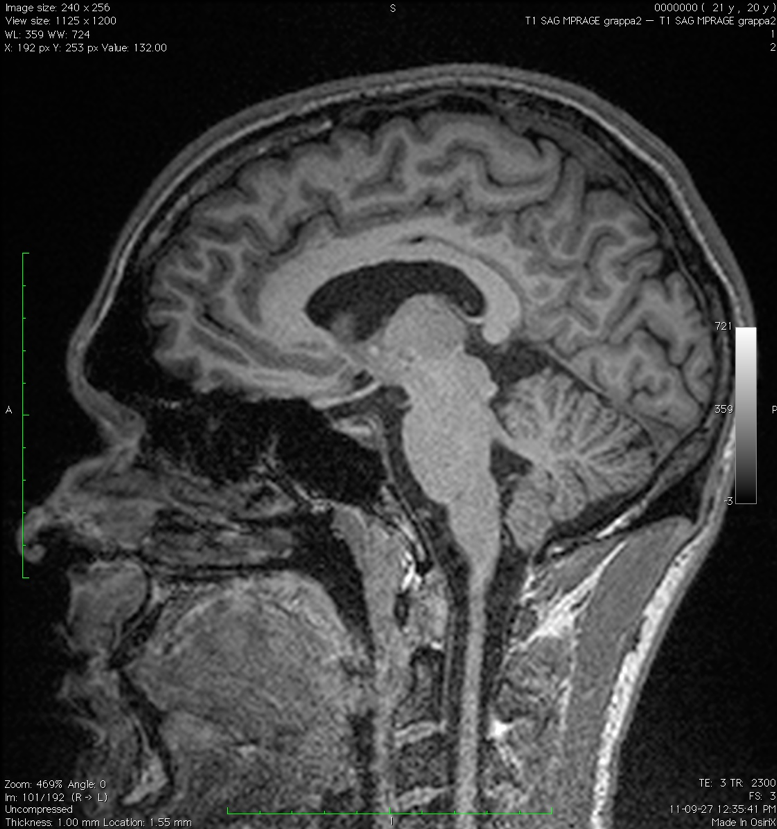
Optimizing the functioning and growth of your brain is essential to your performance and health. In particular, it’s important to understand the role of two kinds of tissue, white matter and gray matter, and how you can make them grow. You can see the different brain tissues in this MRI image:
© Greg Wells Ph.D. 2012
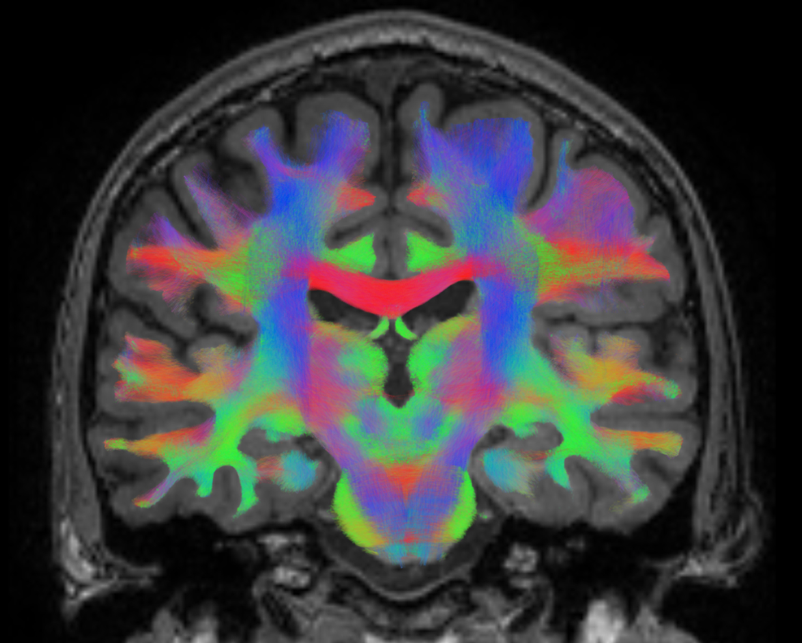
Gray matter is the part of your brain that processes information and contains the cell bodies of your neurons. For everything from emotion to sensory perception and memory, gray matter is where the action takes place. White matter is the part of your brain that connects all of the gray matter nodes together.
We can use another type of MR imaging to see the white matter tracts in the brain and how they connect the different brain regions together:
From: https://phys.org/news/2014-06-esa-image-space-brain-networking.html
It’s a lighter color because there is myelin protecting all of the nerves there, like bark on a tree. Here’s a CGI image of a neuron with myelin sheathing around the axon that connects the neurons in the brain:

© The Wells Group Inc. 2016.
If your brain were a transit system, the gray matter would be the stations and the white matter would be the tracks. You can improve the functioning of your brain by bulking up the processing centers and improving the efficiency of transmission between nodes. Basically, you can enable the trains of your mental transit system to hold more, travel faster and leave more often.
Here’s how to do it.
Gray matter responds beautifully to meditation. In one study, eight weeks of mindfulness training increased gray matter density in brain regions involved in learning, memory and emotional regulation [1]. Meditation practice also raises BDNF (brain-derived neurotrophic factor), a protein that stimulates the growth and protection of neurons [2].
White matter, on the other hand, benefits from a steady diet of healthy fats, because brain tissue is rich in fat. In older adults, six months of omega-3 fats improved white matter integrity and executive function [3]. If you are out for dinner, dump dark green olive oil all over your meal. Or go for other sources of wonderful fats: cold water fish, organic nut butters, coconut and avocados. Or shellfish, omega-3, eggs, cod liver oil, flax seeds, chia seeds, and hemp seeds. That white matter support helps signals travel across your brain.
Start today with ten minutes of meditation and a serving of healthy fat, such as olive oil, fish or walnuts, at each meal.
References
[1] B. K. Hölzel et al., “Mindfulness practice leads to increases in regional brain gray matter density,” Psychiatry Res. Neuroimaging, vol. 191, no. 1, pp. 36-43, Jan. 2011, doi: 10.1016/j.pscychresns.2010.08.006.
[2] B. R. Cahn, M. S. Goodman, C. T. Peterson, R. Maturi, and P. J. Mills, “Yoga, meditation and mind-body health: Increased BDNF, cortisol awakening response, and altered inflammatory marker expression after a 3-month yoga and meditation retreat,” Front. Hum. Neurosci., vol. 11, p. 315, Jun. 2017, doi: 10.3389/fnhum.2017.00315.
[3] A. V. Witte et al., “Long-chain omega-3 fatty acids improve brain function and structure in older adults,” Cereb. Cortex, vol. 24, no. 11, pp. 3059-3068, Nov. 2014, doi: 10.1093/cercor/bht163.