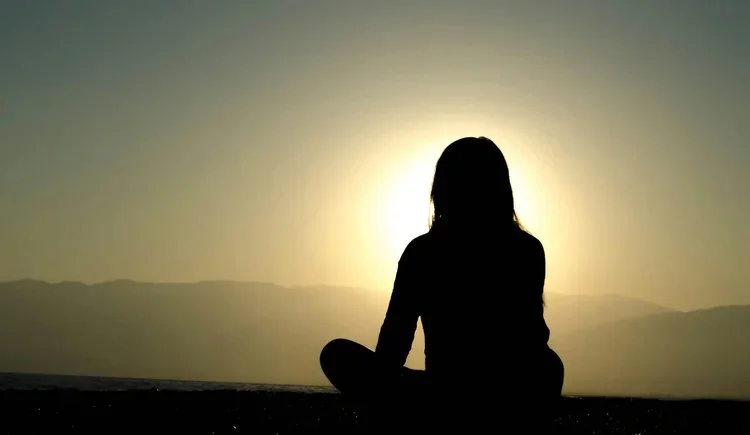
In high-stress situations, tension can limit creativity and problem-solving. By letting go of physical tension through conscious relaxation practices, we can shift our minds from stress to a more creative mindset.
When we are stressed we often experience physical tension as well. Consider that if you are worrying about something I’ll bet your shoulders are a bit tight! When we consciously relax our muscles, it is easier to calm our minds. When this tension release happens, we can access a mental state associated with ideation, creativity and better problem solving. Your brain produces more alpha waves, the rhythm of a relaxed yet alert mind, when you generate creative ideas [1].
Here are a few tips to help you incorporate this concept into your day:
Body Scanning: To begin releasing tension, mentally scan your body from head to toe, noting any areas of tightness. Focus on each tense spot, and take slow, deep breaths to help relax these areas. Repeat this practice whenever you notice tension accumulating during the day.
Practice Progressive Relaxation: This technique involves alternating between tensing and relaxing various muscle groups. Start by sitting comfortably and lifting your toes, holding the tension for a few seconds before releasing. Work your way up through your legs, abdomen, shoulders, and arms, progressively releasing tension in each area. I find this helpful for falling asleep. In one study, a short progressive relaxation session lowered heart rate, anxiety, perceived stress and cortisol [2].
Use Deep Breathing Techniques: Conscious breathing helps calm the nervous system and release mental strain [3]. Try a simple breathing rhythm: inhale for four counts, hold for two, and exhale for six. The long slow exhale is the key.
Adopt a Comfortable Posture: Notice whether your shoulders are hunched, hands clenched, or jaw tight, and adjust to a more comfortable position. Relax your shoulders, arms and hands.
Conscious relaxation uses the mind-body connection to shift you from a stress-dominant state to a relaxed, creative one. Progressive relaxation, deep breathing and guided imagery all raise your state of relaxation [3], and relaxation lowers cortisol [2], which opens the door to problem-solving, creativity and ideation [1].
Pivoting from tension to ideation is a powerful skill that combines body awareness with mental focus. Begin by practicing conscious relaxation, using techniques like progressive relaxation, deep breathing, and body scanning to release stress.
This article is based on my Rest Refocus Recharge book. If you want to learn more about rest, recovery and regeneration for healthy peak performance you can order the book here.
References
[1] A. Fink and M. Benedek, “EEG alpha power and creative ideation,” Neurosci. Biobehav. Rev., vol. 44, pp. 111-123, Jul. 2014, doi: 10.1016/j.neubiorev.2012.12.002.
[2] L. A. Pawlow and G. E. Jones, “The impact of abbreviated progressive muscle relaxation on salivary cortisol,” Biol. Psychol., vol. 60, no. 1, pp. 1-16, Jul. 2002, doi: 10.1016/S0301-0511(02)00010-8.
[3] L. Toussaint et al., “Effectiveness of progressive muscle relaxation, deep breathing, and guided imagery in promoting psychological and physiological states of relaxation,” Evid. Based Complement. Alternat. Med., vol. 2021, p. 5924040, Jul. 2021, doi: 10.1155/2021/5924040.