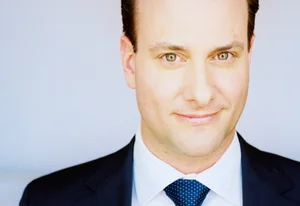
Create Behavior Change That Lasts with Dr. Marc Mitchell
Dr. Mitchell is trying to solve the problem that most people know what healthy behaviors are, but struggle to start and sustain them in real life. His work focuses on using behavioral science, digital health tools, and practical design strategies to help people make small, realistic changes that last and improve health at scale.



In today’s conversation Dr. Mitchell explores why behaviour change is so difficult and how people can make it more achievable by working with psychology instead of against it. He and Dr. Wells discuss habits, motivation, wearable technology, behavioural economics, and the role of confidence, autonomy, and social connection in long-term change. They also break down why walking is such a powerful and accessible health behaviour, especially when goals are personalized and realistic. The conversation lands on a clear idea: lasting change usually starts with one small step done consistently.
You will learn why behaviour change sits on top of a much deeper “iceberg” of barriers and facilitators, how capability, opportunity, and motivation shape action, why autonomy, social connectedness, and confidence matter so much for long-term adherence, how wearables and apps can help when they are designed well, and why walking remains one of the most practical entry points for improving health and wellbeing.
You will discover that sustainable behaviour change usually does not begin with intensity. It begins with a realistic target, a supportive environment, and a small win that builds confidence and momentum.
Dr. Marc helps you solve the challenge of feeling stuck between good intentions and inconsistent action. Dr. Mitchell gives listeners a practical framework for turning health goals into behaviours that are easier to start, easier to repeat, and more likely to last.
Key take aways:
Start with one behaviour.
Make the goal realistic.
Build confidence with small wins.
Walking is a powerful first step.
Make healthy choices easier.
“All you want to do is do a little bit better than what you were doing before.”
Today’s Expert Guest is Dr. Marc Mitchell
Dr. Marc Mitchell is a faculty member in the School of Kinesiology at Western University whose work focuses on behavioural science, digital health, and physical activity promotion. According to his Western profile, he holds a PhD from the University of Toronto, an MSc from the University of Victoria, and a BSc/BPHE from Queen’s University, and he is also a Registered Kinesiologist and a Registered Clinical Exercise Physiologist. His official profile highlights research partnerships with organizations such as WayBetter, TELUS Health, and Caterpillar Health, along with awards that include a Top 10% Ranking for Teaching Excellence, an Edge of Government Award, and a Premier’s Innovation and Excellence Award recognition. In the episode, he also shares that his path into behaviour change was shaped by work in cardiac rehab and earlier experience playing professional football in the CFL.
Dr. Mitchell’s work is distinct because he connects rigorous behavioural science with scalable, real-world tools. His official research program focuses on embedding behavioural science into digital health interventions, especially in areas like financial incentives, AI-driven goal setting, and chronic disease self-management. In this conversation, that shows up as a practical approach: personalize the goal, understand the barriers, use the environment strategically, and build motivation through autonomy, connection, and confidence.
Start by looking at your current average, not someone else’s ideal. Dr. Mitchell’s most practical advice in this episode is to use your own baseline, such as your current daily step count, and then aim for a small, realistic increase that you can repeat consistently.
Follow Dr. Mitchell on Linked In and his page on the Western University website is here.
This podcast contains advice and information relating to health and wellness. It should be used to supplement rather than replace the advice of your doctor or another trained health professional. If you know or suspect that you have a health problem, seek your physician’s advice before embarking on any medical program or treatment. All efforts have been made to assure the accuracy of the information contained in this podcast / interview / article as of the date of publication. The author and publisher disclaim liability for any medical or other outcomes that may occur as a result of applying the methods suggested in this material.