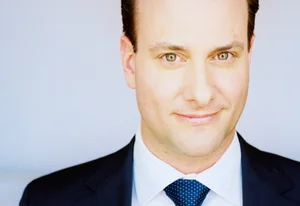
#52 Burnout-Proof High Performance with Dr. Susan Biali Haas
Today’s guest is Dr. Susan Biali Haas
High-performing people are stuck in a cycle of chronic stress that quietly erodes energy, mood, relationships, and results—until it becomes burnout. Susan’s work (and this conversation) focuses on breaking that cycle with science-based tools that help leaders build sustainable high performance without sacrificing health.
In today’s conversation Susan Biali Haas explores how high achievers can build stress resilience and prevent burnout without lowering their standards. She and Dr. Wells unpack why the brain and nervous system can get “stuck” in threat mode, especially after prolonged stress, and how small, repeatable practices can shift you back toward calm, energy, and clarity. They also dig into the performance value of purpose, joy, and mental training—simple levers that help people show up better at work and at home.
You will learn how to spot early burnout signals (before you crash), how to use neuroscience-informed strategies to downshift stress and rebuild capacity, how purpose and meaning protect performance over time, and why “fun” and recovery aren’t indulgences—they’re part of the physiology of sustainable output.
You will discover that resilience isn’t a personality trait—it’s a trainable skillset, built through small, evidence-based shifts that change how you respond to pressure.
This episode helps solve the challenge of trying to maintain elite performance while feeling exhausted, overwhelmed, or emotionally flat—by giving you practical ways to protect your brain, energy, and mental health under real-world demands.



Key take aways:
Burnout is preventable when you act early.
Stress resilience is built through small daily practices.
Protect sleep, boundaries, and recovery like performance assets.
Purpose and meaning reduce burnout risk over time.
Joy and play aren’t optional—they’re fuel.
“Life is too short to be continually stressed, burned out, and just trying to make it through the day.”
Today’s Expert guest is Dr. Susan Biali Haas
Dr. Susan Biali Haas, MD is an award-winning physician, executive coach, and keynote speaker who applies leading-edge science to stress resilience, burnout prevention, and sustainable high performance. She began her career in Royal College Emergency Medicine training, then spent two decades in fast-paced primary care, and served as a mental health clinician during the COVID-19 pandemic supporting people with anxiety and depression. She’s delivered keynotes and workshops for organizations including the U.S. Navy, Google, MIT, McKinsey & Company, Coca-Cola, AT&T, and Deloitte, and she has taught on clinician burnout prevention through Harvard Medical School Continuing Education programming.
Susan’s approach is distinct because it blends medical training, real-world high-pressure clinical experience, and practical coaching into tools people can actually use when life is busy. She focuses on helping leaders and high-output professionals shift from constant strain to sustainable success—using science-backed strategies that support mental health, strengthen stress resilience, and restore energy, meaning, and performance.
Her recommendation is to pick one small daily “resilience rep” for the next 14 days: (1) a brief mental reset (breath/quiet pause), (2) a boundary that protects recovery (sleep start time, meeting cutoff, or a no-email window), and (3) one “joy appointment” (music, movement, connection). The power is consistency—small inputs, big downstream physiology and performance returns.
12. and 13. Follow Dr. Biali Haas on Instagram & Linked In.
14. Check out her website.
This podcast contains advice and information relating to health and wellness. It should be used to supplement rather than replace the advice of your doctor or another trained health professional. If you know or suspect that you have a health problem, seek your physician’s advice before embarking on any medical program or treatment. All efforts have been made to assure the accuracy of the information contained in this podcast / interview / article as of the date of publication. The author and publisher disclaim liability for any medical or other outcomes that may occur as a result of applying the methods suggested in this material.