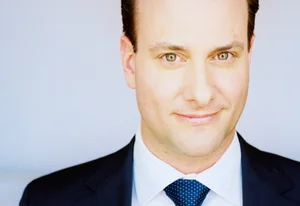
#59 - The Three Levers: Andy Blow on sweat, sodium, and smarter hydration
Today’s guest is Precision Hydration Founder Andy Blow
Andy is solving the “guesswork problem” in endurance performance: athletes lose wildly different amounts of fluid and sodium, so generic hydration advice leads to dehydration, cramping, GI distress, or even hyponatremia—and performance falls apart in the heat and over long durations.
In today’s conversation Andy Blow explores why hydration and fueling are never one-size-fits-all—and how understanding your sweat losses can transform performance in long or hot training and racing. He and Dr. Wells break down sweat physiology, heat adaptation, and why you can “do everything right” yet still struggle if your sodium and fluid strategy doesn’t match your body. Andy also shares practical guardrails for drinking, electrolyte replacement, and carbohydrate intake, plus the simple “three levers” framework that helps athletes execute better under stress.
You will learn why humans sweat (and why it’s a performance superpower), and how sweat is linked to blood plasma and electrolyte loss. You will learn the real-world range of sweat sodium losses (and why that range matters more the longer/hotter the event). You will learn how heat acclimation changes sweating, blood volume, and tolerance over ~2 weeks. You will learn practical hydration guidance (short sessions vs long sessions) and how to avoid overdrinking/underd rinking traps. You will learn the emerging best practices for endurance fueling—from ~30g/hr up to 90–120g/hr for high-output athletes who can tolerate it.
You will discover that your “hydration problem” is often a sodium + fluid mismatch—and that getting those two numbers closer to your personal losses can be “night and day” for performance in the heat.
Andy helps listeners solve the challenge of finishing long/hot sessions strong—without bonking, cramping, or having the day ruined by avoidable hydration and fueling mistakes.



Key take aways:
Sweat losses vary massively—don’t rely on generic advice.
Under 60–90 minutes: start hydrated, drink to thirst.
Heat acclimation takes ~14 days; most gains happen early.
Dial the three levers: fluid, sodium, carbs.
Practice your plan—race day isn’t the test lab.
Today’s guest is Precision Hydration Founder Andy Blow
Andy Blow is a UK-based sports scientist and the founder/CEO of Precision Fuel & Hydration, launched in 2011. He holds a Sport & Exercise Science degree from the University of Bath, previously worked as a Sports Scientist for the Renault and Benetton Formula 1 teams, helped establish the Porsche Human Performance Centre, and raced triathlon at a high level (including top-10 finishes at IRONMAN UK and an XTERRA Age Group world title).
Andy’s work is distinct because it’s built around individualization: instead of generic “drink more” or “drink to thirst” dogma, he helps athletes quantify and test their needs—then adjust a simple plan around the three levers (fluid, sodium, carbs). The Precision Fuel & Hydration approach combines field-tested athlete experience with practical tools (education, planning, and sweat testing) so people can execute confidently in long and hot conditions.
One actionable takeaway from today’s conversation is to run a 2-week “Three-Lever Experiment” in training: pick one long session each week and deliberately test (1) fluid intake per hour, (2) sodium per liter, and (3) carbs per hour—changing only one variable at a time—until you can finish strong with stable energy and minimal GI issues.
Follow Andy Blow on Instagram & Linked In.
Check out his website.
This podcast contains advice and information relating to health and wellness. It should be used to supplement rather than replace the advice of your doctor or another trained health professional. If you know or suspect that you have a health problem, seek your physician’s advice before embarking on any medical program or treatment. All efforts have been made to assure the accuracy of the information contained in this podcast / interview / article as of the date of publication. The author and publisher disclaim liability for any medical or other outcomes that may occur as a result of applying the methods suggested in this material.