

The Dr. Greg Wells Podcast



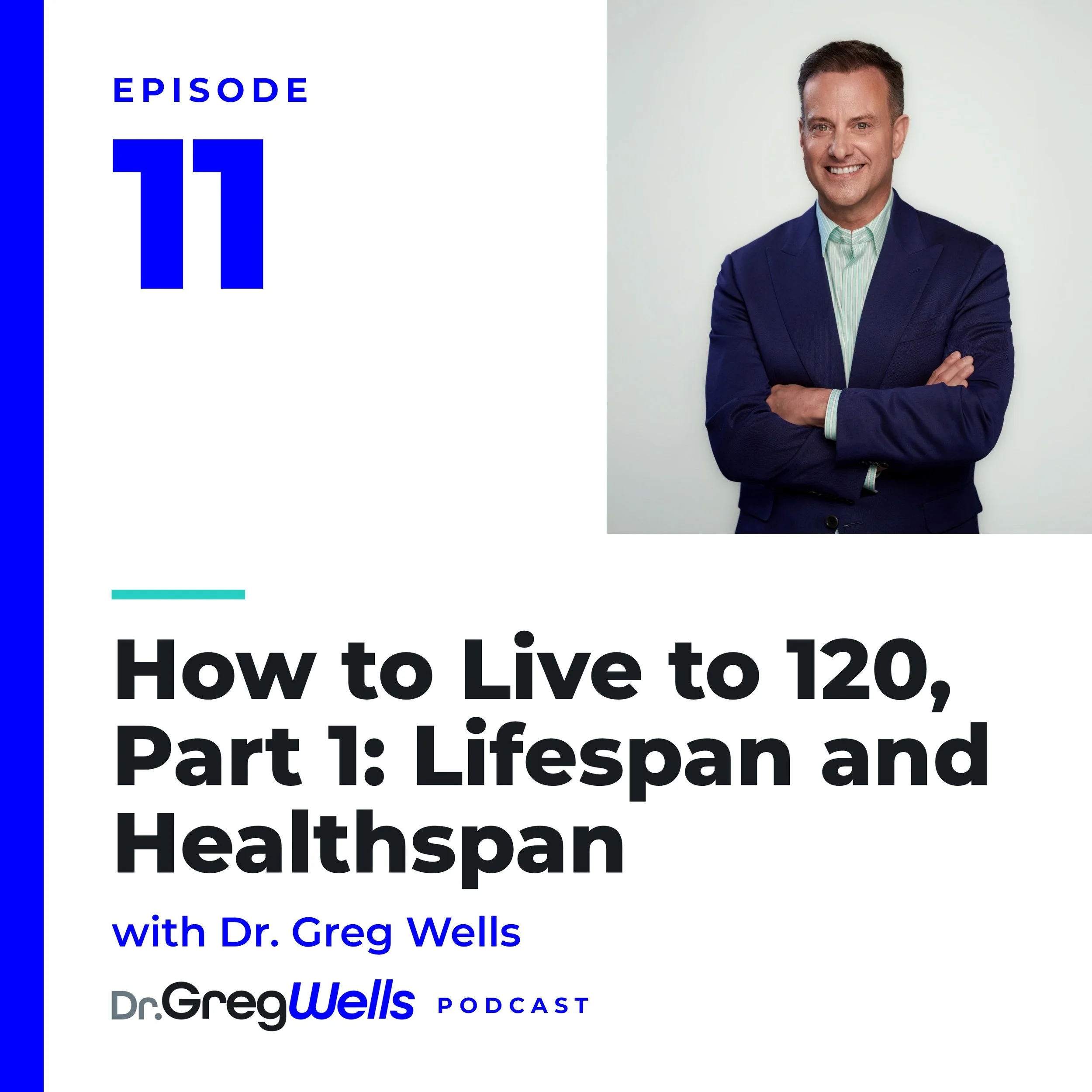
How to Live to 120, Part 1: Lifespan and Healthspan
For the five or six months before this talk, I swam in Lake Ontario with my friend Doug, right up until about three weeks before I flew out. If you have ever been in Lake Ontario, you know it is not warm. Swimming is what I grew up doing and what I competed in as an athlete. We would warm up, then sprint flat out, as hard as we could, in open water. People walking their dogs stopped to stare. Someone actually called the police on us once. Fortunately, Doug is a firefighter, and they left us alone.
Those sprints are one piece of a bigger plan. Living to 120 well takes two things: lifespan, the number of years you live, and healthspan, the number of those years you spend strong and able to do your best work. Aerobic exercise is your lifespan tool. In a study of more than 416,000 adults in Taiwan, people who exercised for just 15 minutes a day had a 14% lower risk of dying from any cause and lived about three years longer than people who were inactive (Wen et al., 2011). The benefit reaches all the way into your DNA. Researchers at the University of Colorado found that older endurance-trained adults had telomeres, the protective caps on the ends of your chromosomes, about 900 base pairs longer than sedentary people their age (LaRocca, Seals and Pierce, 2010). Strength training builds your healthspan by keeping your muscles strong as you age, and short, fast efforts challenge your body in a way steady exercise does not. Sleep is the foundation that lets your body repair from all of it.
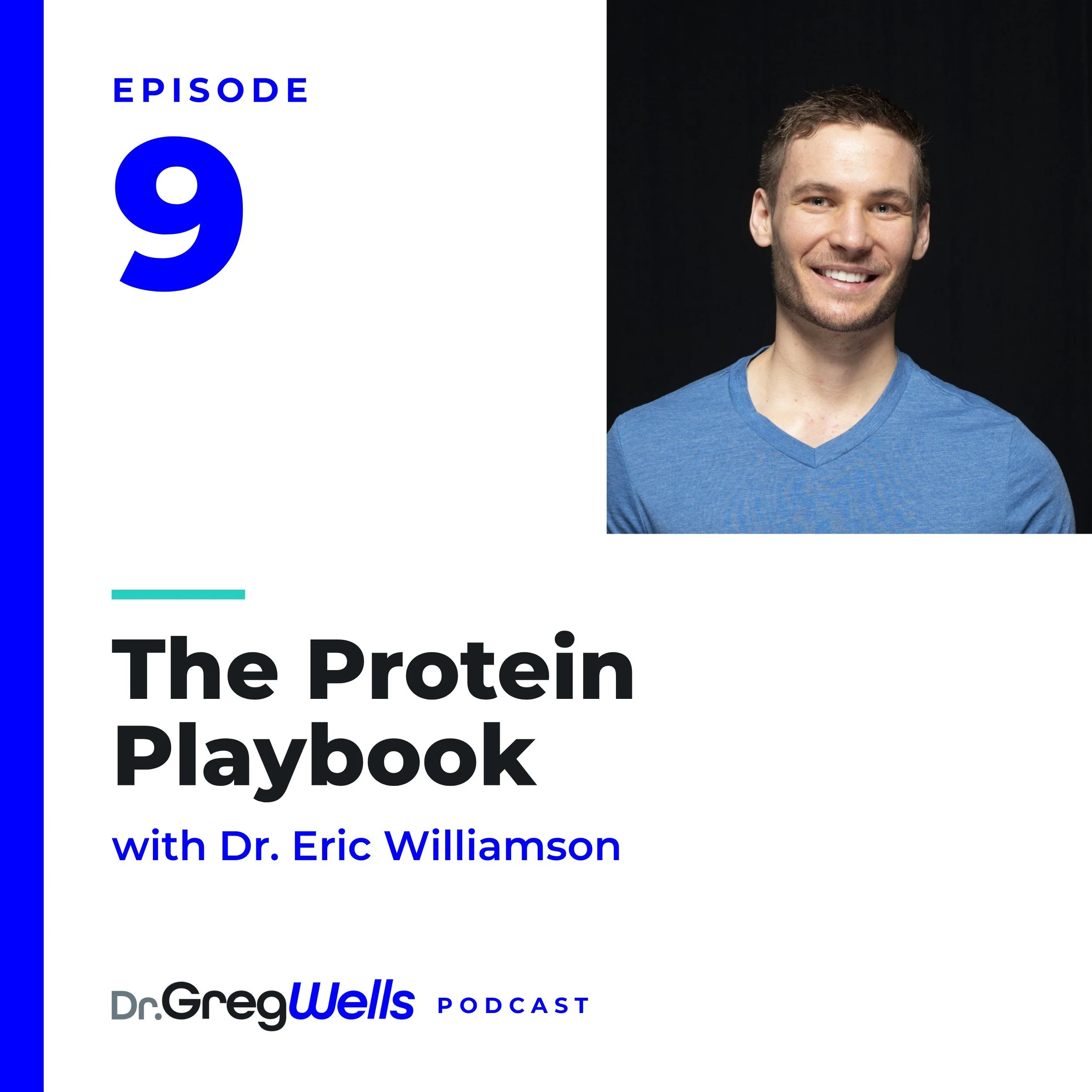
The Protein Playbook with Dr. Eric Williamson
At 15, Eric Williamson joined a gym and a boxing club to change his body and his performance. Nothing seemed to happen. He read the magazines, bought the supplements and trained harder, then jumped to the next program he found online, always looking for the quick fix. Eventually he decided he would do whatever it took to figure it out. After a year in a college program, he went back to high school to repeat grade 11 and 12 credits so he could get into university. He went on to earn degrees in kinesiology and nutrition at Western, became a registered dietitian and did his graduate research in Dr. Dan Moore’s lab at the University of Toronto. The change that finally worked for his own body was simpler than any program he had chased: a plan built on sound principles that fit his life, followed consistently.
Eric’s master’s research asked a question that matters for anyone who trains. Most protein guidelines are built around the minimum you need to stay in protein balance. In his study, ten endurance-trained runners completed three four-day blocks of controlled training while eating 0.94, 1.20 or 1.83 grams of protein per kilogram of body weight per day. On the highest intake, their bodies retained more protein to support recovery, and their 5 km time trial performance tended to be better (Williamson et al., 2019). How you spread your protein through the day matters too. When trained men took 80 grams of protein over 12 hours after a workout, four 20-gram servings every three hours stimulated more muscle protein synthesis than two large servings or eight small ones (Areta et al., 2013).