

The Dr. Greg Wells Podcast



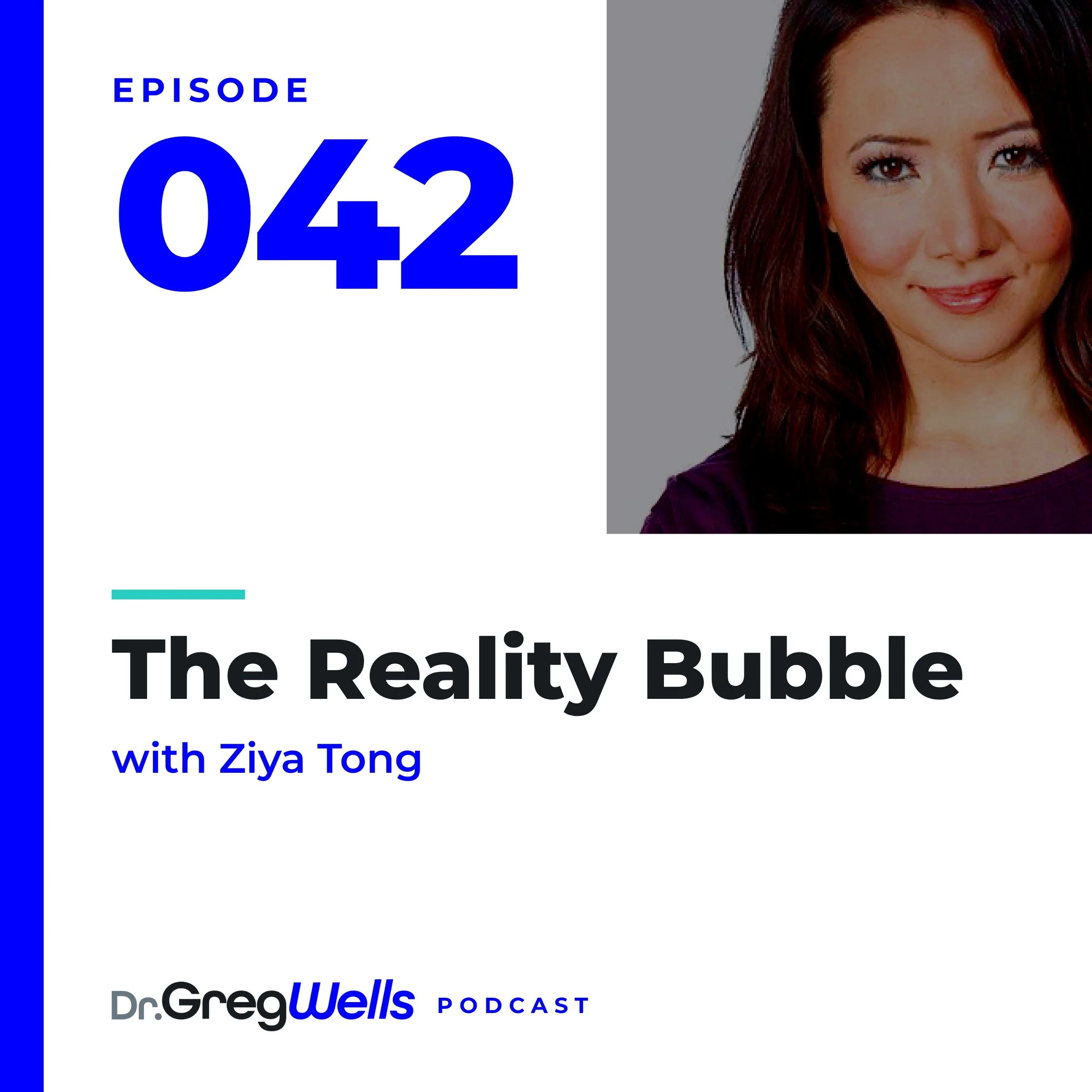
The Reality Bubble with Ziya Tong
A while ago I was swimming at night in the Indian Ocean. I switched off my flashlight, and the water went pitch black. A few moments later I sensed something out in the deep, so I turned the light back on and pointed it into the darkness. A tiny eye reflected the beam back at me. It belonged to a blacktip reef shark, harmless and definitely not small, and it swam right past us. It remains one of the coolest experiences of my life, and it captures exactly what my friend Ziya Tong writes about in The Reality Bubble. A huge part of reality is right there in front of you, and you only see it when you change how you look. Ziya anchored Discovery Channel’s Daily Planet for years, and in this conversation she takes us from X-rays and dragonfly eyes to the microbes covering every surface around you.
Curiosity primes your brain to learn. Gruber and colleagues found that when people were curious about a question, activity rose in the brain’s dopamine-driven reward circuit and in the hippocampus, and they remembered both the answer and unrelated information they saw in that state (Gruber et al., 2014). Seeing the bigger picture also shifts how you act. Across five studies with more than 2,000 people, Piff and colleagues found that awe made people feel smaller and less focused on themselves, and a few moments standing in a grove of towering trees made people more helpful to others (Piff et al., 2015). When you keep asking questions and seek out experiences that stretch your sense of scale, your brain locks in what you learn and your attention widens to include the people and the world around you.

Take Care of Yourself First
There have been stretches in my life when I put everything on the back burner to crush a project, build a business or get through a busy phase, like the years of diapers and sleepless nights when my kids were small. You can pull that off for a while. Then it catches up with you. When Scott Livingston had me on his podcast, Leave Your Mark, he asked what I’d say to people in the performance world who look after everyone except themselves. I told him about coaches running double sessions. Do a morning workout with your athletes, then do your own workout. Have lunch and rest, come back and train, then coach the kids at night. They will notice. They will pay attention, and they will work harder for you because of it. If you’re fit, eating well and taking time to recover, you lead by example.
Your own habits shape the people you lead. Barnes and colleagues followed 88 leaders and their teams for two weeks and found that on days after leaders slept well, they had more self-control, treated their people better and their teams were more engaged at work (Barnes et al., 2015). The same holds when you’re the one giving health advice. A review of 28 studies found that physically active doctors and other health care providers were consistently more likely to counsel their patients to be active, with some studies showing active physicians two to five times more likely to recommend exercise (Lobelo & de Quevedo, 2016). When you protect your sleep and your training, you bring more patience, energy and credibility to everyone who depends on you.