

The Dr. Greg Wells Podcast



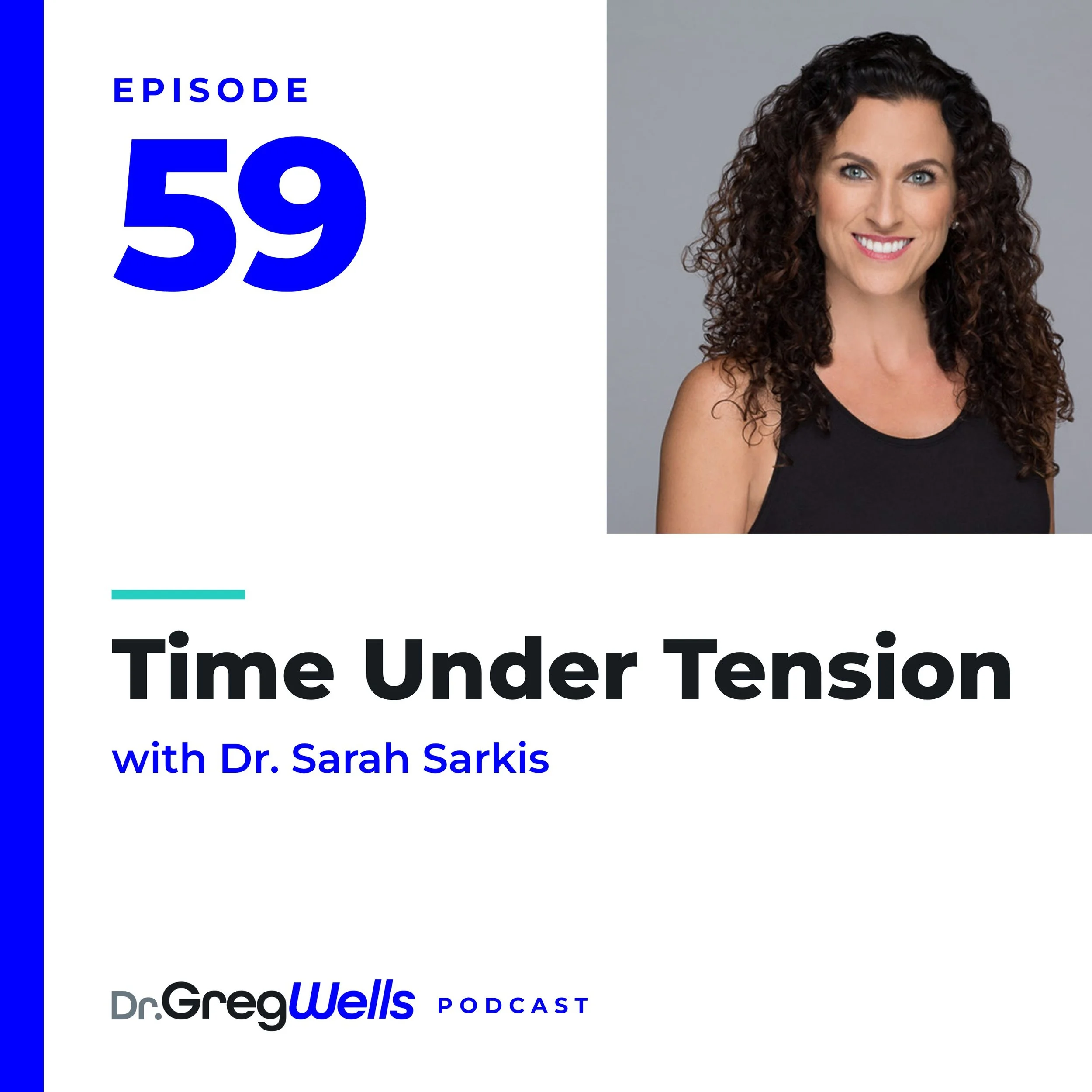
Time Under Tension with Dr. Sarah Sarkis
The morning I recorded this conversation, I called myself an idiot right before the call and again during it. As a physiologist, I think about time under tension in the weight room: how long your muscle actually works against a load. Dr. Sarah Sarkis, a psychologist and performance consultant, applies that same idea to your inner life. Her clients will happily write pages of answers to hard questions, then push back when she asks them to sit still with themselves for 15 minutes.
Sarah calls this emotional time under tension. If you can sit with a hard feeling for a minute today, you try for 90 seconds tomorrow, and you gradually widen the range of emotions you can tolerate before you fall back on an old pattern. Muscle responds the same way: when researchers at McMaster University had men lift a light weight slowly, keeping the muscle under tension longer, muscle protein synthesis rose more than when they lifted it quickly. Once you can observe your self-talk, Sarah asks you to meet what you hear with kindness. In four experiments at the University of California, Berkeley, Juliana Breines and Serena Chen found that people who responded to a failure with self-compassion studied longer for a retest and felt more motivated to make amends for a mistake. When you treat a setback the way you would treat a friend’s, you feel safe enough to look at what went wrong, which makes you more likely to fix it.
The Power of Flow
In January 2015, Tommy Caldwell and Kevin Jorgeson became the first people to free climb the Dawn Wall of El Capitan in Yosemite, a 3,000-foot face climbed with only their hands and feet, with ropes there just to catch their falls. Caldwell had been working toward it for seven years, and the final push took 19 days. Partway up, Jorgeson got stuck on pitch 15, a traverse across holds as thin as razor blades. He fell 11 times over about a week, in front of cameras and the whole climbing world, while his fingertips split and bled. Then he rested, reset and climbed it. Over the next two days, the pair finished the last 12 pitches together.
I tell this story because it shows the last step in a progression I use with every team I work with: take on a big challenge, focus relentlessly, then move out of tension and into flow. Flow depends on your arousal sitting in the right zone. Corinna Peifer and her colleagues put people under stress, then measured their stress hormones and heart activity while they worked on a demanding task. Flow showed an inverted U relationship with both cortisol and sympathetic arousal, so moderate activation went with the most flow and too much shut it down. When you are tense and forcing it, your stress response pushes you past that zone. When you warm up, breathe and fuel yourself well, you bring yourself back into the range where your body and brain do their best work.