

The Dr. Greg Wells Podcast



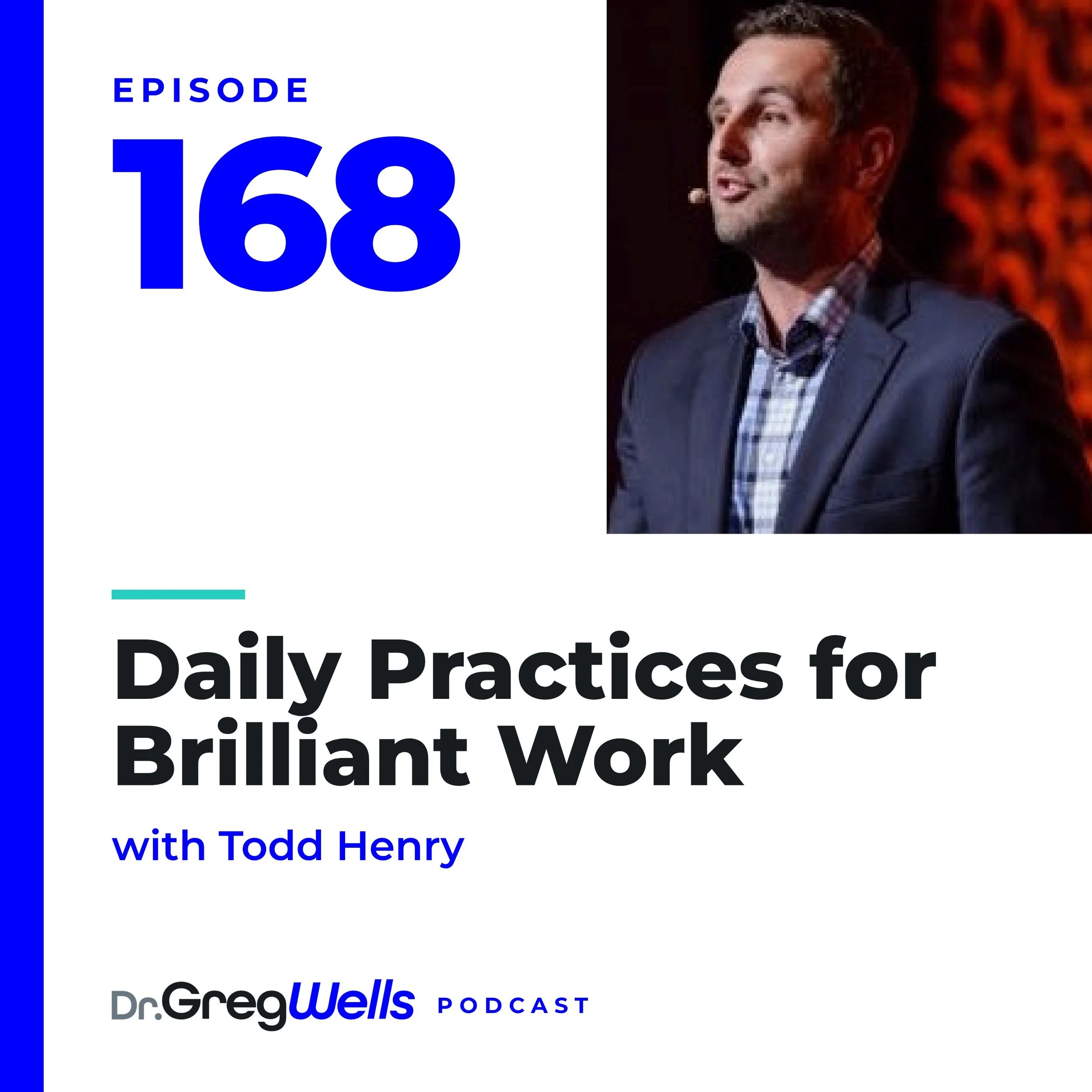
Daily Practices for Brilliant Work with Todd Henry
A while ago I made simplifying my life the theme of a whole year: clearing out contacts, subscriptions and distractions, and setting my phone so only certain people can reach me at certain hours. Todd Henry would call that getting away from the ping. Todd led a creative team for years, started The Accidental Creative, and wrote Daily Creative after noticing that the people who kept doing good work through the pandemic shared one thing: daily practices. He is also my first three-time guest.
Solving problems is creative work, whether you are a doctor, a marketer or a coach, and it needs deep, focused time. When you live in what researcher Linda Stone calls continuous partial attention, you never give your brain the quiet it needs to connect the dots and hear your intuition.
The Power of Flow
In January 2015, Tommy Caldwell and Kevin Jorgeson became the first people to free climb the Dawn Wall of El Capitan in Yosemite, a 3,000-foot face climbed with only their hands and feet, with ropes there just to catch their falls. Caldwell had been working toward it for seven years, and the final push took 19 days. Partway up, Jorgeson got stuck on pitch 15, a traverse across holds as thin as razor blades. He fell 11 times over about a week, in front of cameras and the whole climbing world, while his fingertips split and bled. Then he rested, reset and climbed it. Over the next two days, the pair finished the last 12 pitches together.
I tell this story because it shows the last step in a progression I use with every team I work with: take on a big challenge, focus relentlessly, then move out of tension and into flow. Flow depends on your arousal sitting in the right zone. Corinna Peifer and her colleagues put people under stress, then measured their stress hormones and heart activity while they worked on a demanding task. Flow showed an inverted U relationship with both cortisol and sympathetic arousal, so moderate activation went with the most flow and too much shut it down. When you are tense and forcing it, your stress response pushes you past that zone. When you warm up, breathe and fuel yourself well, you bring yourself back into the range where your body and brain do their best work.
The Power of Focus
One of my colleagues at SickKids once suggested we climb Chimborazo in Ecuador, and I said yes before he told me where it was. Because the Earth bulges at the equator, Chimborazo’s summit is the point on the planet farthest from the Earth’s centre. On our first push up the mountain, at around 5,500 metres, my heart rate sat at 130 to 150 and I was dizzy, right on the edge of passing out. Then a black cloud rolled over the peak and the temperature dropped from about 20 degrees Celsius to minus 5 in roughly 30 seconds. My pulse oximeter read 66 percent oxygen saturation. I had a blinding headache, and every time I moved my head or my eyes, I lost my vision. So I locked onto the boots of the person in front of me and focused on that one thing for about four hours until we were safely down.
Two nights later we went back up. Two of my graduate students reached the summit, and I made it to around 5,850 metres before I simply couldn’t go any further. That mountain showed me how much focus matters when the stakes are high, and everyday life is full of things that steal it. Cary Stothart and his colleagues at Florida State had people do an attention-demanding task while the researchers secretly sent calls and texts to their phones. Just receiving a notification, without answering it, made people make more mistakes, at a level comparable to actually using the phone. A notification pulls your mind toward the message and what it might say, which takes attention away from the work in front of you. I believe that 20 years from now, we will look back on our constant distraction the way we look back on smoking today.
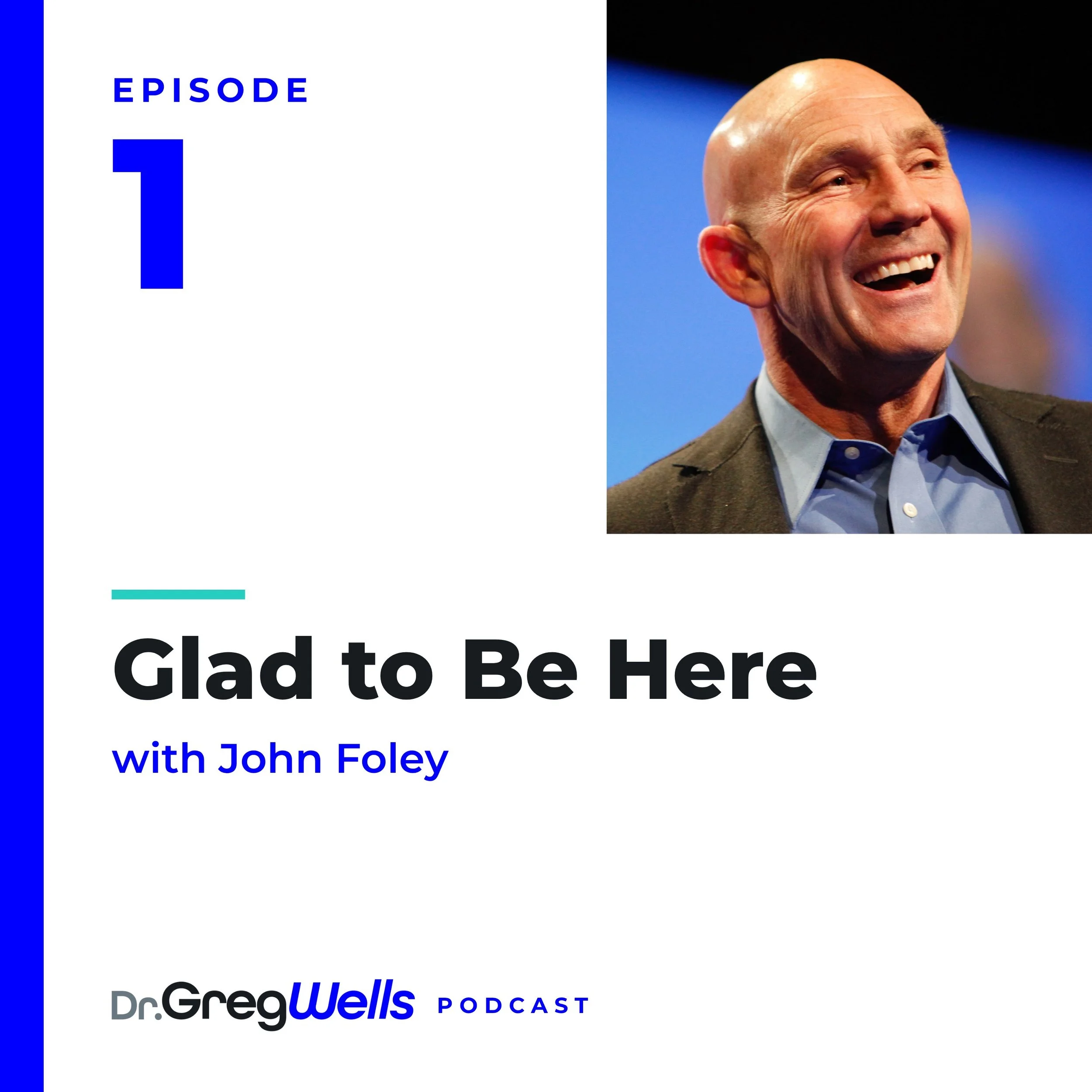
Glad to Be Here with John Foley
When John Foley was learning to fly as a Blue Angels solo pilot, his mentor gave him a checkpoint for the two-mile mark of a maneuver: the northeast corner of a three-story white house, the upper window with the green shade. John thought it was impossible. He would be upside down at 400 knots, and that house sat among a cluster of other white houses. With repetition, he learned to pick out the green shade every time he flew past. As John puts it, you can see that kind of detail at speed when you know exactly what you are looking for. Without the preparation, everything is a blur.
John and his teammates rehearsed every maneuver before they flew it. On the ground, the boss talked the team through the routine in the same cadence and tone they would hear in the air, so the whole team visualized the flight together. The research supports what they were doing. A meta-analysis of mental practice, the cognitive rehearsal of a task before you perform it, found that it has a positive and significant effect on your performance (Driskell, Copper and Moran, 1994). The Blue Angels close the loop with a debrief after every flight. When researchers pooled studies of teams and individuals, well-run debriefs improved performance by about 20 to 25 percent on average (Tannenbaum and Cerasoli, 2013).