

The Dr. Greg Wells Podcast



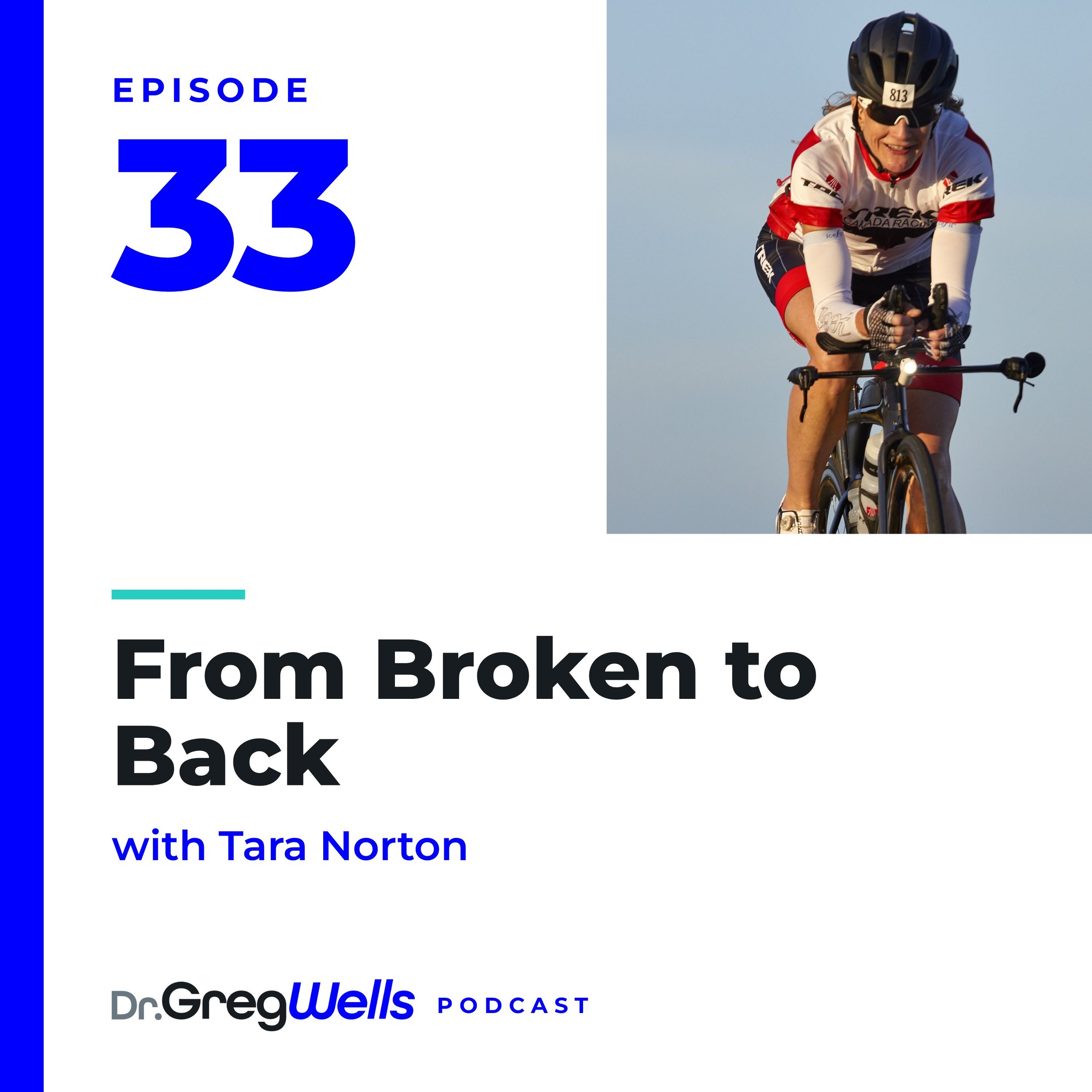
From Broken to Back with Tara Norton
Tara Norton and I have been friends since grade six, and I have watched her whole career unfold. She became a professional Ironman triathlete, and then she started breaking bones: 24 of them over her career, including nine in a training crash when her bike’s front fork failed and 11 when she hit a volunteer who ran onto the course at the Ironman World Championship in Hawaii. In 2016 she raced Ultraman on a fractured femur and spent the next two years in rehab, unsure she would run again. In 2018, at age 47, she won the Ultraman World Championship.
Tara credits a mental coach for much of her comeback. He taught her that mental strength starts with awareness: naming what she was really afraid of, acknowledging a cramp instead of fighting it, and seeing that even her worst case still left room for a life she loved. Out of that came her mantra, “all is great.” Research on optimism points the same way. In a study of men recovering from coronary artery bypass surgery, Michael Scheier and colleagues found that the most optimistic patients recovered faster in the days after surgery, returned to their normal activities sooner and reported a better quality of life six months later. When you expect things to work out, you are more likely to keep coping actively, which keeps you doing the rehab and the small steps that recovery depends on.