

The Dr. Greg Wells Podcast




The Great Traits of Champions with Mark Tewksbury and Debbie Muir
I swam in the same era as Mark Tewksbury, and we trained under the same coach in Calgary. At national meets I was usually in the consolation final, which meant I got to watch Mark race in the final, including some of the new starts that did not work at first. A year and a half before the Barcelona Olympics, his rival Jeff Rouse dropped 1.2 seconds in the 100-metre backstroke, and Mark was suddenly second best in the world. He had ten months to find an improvement that had taken him years to earn, so he turned to Debbie Muir, the synchronized swimming coach whose athletes had won seven of nine world championship titles.
Debbie went back to fundamentals. Mark did not yet know how to dolphin kick powerfully off the start and the turns, so they rebuilt his underwater work, his starts and his turns. Debbie also heard how negative Mark’s self-talk became under pressure, and she brought those thoughts to the surface so he could deal with them. That approach has strong support: a meta-analysis of 32 studies found that self-talk interventions improve sports performance, with the largest gains when athletes are trained to use them and on tasks that demand precise skill. When you notice what you are saying to yourself and replace it with a specific cue, you direct your attention to the movement that matters. Ten months later, Mark won Olympic gold in the 100-metre backstroke.
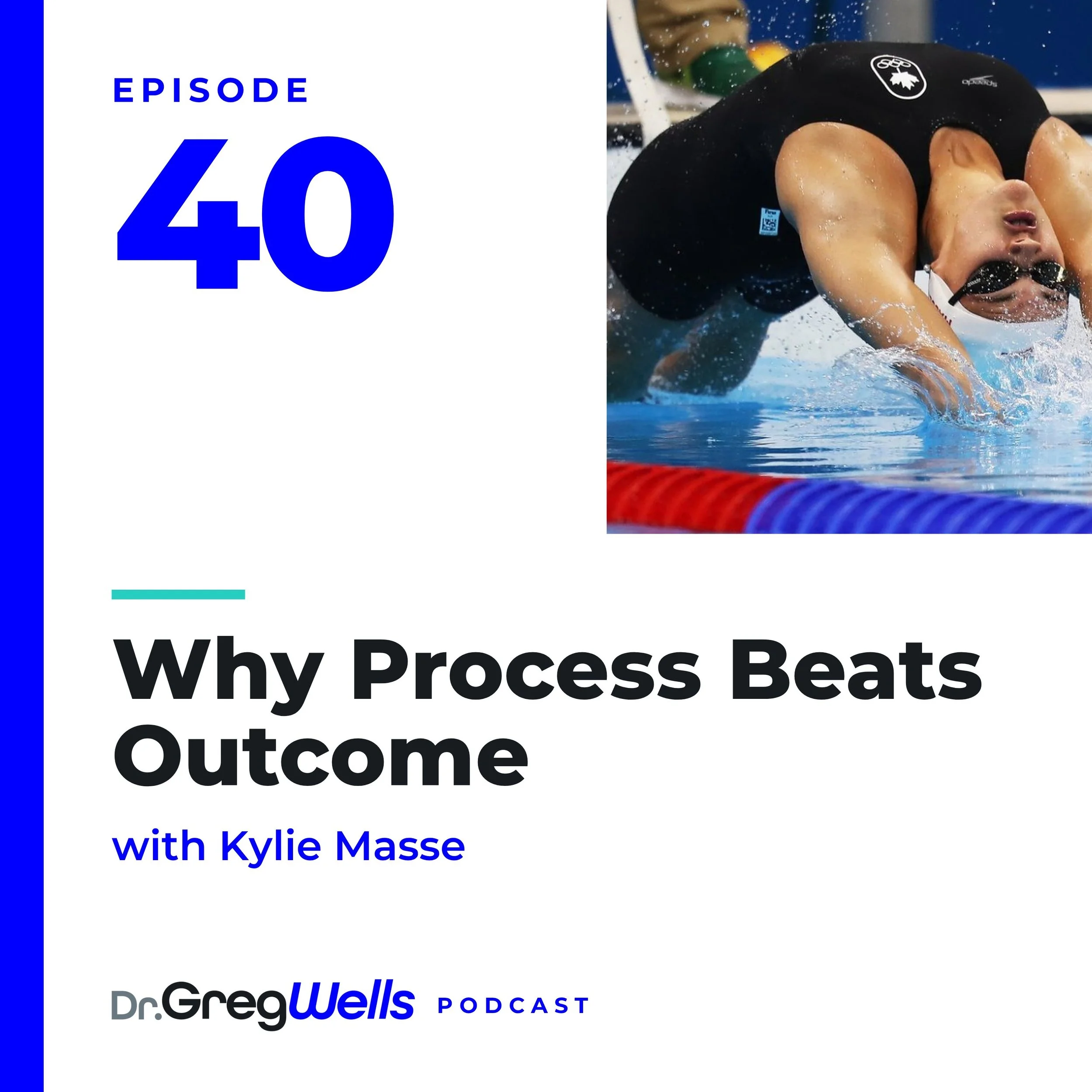
Why Process Beats Outcome with Kylie Masse
I grew up as a swimmer, and before one race when I was nervous, a coach told me that a billion people in China did not care about it. It put the race in perspective instantly. Kylie Masse learned her own version of that lesson. She grew later than many of her teammates and watched friends pass her in the pool, and she kept going because practice with her training group was fun. That foundation carried her to an Olympic bronze medal in Rio in 2016 and a world record in the 100-metre backstroke a year later.
Kylie has learned that the more she thinks during a race, the worse she swims. Research on skilled performance explains why. When Sian Beilock’s team had experienced golfers and soccer players attend to the step-by-step details of their movement, they performed worse than when their attention was on something else, while novice soccer players showed the opposite pattern. When you have trained a skill thousands of times, it runs best on autopilot, and attending to each step interrupts the smooth, automatic control your brain has built. Kylie trusts her preparation, focuses on the process instead of the result and uses music and laughter with teammates to keep her mind from overanalyzing.