Beat the Afternoon Slump: How Strategic Protein Timing Keeps You Sharp
In this series on eating well, I have detailed why proper nutrition matters and how it influences your brain and body health day to day. Now I'm going to show you how to beat the afternoon slump with strategic food choices that directly affect your ability to focus.
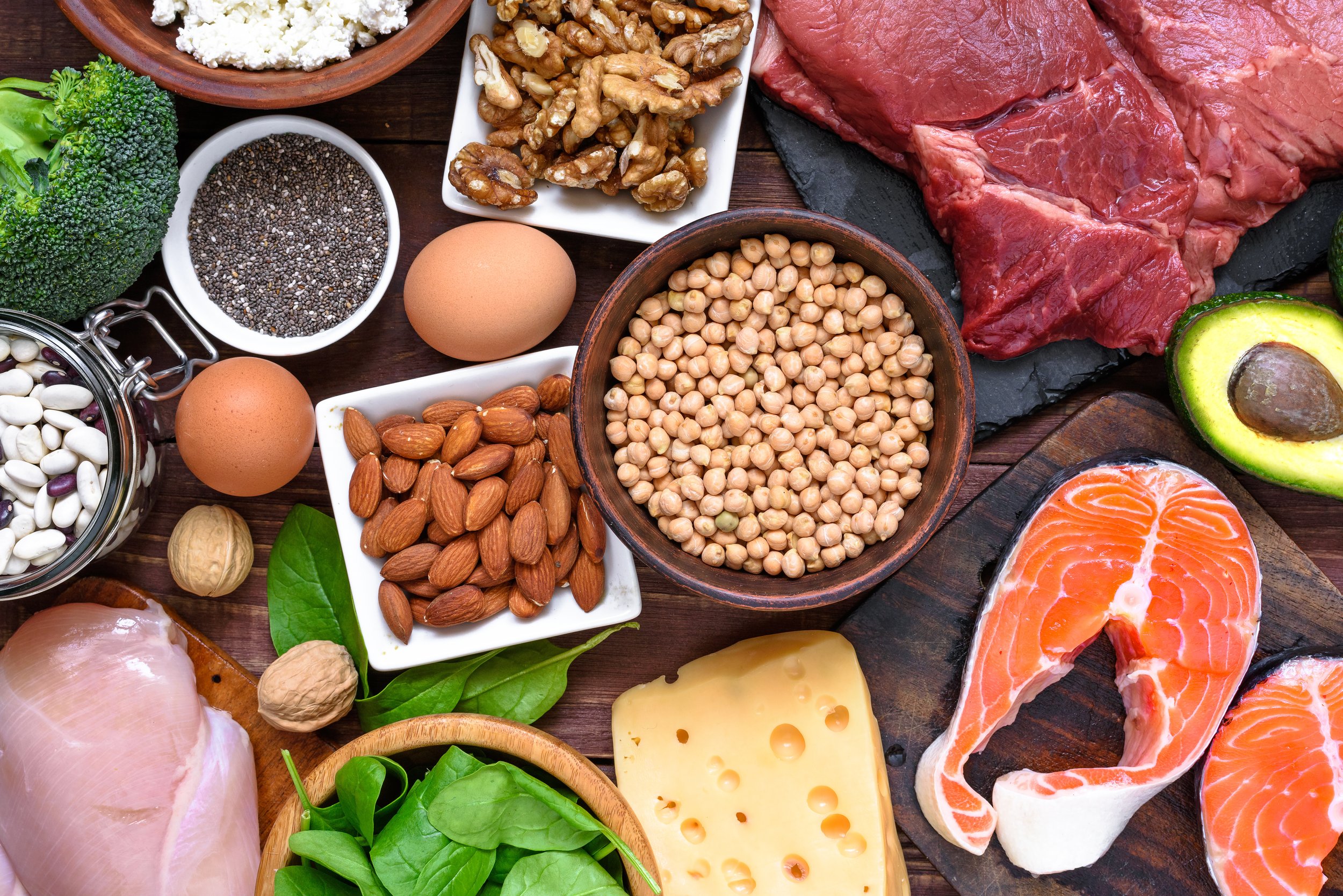
Consider a true story: my team rocked a difficult afternoon negotiation by eating foods that sharpen focus at lunch (lean proteins, good fats), while the team we were competing with ate sugary carbohydrate-rich foods that left them distracted and irritable.
The result was that my protein-powered team stayed sharp and energized, were able function at a high level, while the other faded into sluggishness as their brain chemistry shifted against them. This experience highlighted that what you eat before a critical performance can be the raw material that your brain can then use to create the mental state you need to succeed.
Tyrosine: The Focus Amino Acid that Beats the Afternoon Slump
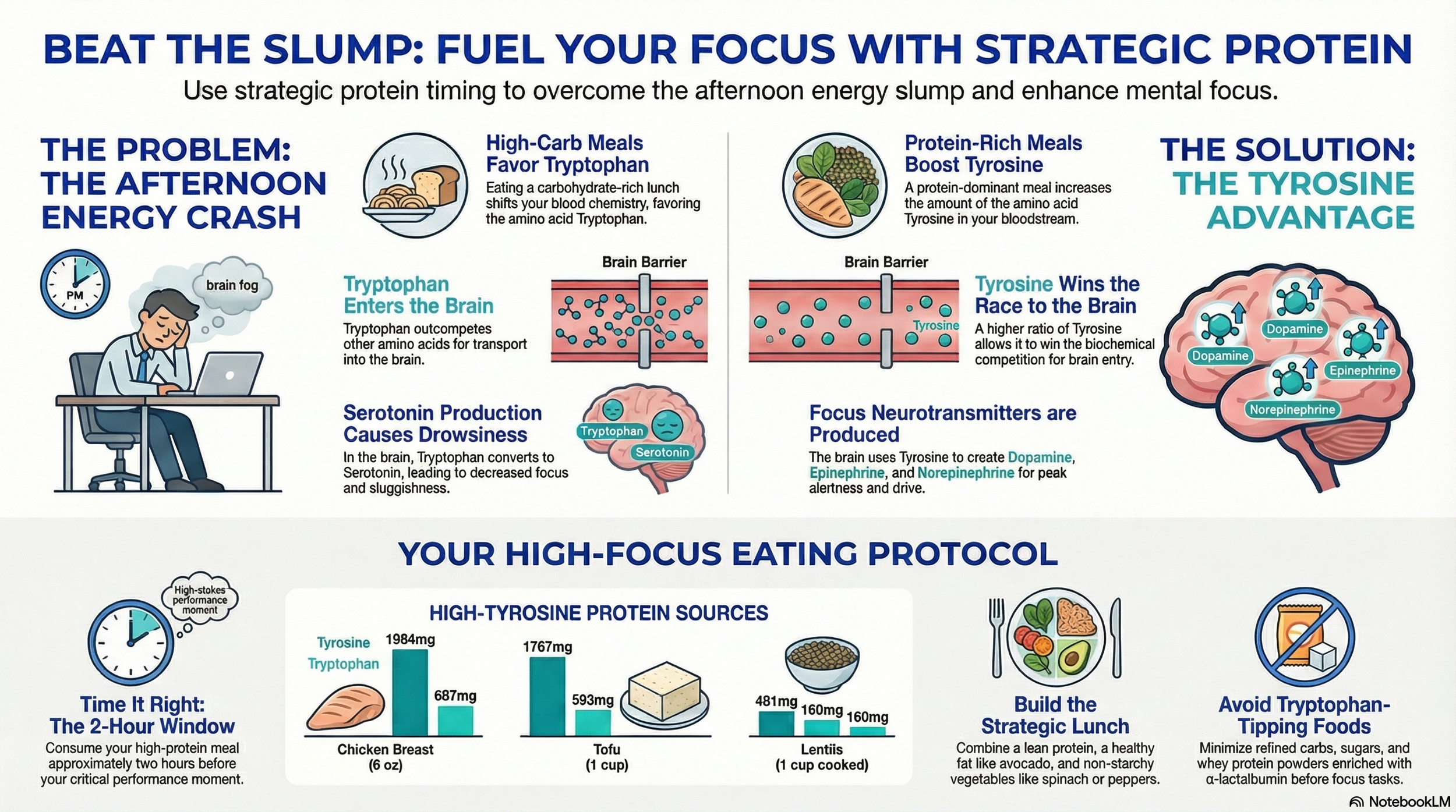
As I touched on in a previous article, tyrosine is the key building block for dopamine, epinephrine, and norepinephrine. These are the neurotransmitters responsible for alertness, motivation, and focus, with a small study showing that just 2 grams of tyrosine before cognitive testing improved decision-making and impulse control [1]. Eating a protein-rich meal before a critical performance moment increases the amount of tyrosine in your bloodstream. By boosting the ratio of tyrosine compared to other amino acids (like tryptophan), tyrosine wins out, gains easier passage into your brain, and is used to produce the focus that helps you perform at your best when it matters most [2].
The Carb-Tyrosine Competition: Timing Is Critical
A meal high in simple carbohydrates before a crucial event is a recipe for the afternoon energy crash. It shifts your blood chemistry toward tryptophan, which edges out tyrosine for transport into the brain. This leads to more serotonin production, which can cause drowsiness or decreased focus at exactly the wrong time. In contrast, eating a protein-dominant, slow digesting-carb (high fiber) meal before critical tasks ensures tyrosine wins the biochemical competition, creating the alertness and drive needed for top performance.
The 2-Hour Window: When & What Protein Works
For best results, consume high-quality protein about two hours before your high-focus activity. Animal proteins (chicken, fish, eggs), plant proteins (lentils, quinoa), and dairy products all contain significant amounts of tyrosine. Examples of effective protein meals include grilled chicken salad, tofu stir-fry, or a quinoa-lentil bowl. Minimizing added sugars and simple carbs in this window optimizes your neurotransmitter balance for peak focus and mental clarity. Aim for a meal where protein is the main macronutrient, supported by a healthy fat source such as avocado, olive oil, or nuts, and keep carbohydrates to a supporting role (avoiding refined types entirely). Avoid whey protein powders enriched with α-lactalbumin when you are eating for focus, as they can tip the balance in favour of tryptophan metabolism [3]. This pre-performance nutrition strategy ensures your brain has the raw materials it needs when focus matters most.
The Strategic Lunch Protocol: Best Foods to Beat the Afternoon Slump
Want to excel through a demanding afternoon? Try the Strategic Lunch Protocol: eat a lunch consisting of grilled chicken (or plant protein), avocado for healthy fat, and a serving of non-starchy veggies such as carrots, spinach, peppers, or kale. Keep bread, pasta, and other starchy carbs to a minimum, and choose an apple or ½ cup of berries instead of a dessert. This supports stable energy and mental stamina, keeping you focused well into your afternoon meeting or presentation.
Use Food as Your Edge
With these articles on Eating Well, you’ve learned why nutrition is the foundation for health and high performance, how specific foods shape brain chemistry and energy, and specific dietary strategies for optimizing focus. Prioritizing protein at each meal and timing it carefully before critical moments equips you with a science-backed edge in energy, focus, and mental clarity when it matters most.
1% TIP: CHOOSE HIGH-QUALITY TYROSINE-RICH PROTEIN
Select proteins that deliver not just quantity, but quality and tyrosine:
Protein Source. Protein per serving. Tyrosine*. Tryptophan*.
Chicken breast (6 oz). 25g. 1964mg. 687mg.
Lentils (1 cup cooked). 18g. 481mg. 160mg.
Eggs (1 large). 12g. 257mg. 77mg.
Tofu (1 cup). 20g. 1767mg. 592mg.
Aim for less processed and more whole-food options, and include a tyrosine-rich protein at breakfast and lunch to enhance focus, energy and cognitive performance throughout your active day. At dinner, shift towards more tryptophan-rich proteins like turkey, fish, and dairy, and smaller portions of complex carbohydrates and vegetables to promote sleep quality and recovery [4].
*Values are approximate and vary by preparation and source. For detailed values, see nutritional labels or food databases.
References
[1] D. Mathar, M. Erfanian Abdoust, T. Marrenbach, D. Tuzsus, and J. Peters, “The catecholamine precursor Tyrosine reduces autonomic arousal and decreases decision thresholds in reinforcement learning and temporal discounting.,” PLoS Comput. Biol., vol. 18, no. 12, p. e1010785, Dec. 2022, doi: 10.1371/journal.pcbi.1010785.
[2] J. D. Fernstrom, “Large neutral amino acids: dietary effects on brain neurochemistry and function.,” Amino Acids, vol. 45, no. 3, pp. 419–430, Sep. 2013, doi: 10.1007/s00726-012-1330-y.
[3] C. R. Markus, B. Olivier, and E. H. F. de Haan, “Whey protein rich in α-lactalbumin increases the ratio of plasma tryptophan to the sum of the other large neutral amino acids and improves cognitive performance in stress-vulnerable subjects,” Am. J. Clin. Nutr., vol. 75, no. 6, pp. 1051–1056, 2002, doi: https://doi.org/10.1093/ajcn/75.6.1051.
[4] F. M. Zuraikat, R. A. Wood, R. Barragán, and M.-P. St-Onge, “Sleep and Diet: Mounting Evidence of a Cyclical Relationship.,” Annu. Rev. Nutr., vol. 41, pp. 309–332, Oct. 2021, doi: 10.1146/annurev-nutr-120420-021719.