
Episode 268 · June 12, 2026 · 47 min



I have never liked core workouts, even though my back needs them. Then my daughter, rehabbing an injury at home, asked me to do her core sessions with her, and now I do every one. Chris Bailey explains why that works. Chris is the bestselling author of Intentional, and in this conversation he takes us through the research on values, goals and procrastination, and the daily rituals that help you finish what you start.
When a goal lines up with what you value, it feels less aversive, and aversion is what drives procrastination. Chris points to six triggers that make a task feel aversive: boring, frustrating, unpleasant, far off, unstructured and meaningless. When you know which ones a goal sets off, you can edit it, add structure and connect it to what matters to you, so your daily actions carry your values forward.
“A goal is a prediction of where we believe our current and our planned actions will take us.”
Key takeaways
Know your values. Shalom Schwartz’s research, validated across more than 60 countries, describes fundamental human values we all share in different amounts, from self-direction and achievement to security and benevolence. When you know which ones drive you, you can see why some goals stall.
Edit a stalled goal to fit what you value. A goal that has sat on your list for months is probably the wrong goal. If benevolence drives you, “write the employee handbook” becomes “welcome and mentor new employees through the handbook.” The actions stay the same, and the pull gets stronger.
Name the trigger behind your procrastination. A task feels aversive when it is boring, frustrating, unpleasant, far off, unstructured or meaningless. When you identify which triggers a goal sets off, you can choose a strategy that fixes them, starting with structure.
Spend more time planning. Chris suggests something closer to 20 percent planning and 80 percent action. When you plan, you fit the goal into your life, which adds structure, control and meaning, and those are exactly what defuse procrastination.
Track your time for one day. Write the hours of the day down the left side of a page, what you did beside each one, and which value each activity fed. You will find time you did not know you had, and you will see where your days drift from what matters.
Your 1% Tip
Before you open your email tomorrow, write down three things you want to accomplish by the end of the day. When something new lands, check it against your three and decide whether it truly matters more. Chris sets three intentions every day, every week and every year.
About Chris
Chris Bailey is the bestselling author of four books on productivity, focus and intentional living: The Productivity Project, Hyperfocus, How to Calm Your Mind and Intentional, published in January 2026. His books have been read by more than 900,000 people in over 40 languages, and his work has appeared in The New York Times, The Wall Street Journal, Harvard Business Review and on TED. He lives in Ottawa.
Resources
Intentional by Chris Bailey (2026): the research on following through on your goals, including the intention stack.
An Overview of the Schwartz Theory of Basic Values (Schwartz, Online Readings in Psychology and Culture, 2012): the values research Chris describes.
Get the science in your inbox
Wells Performance Insights is my newsletter. I take the science of your body and brain and turn it into a 1% Tip you can use the same day. Sign up for Wells Performance Insights.
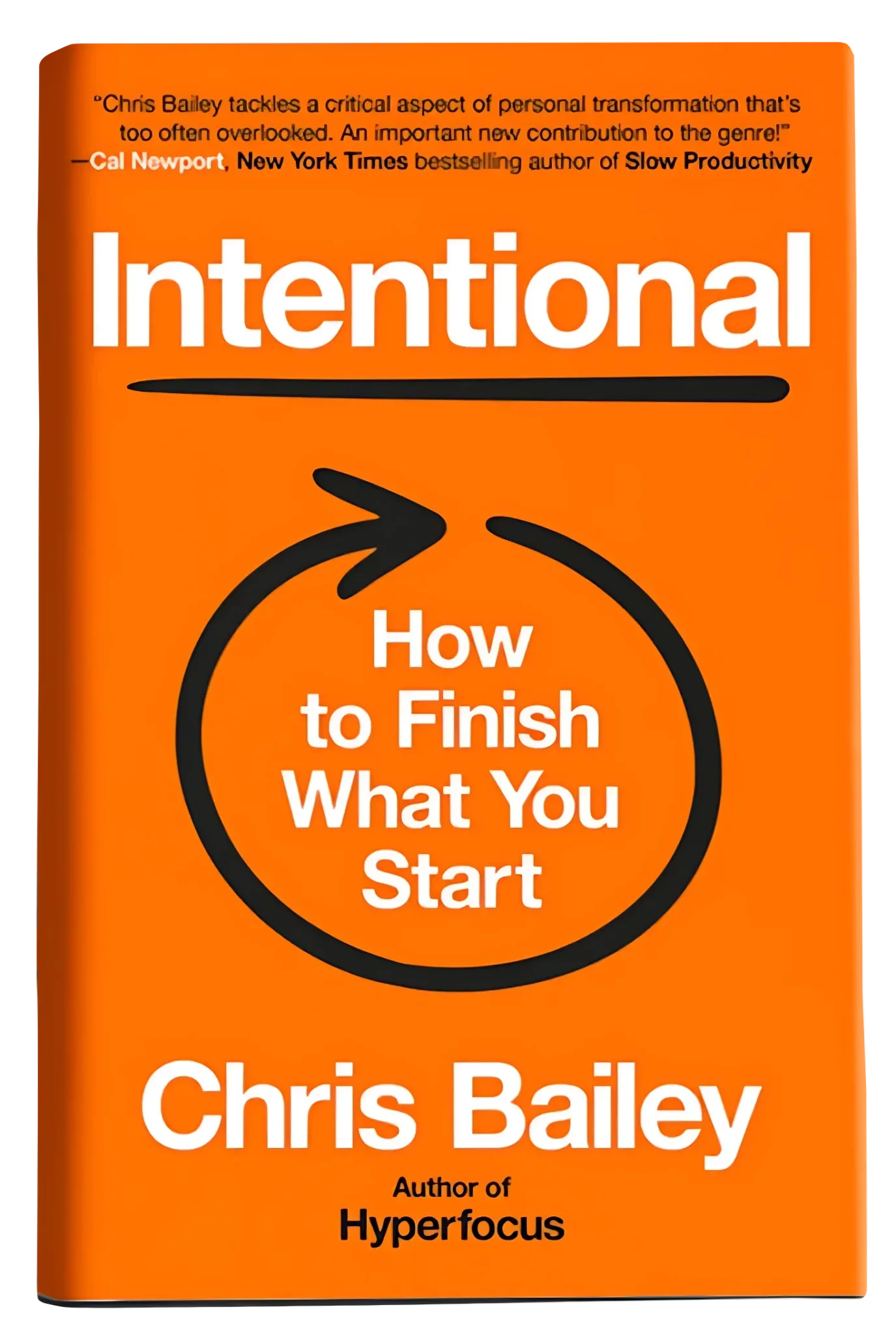
The book
Intentional: How to Finish What You Start is Chris’s research-based guide to following through on your goals, from your values down to your daily intentions.
Dr. Greg Wells is a human physiologist, five-time bestselling author, Senior Scientist Emeritus at SickKids and author of 70+ peer-reviewed papers.
This podcast contains advice and information relating to health and wellness. It should be used to supplement rather than replace the advice of your doctor or another trained health professional. If you know or suspect that you have a health problem, seek your physician’s advice before embarking on any medical program or treatment. All efforts have been made to assure the accuracy of the information contained in this podcast / interview / article as of the date of publication. The author and publisher disclaim liability for any medical or other outcomes that may occur as a result of applying the methods suggested in this material.
