

The Dr. Greg Wells Podcast



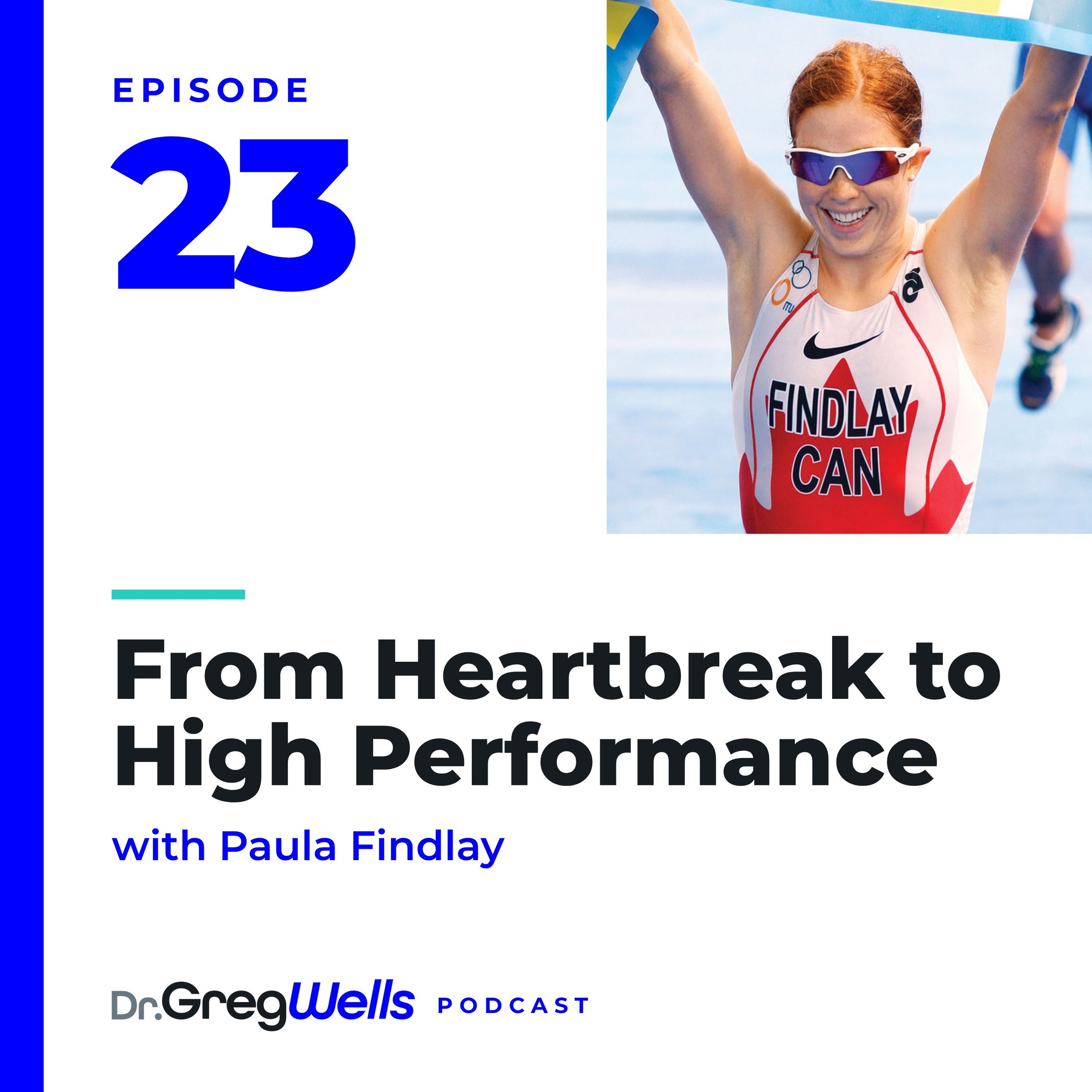
From Heartbreak to High Performance with Paula Findlay
I was commentating at the 2012 London Olympics when Paula Findlay raced the women’s triathlon. She had won five World Triathlon Series races in two seasons, her face was on cereal boxes and billboards across Canada, and she was a favourite for the podium. What almost nobody knew was that she had been injured for about 10 months and had kept training through it. In London she was far back after the swim, dropped off the last pack and was lapped by the leaders. She crossed the line last, in tears, apologizing for letting everyone down.
Her comeback took years, and it was built on something unglamorous. Her coach put her on what he called the get fit plan: 5 kilometres of swimming six days a week with no fancy sets, long easy rides and a run almost every day. Nothing looks hard on paper. The day-in, day-out consistency is the point, because it builds a huge base and keeps her healthy. Tim Gabbett’s review of the training load research explains why. Athletes who are accustomed to high training loads get injured less than athletes who train less, and the biggest injury risk comes from sudden spikes in load. When you build your training steadily, your tissues adapt to the work, which lets you handle more without breaking down. Within months, Paula was winning again at the half-iron distance.