

The Dr. Greg Wells Podcast



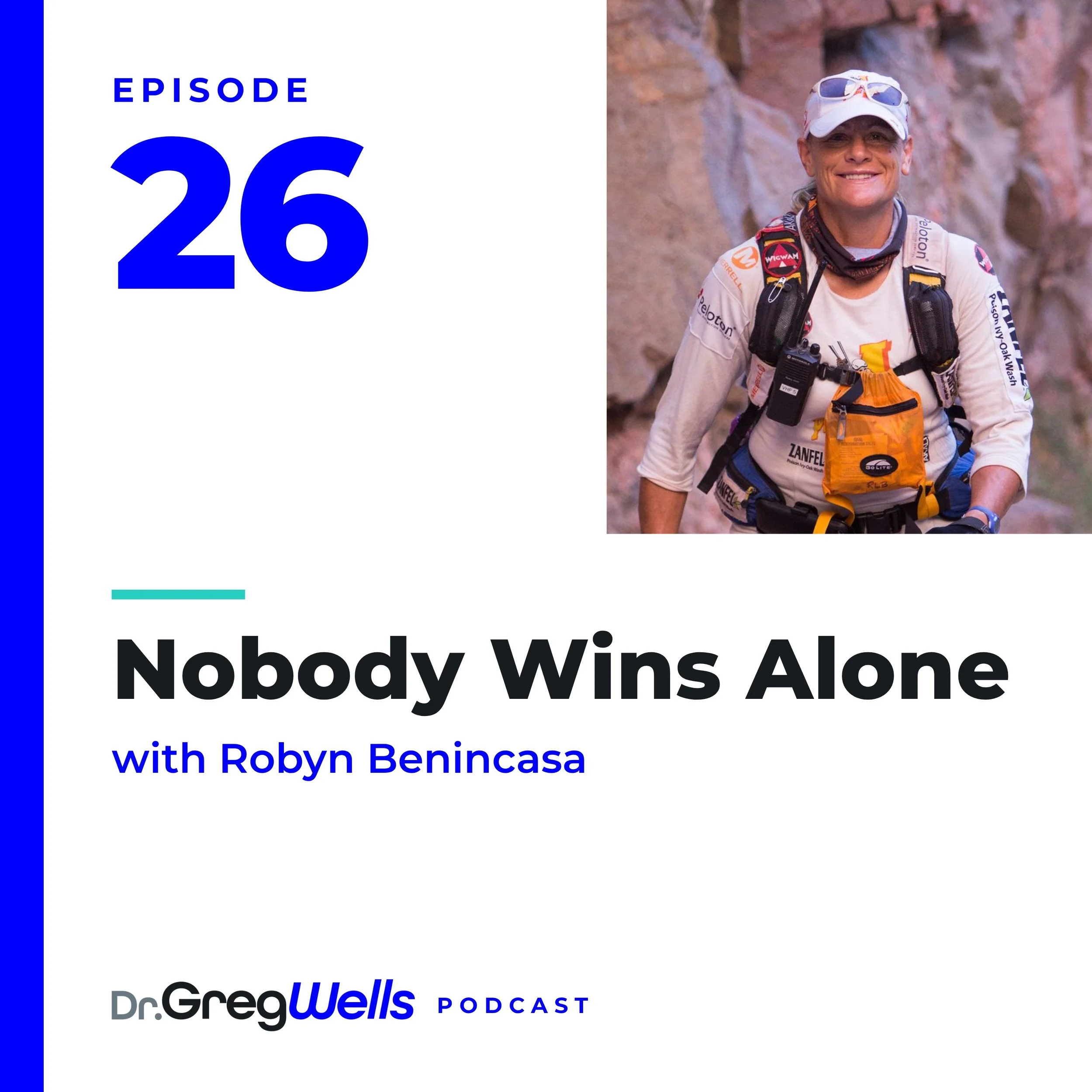
Nobody Wins Alone with Robyn Benincasa
In an adventure race in Ecuador, Robyn Benincasa’s team had to summit a 19,700-foot active volcano after three days with almost no sleep. Robyn was struggling so badly with the altitude that the race doctors almost didn’t let her climb. Then two of her teammates developed high altitude pulmonary edema and had to go back down. In an instant, Robyn went from being the person she thought was holding the team back to the person keeping her team in the race, and she kept climbing because her teammates believed in her. When she hits a low point, she pictures herself 10 days later, sitting in her kitchen or back at the fire station, and asks who she will be talking to: the person who pushed through or the person who quit.
Every time she pushes through, Robyn earns another brick for what she calls her confidence wall. Psychologist Albert Bandura described the same mechanism in his theory of self-efficacy, your belief that you can do what a situation demands. He identified performance accomplishments, the times you actually succeed at something hard, as the most dependable source of that belief, more powerful than encouragement or watching someone else do it. When you finish something difficult, you collect evidence that changes what you expect of yourself next time, which makes you more likely to take on hard things and stick with them. I felt this at my second Ironman. I was tired and blistered coming back to the turnaround and ready to call it. Then my kids yelled, “Go daddy, go,” and I knew I could never tell them to keep going when it gets hard if I bailed. So I turned around and kept running.