
Episode 26 · August 6, 2021 · 81 min



In an adventure race in Ecuador, Robyn Benincasa’s team had to summit a 19,700-foot active volcano after three days with almost no sleep. Robyn was struggling so badly with the altitude that the race doctors almost didn’t let her climb. Then two of her teammates developed high altitude pulmonary edema and had to go back down. In an instant, Robyn went from being the person she thought was holding the team back to the person keeping her team in the race, and she kept climbing because her teammates believed in her. When she hits a low point, she pictures herself 10 days later, sitting in her kitchen or back at the fire station, and asks who she will be talking to: the person who pushed through or the person who quit.
Every time she pushes through, Robyn earns another brick for what she calls her confidence wall. Psychologist Albert Bandura described the same mechanism in his theory of self-efficacy, your belief that you can do what a situation demands. He identified performance accomplishments, the times you actually succeed at something hard, as the most dependable source of that belief, more powerful than encouragement or watching someone else do it. When you finish something difficult, you collect evidence that changes what you expect of yourself next time, which makes you more likely to take on hard things and stick with them. I felt this at my second Ironman. I was tired and blistered coming back to the turnaround and ready to call it. Then my kids yelled, “Go daddy, go,” and I knew I could never tell them to keep going when it gets hard if I bailed. So I turned around and kept running.
“I like earning those bricks and my wall is pretty high.”
Key takeaways
Earn a brick for your confidence wall. Every time you finish something hard, you build evidence that you can do the next hard thing.
Picture yourself 10 days from now. When you want to quit, ask who you will be talking to after the event: the person who pushed through or the person who quit.
Know an injury from an excuse. Walking on a broken ankle is a bad idea. Letting yourself off the hook is something else, and deep down you usually know which one you are facing.
Lean on your team. In Robyn’s best races, someone was always there with a tow line. The strength of the team matters more than the strength of any one person.
Cover fit, fast, force and flexibility. Thirty minutes each week of cardio, intervals, strength and mobility is a simple way to cover your bases.
Your 1% Tip
Pick one hard thing you have been putting off, finish it this week, and count it as a brick on your confidence wall.
About Robyn
Robyn Benincasa is a world champion adventure racer, a 10-time Ironman finisher, a three-time Guinness World Record holder in endurance paddling and a San Diego firefighter. She founded the Project Athena Foundation, which helps survivors of medical and traumatic setbacks reach athletic goals and adventurous dreams, and she was named a CNN Hero in 2014.
Resources
Project Athena Foundation: the foundation Robyn started to help survivors take on adventures and athletic goals.
Bandura, 1977: self-efficacy and the sources of the belief that you can succeed, published in Psychological Review.
Get the science in your inbox
Wells Performance Insights is my newsletter. I take the science of your body and brain and turn it into a 1% Tip you can use the same day. Sign up for Wells Performance Insights.
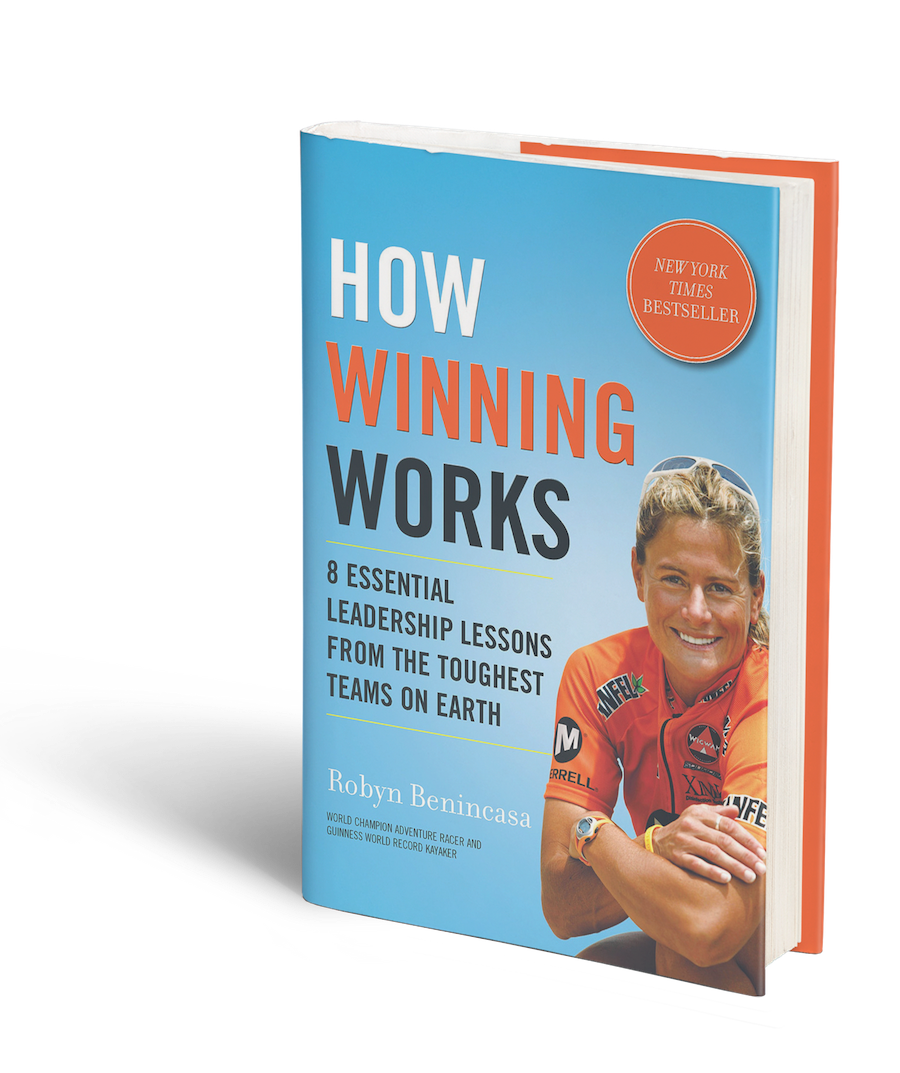
The book
How Winning Works is Robyn’s book on the leadership and teamwork lessons she learned racing with the toughest teams on earth. Find the book.
Dr. Greg Wells is a human physiologist, five-time bestselling author, Senior Scientist Emeritus at SickKids and author of 70+ peer-reviewed papers.
This podcast contains advice and information relating to health and wellness. It should be used to supplement rather than replace the advice of your doctor or another trained health professional. If you know or suspect that you have a health problem, seek your physician’s advice before embarking on any medical program or treatment. All efforts have been made to assure the accuracy of the information contained in this podcast / interview / article as of the date of publication. The author and publisher disclaim liability for any medical or other outcomes that may occur as a result of applying the methods suggested in this material.
