

The Dr. Greg Wells Podcast



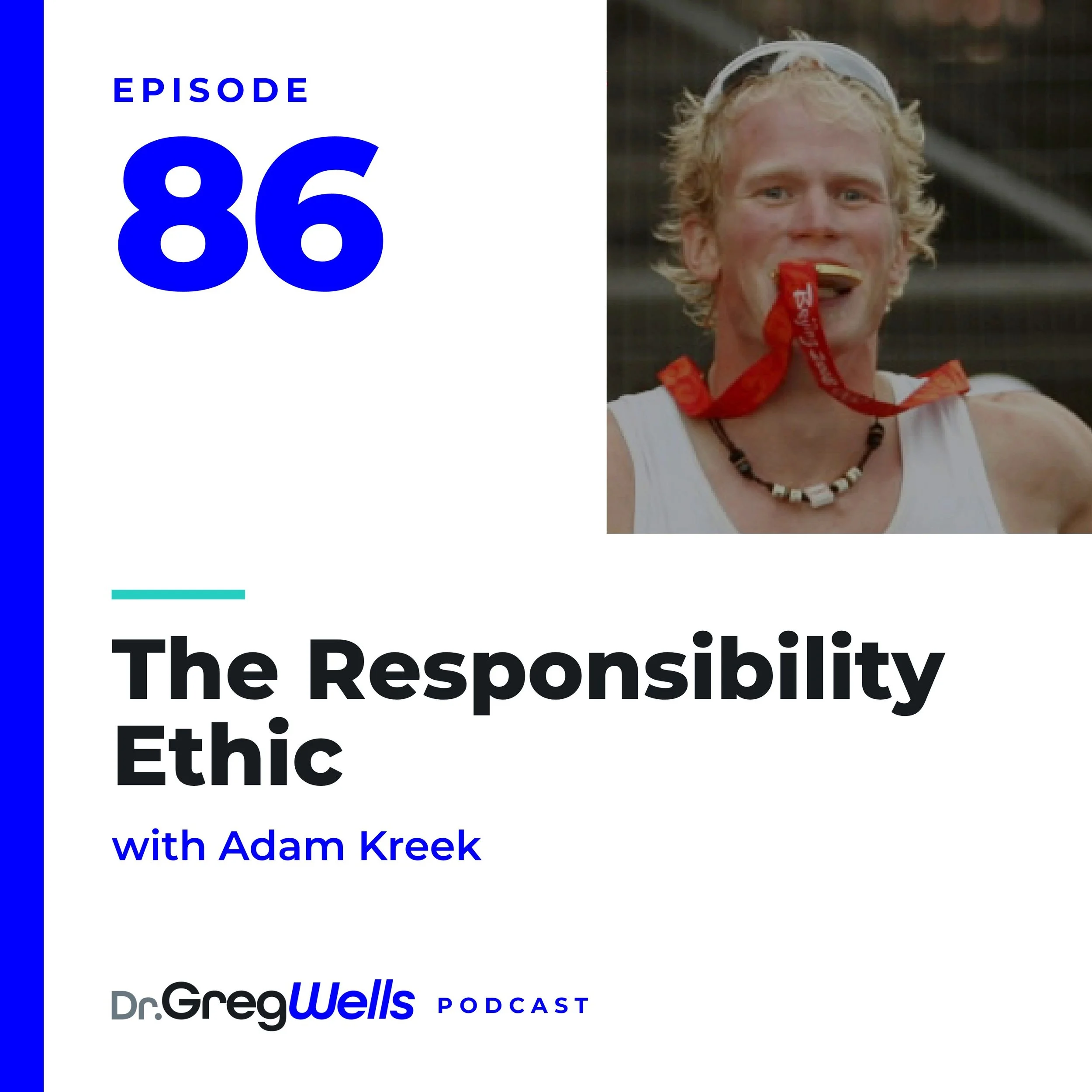
The Responsibility Ethic with Adam Kreek
When Adam Kreek described the last stretch of the men’s eight final at the Beijing Olympics, I watched him turn red and start breathing hard as he relived it, and I had chills. Four years earlier in Athens, his crew had arrived as favourites and fallen apart. In Beijing, deep in the pain of the final strokes, the coxswain called out that five more strokes would make them Olympic champions, and Adam went from believing he could not take another stroke to taking all five. They won gold.
Adam’s coach used to tell the crew that even in the depths of pain and doubt, they were only four-fifths dead. The physiology supports him. In a study of fit young men cycling at 80 percent of their peak aerobic power, Samuele Marcora found that at the moment they quit from exhaustion, their legs could still produce about three times the required power in a five-second all-out effort. Your perception of effort, more than your muscles, tells you when to stop. When you train close to your limit in a controlled way, you learn that you have more in reserve than you feel. Adam pairs that with a lesson from Athens: give yourself space to process a failure physically, often through long, steady aerobic exercise, before you jump to the lessons.
The Coping Crisis with Dr. Bill Howatt
When I speak in schools, I have been pushing the idea of a failure project: pick something you have almost no chance of achieving, go all out, then celebrate the failure and share it. I have failed more times than I can count, and many of my biggest steps forward came out of those moments. Dr. Bill Howatt agreed immediately. He has spent decades working in mental health and addictions, including a postdoctoral fellowship at UCLA’s School of Medicine, and now helps workplaces build mental health on purpose. He wrote The Coping Crisis because so many people have no mental illness at all and are simply struggling with being human, without ever having been taught how to cope.
Bill separates mental health from mental illness, and Corey Keyes’s research supports that split. In a national sample of more than 3,000 American adults, measures of mental health and measures of mental illness formed two related but distinct dimensions, so the absence of an illness does not guarantee that you are flourishing. Bill’s framework starts with a baseline, just as you would check your blood pressure, then builds developmental coping skills such as emotional regulation, self-efficacy and a sense of control, and finishes with daily habits that act like brushing your teeth for your mind. When you practise those skills every day, you give yourself more capacity to handle stress before it accumulates.