
Episode 37 · October 22, 2021 · 57 min



When I speak in schools, I have been pushing the idea of a failure project: pick something you have almost no chance of achieving, go all out, then celebrate the failure and share it. I have failed more times than I can count, and many of my biggest steps forward came out of those moments. Dr. Bill Howatt agreed immediately. He has spent decades working in mental health and addictions, including a postdoctoral fellowship at UCLA’s School of Medicine, and now helps workplaces build mental health on purpose. He wrote The Coping Crisis because so many people have no mental illness at all and are simply struggling with being human, without ever having been taught how to cope.
Bill separates mental health from mental illness, and Corey Keyes’s research supports that split. In a national sample of more than 3,000 American adults, measures of mental health and measures of mental illness formed two related but distinct dimensions, so the absence of an illness does not guarantee that you are flourishing. Bill’s framework starts with a baseline, just as you would check your blood pressure, then builds developmental coping skills such as emotional regulation, self-efficacy and a sense of control, and finishes with daily habits that act like brushing your teeth for your mind. When you practise those skills every day, you give yourself more capacity to handle stress before it accumulates.
“The answer to your question is awareness, accountability and action.”
Key takeaways
Know your baseline. You would not guess your blood pressure. Measure how you are coping so you know where you stand.
Build mental health on purpose. Mental health is something you work on every day, whether or not you ever have a diagnosis.
Learn the core coping skills. Emotional regulation, self-efficacy and a sense of control are skills you can learn, like reading or math.
Practise daily mental hygiene. Breathing, journaling, exercise, gardening or time alone: find the habits that clear your head and do them every day.
Start a failure project. Pick something you will probably not achieve, go all out and learn from the attempt.
Your 1% Tip
Tonight, write down one thing you did today with the intention of supporting your mental health. If the list is empty, pick one small habit for tomorrow.
About Bill
Dr. Bill Howatt is an international keynote speaker, author and consultant on workplace mental health and psychological health and safety. He completed a postdoctoral fellowship in addictive behaviours at UCLA’s School of Medicine and has led research on workforce mental health and productivity for major employers. His books include The Coping Crisis, The Cure for Loneliness, Stop Hiding and Start Living and No Regrets.
Resources
billhowatt.com: Bill’s official website.
Keyes, 2005: mental health and mental illness as two distinct dimensions, published in the Journal of Consulting and Clinical Psychology.
Get the science in your inbox
Wells Performance Insights is my newsletter. I take the science of your body and brain and turn it into a 1% Tip you can use the same day. Sign up for Wells Performance Insights.
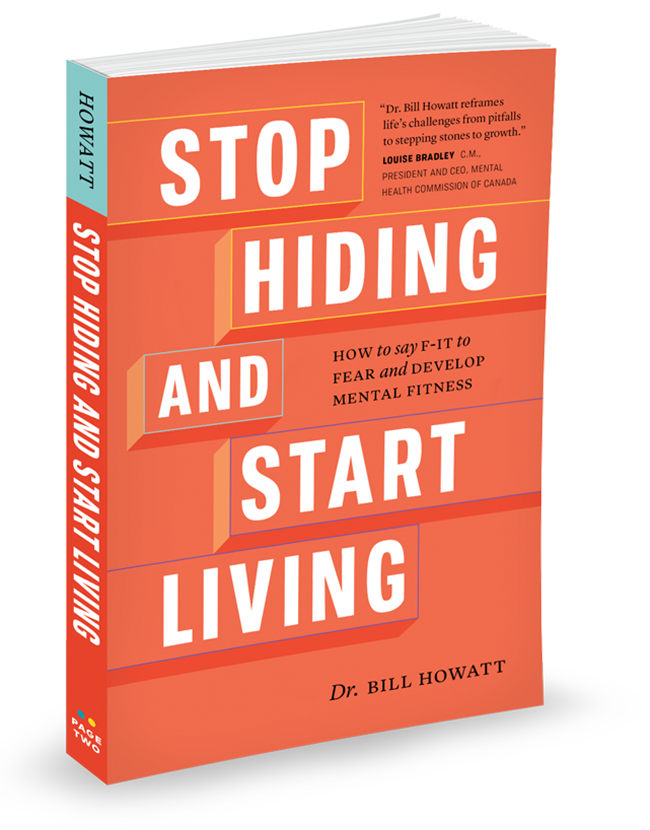
The books
Bill’s books include The Coping Crisis and his trilogy The Cure for Loneliness, Stop Hiding and Start Living and No Regrets. Find his books.
Dr. Greg Wells is a human physiologist, five-time bestselling author, Senior Scientist Emeritus at SickKids and author of 70+ peer-reviewed papers.
This podcast contains advice and information relating to health and wellness. It should be used to supplement rather than replace the advice of your doctor or another trained health professional. If you know or suspect that you have a health problem, seek your physician’s advice before embarking on any medical program or treatment. All efforts have been made to assure the accuracy of the information contained in this podcast / interview / article as of the date of publication. The author and publisher disclaim liability for any medical or other outcomes that may occur as a result of applying the methods suggested in this material.
