

The Dr. Greg Wells Podcast



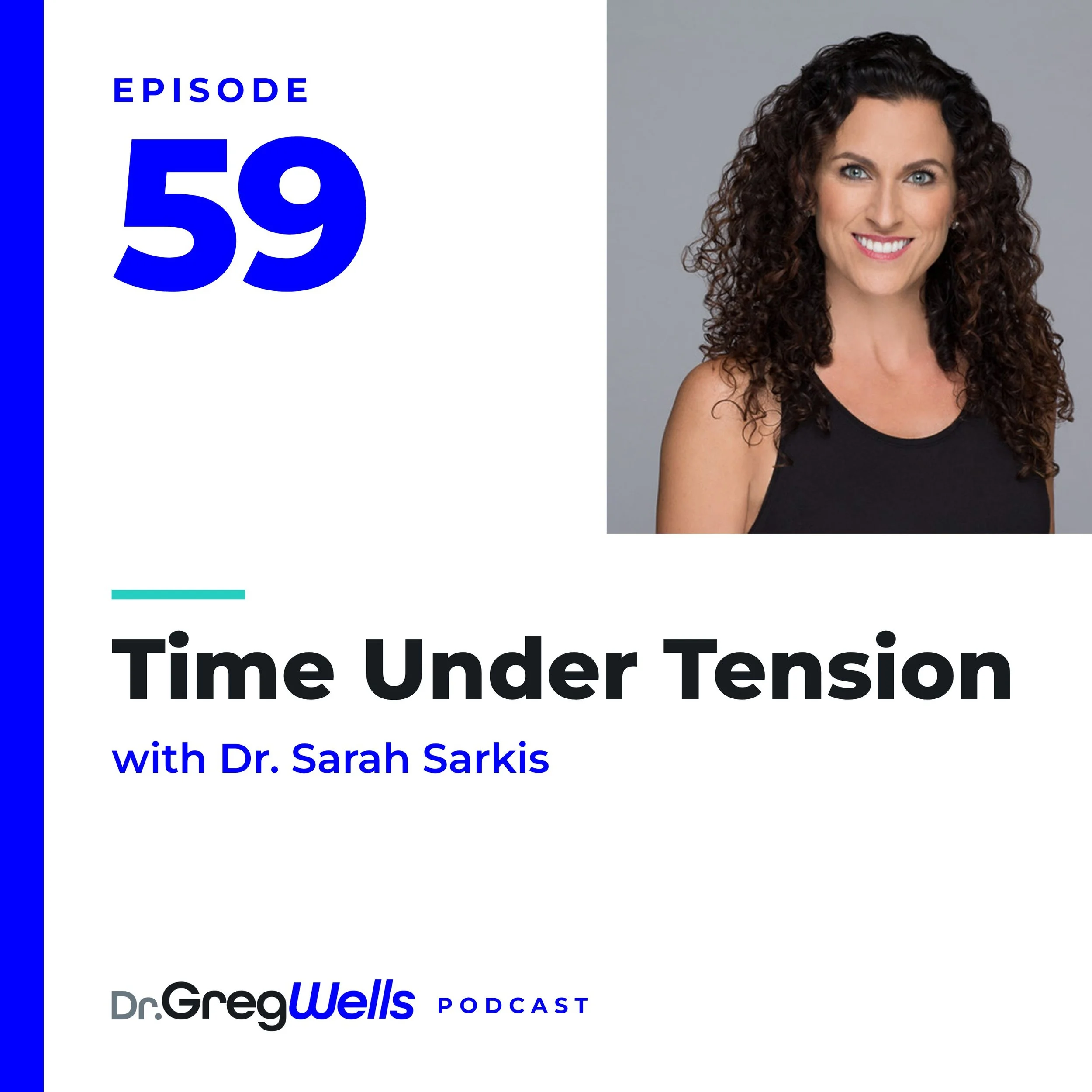
Time Under Tension with Dr. Sarah Sarkis
The morning I recorded this conversation, I called myself an idiot right before the call and again during it. As a physiologist, I think about time under tension in the weight room: how long your muscle actually works against a load. Dr. Sarah Sarkis, a psychologist and performance consultant, applies that same idea to your inner life. Her clients will happily write pages of answers to hard questions, then push back when she asks them to sit still with themselves for 15 minutes.
Sarah calls this emotional time under tension. If you can sit with a hard feeling for a minute today, you try for 90 seconds tomorrow, and you gradually widen the range of emotions you can tolerate before you fall back on an old pattern. Muscle responds the same way: when researchers at McMaster University had men lift a light weight slowly, keeping the muscle under tension longer, muscle protein synthesis rose more than when they lifted it quickly. Once you can observe your self-talk, Sarah asks you to meet what you hear with kindness. In four experiments at the University of California, Berkeley, Juliana Breines and Serena Chen found that people who responded to a failure with self-compassion studied longer for a retest and felt more motivated to make amends for a mistake. When you treat a setback the way you would treat a friend’s, you feel safe enough to look at what went wrong, which makes you more likely to fix it.
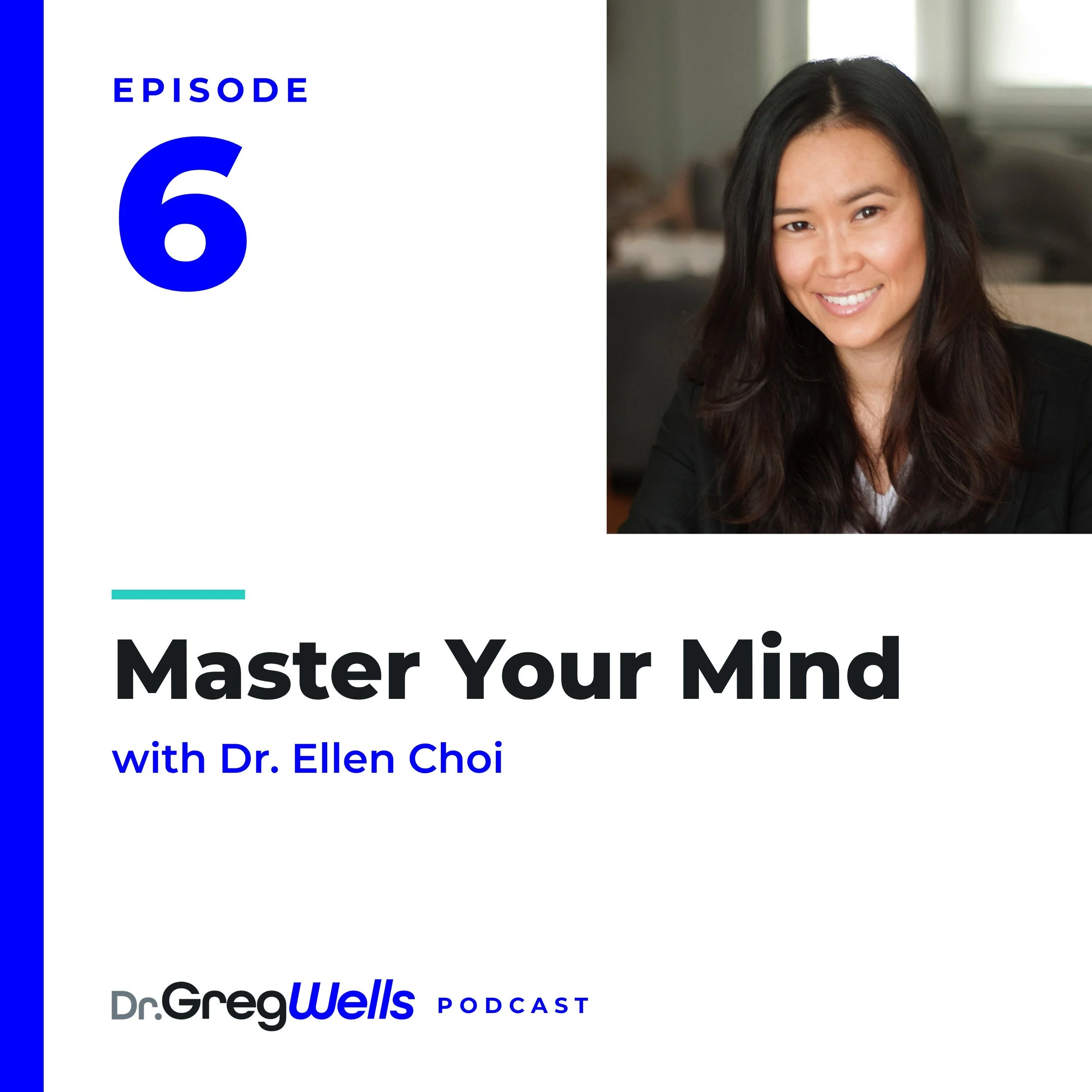
Master Your Mind with Dr. Ellen Choi
For her PhD, Ellen Choi took mindfulness into a hospital, a place where an unreported mistake can hurt a patient. Staff did an eight-week mindfulness program, an eight-week Pilates program or no training at all, and Ellen studied how they responded when they realized they had made an error. She expected the story to be about attention. What came through in her interviews was emotion. The usual inner voice after a mistake is harsh and fearful: how could I be so stupid, and what will they think of me? People who had trained in mindfulness spoke to themselves in a more human way. They could acknowledge that the mistake was frustrating and that everybody makes them, which left them free to stay with the error, report it and learn from it.
Ellen describes two ways your brain refers to itself. In the default mode, your mind drifts into the past or the future, stays focused on you and tends to be critical. In the experiential mode, your attention rests on what your senses are taking in right now, the way a hockey player in flow feels the stick and reads the ice. Researchers in Toronto saw this split in the brain. After an eight-week mindfulness course, people who focused on present-moment experience showed larger reductions in the midline regions tied to narrative self-talk and more activity in regions that track body sensation (Farb et al., 2007). The kinder inner voice pays off too. In experiments at UC Berkeley, people encouraged to treat a failed test with self-compassion spent more time studying for the next one than people given a self-esteem boost (Breines and Chen, 2012).