

The Dr. Greg Wells Podcast



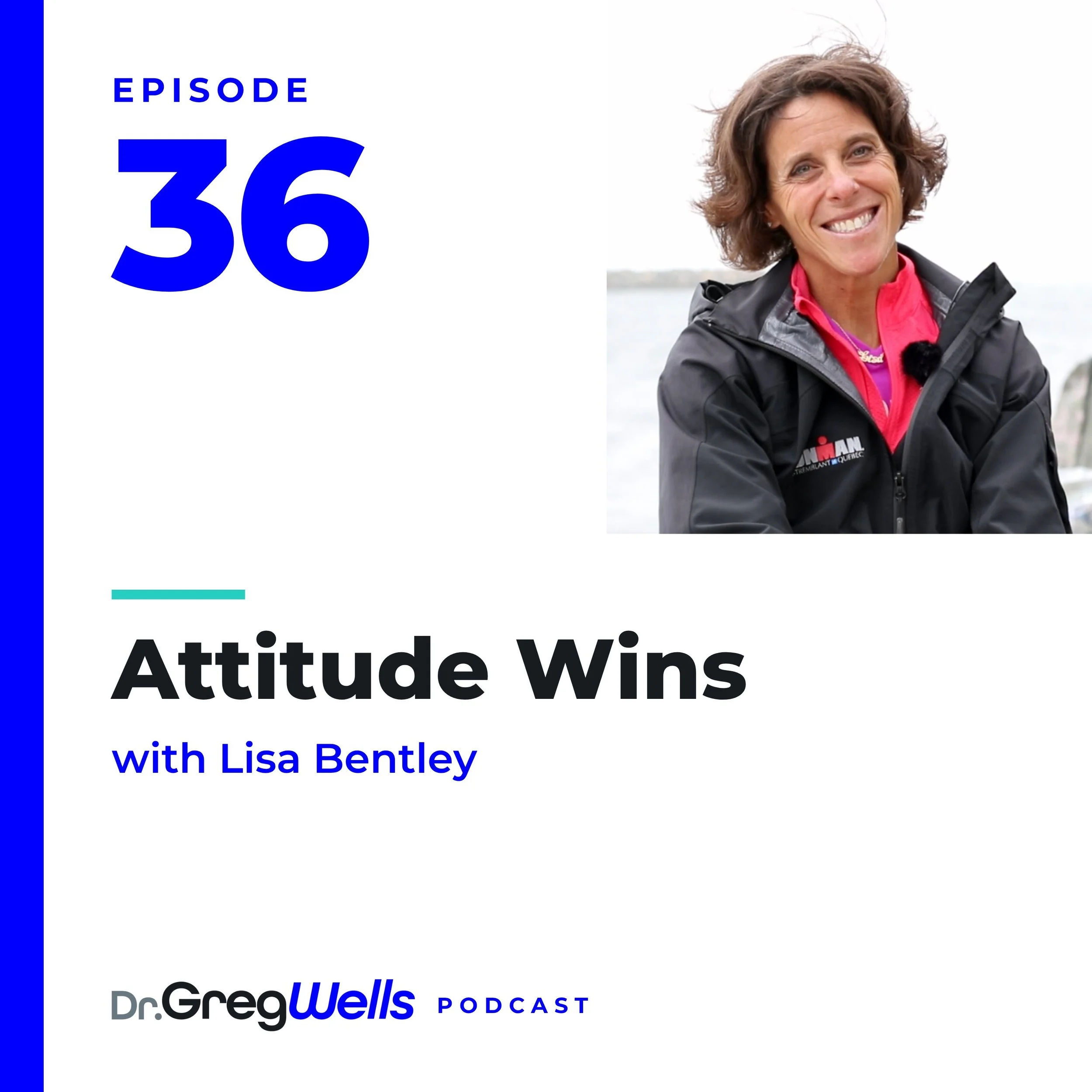
Attitude Wins with Lisa Bentley
In 2007, Lisa Bentley could barely put on a shoe. An Achilles injury had forced her to walk half the marathon at Ironman Australia, and as Ironman Canada approached she was running only every 48 hours, with a longest run of 90 minutes. The day before the race, a stranger handed her a photo of Terry Fox dipping his foot in the ocean at the start of the Marathon of Hope, with his words on the back: one step at a time, one telephone pole at a time, one mile at a time. Lisa repeated that line all day and won the race.
Lisa’s race-week preparation was an extra half hour in bed each morning, rehearsing the entire course in her mind, including the problems: a flat tire, dropped nutrition, losing the swim pack, falling 10 minutes behind. For each one she pictured exactly how she would respond. Psychologists call this kind of if-then planning an implementation intention. In a meta-analysis of 94 studies, Peter Gollwitzer and Paschal Sheeran found that people who formed if-then plans reached their goals substantially more often than people who only set the goal. When you decide in advance that if a specific problem happens you will do a specific thing, the situation itself triggers your response, so you spend less energy deciding under pressure.
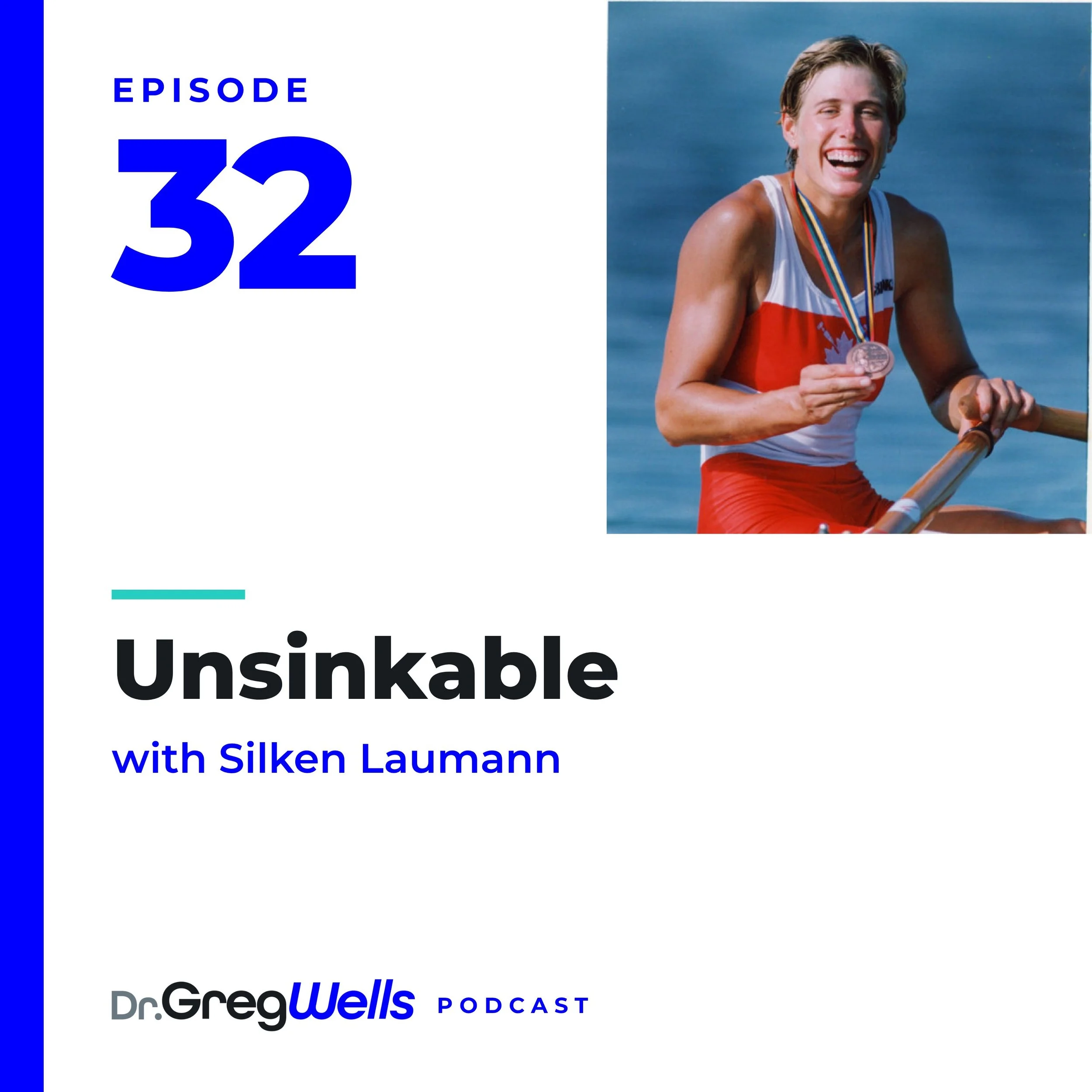
Unsinkable with Silken Laumann
In 1992 I didn’t make the Olympic team, so I went to Barcelona to work with CTV, and I watched Silken Laumann do something that still challenges what I know about physiology. Ten weeks before the Games, while she was the reigning world champion in single sculls, another boat hit hers at a regatta in Germany. Her wooden boat shattered and drove about 200 pieces of wood into her lower right leg, breaking her ankle and shredding the muscle. Her doctor told her she might never row competitively again. After five operations and a skin graft she was still on crutches three weeks before the Olympics, and she walked with a cane in Barcelona. Then she raced and won the bronze medal.
Silken also talks openly about her mental health and the day she finally reached out to a friend, who connected her with a counsellor. Today she watches her mind the way she watches her body. When a stressful phone call pushes her stress up, she tunes in and names it: I am feeling angry. Naming a feeling has a measurable effect in your brain. Matthew Lieberman and his colleagues at UCLA scanned people while they looked at angry and fearful faces. When people chose a word to label the emotion they saw, activity in the amygdala, your brain’s alarm system, dropped, and activity rose in the right ventrolateral prefrontal cortex. When you put a feeling into words, your prefrontal cortex helps quiet the alarm, which gives you a moment to choose your next move.
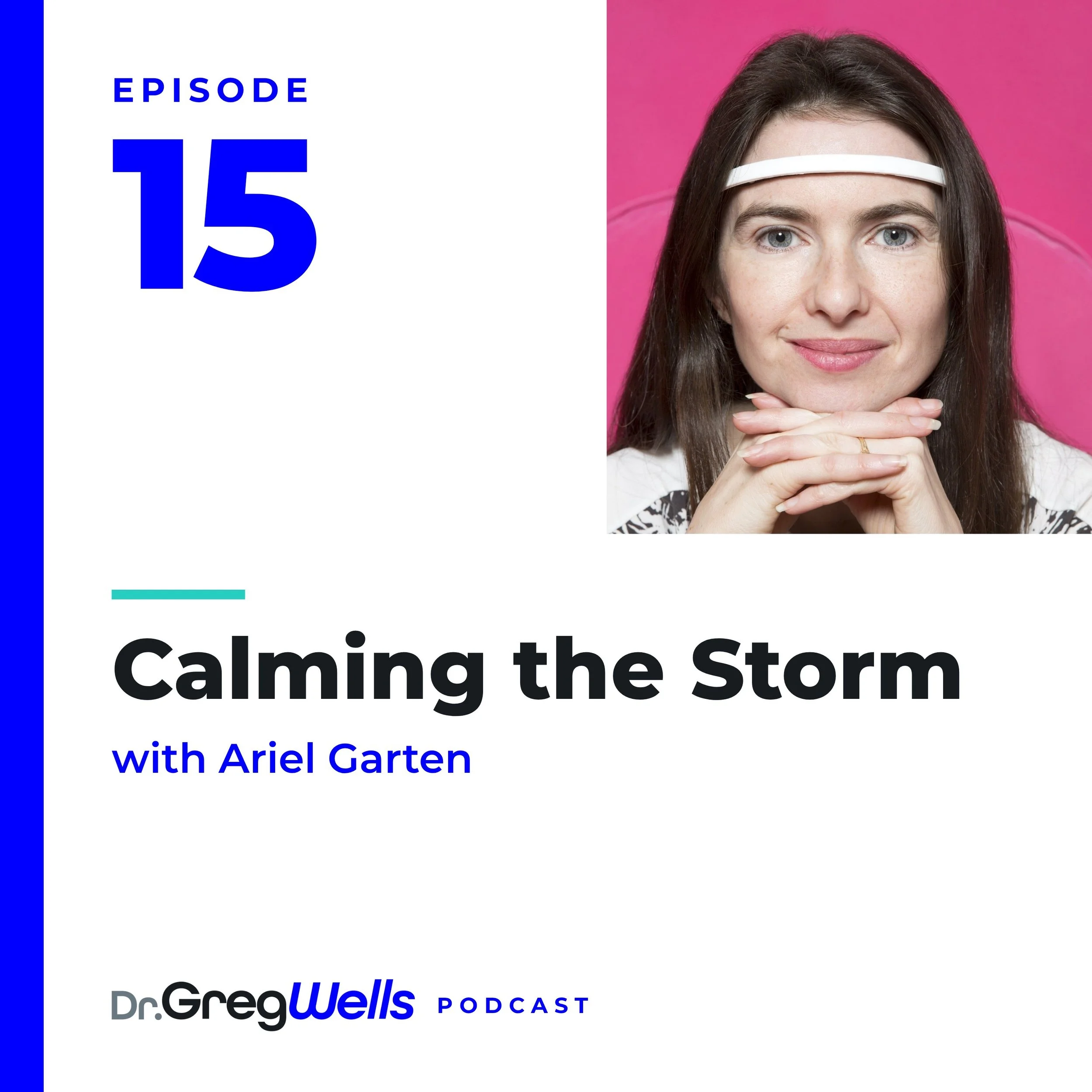
Calming the Storm with Ariel Garten
At the Vancouver 2010 Winter Olympics, Ariel Garten and her co-founders built an installation that let visitors control the lights on Toronto’s CN Tower, Niagara Falls and the Parliament buildings in Ottawa using only their brain activity, thousands of kilometres away. On the last night of the Games, Ariel’s parents drove to Niagara Falls. She sat down in the installation, looked up at the live feed and, one by one, turned the lights on the Falls pink for her mom. Years later, a concussion gave her a very different lesson in her own brain. She found that meeting each new symptom with curiosity, instead of anxiety, kept her out of the stress spiral that made everything harder.
Ariel’s favourite tool for nerves before a talk is to reinterpret the feeling. The rising energy in your body before you walk on stage can be read as nervousness or as excitement. Alison Wood Brooks at Harvard Business School tested exactly this. People who said “I am excited” before singing karaoke, giving a speech or doing difficult math performed better than people who tried to calm down, and they felt more excited. Anxiety and excitement are both high-arousal states, so it is easier to move from one to the other than to force yourself all the way down to calm. When you name the feeling as excitement, you shift toward an opportunity mindset, which lets you channel that energy into the performance.
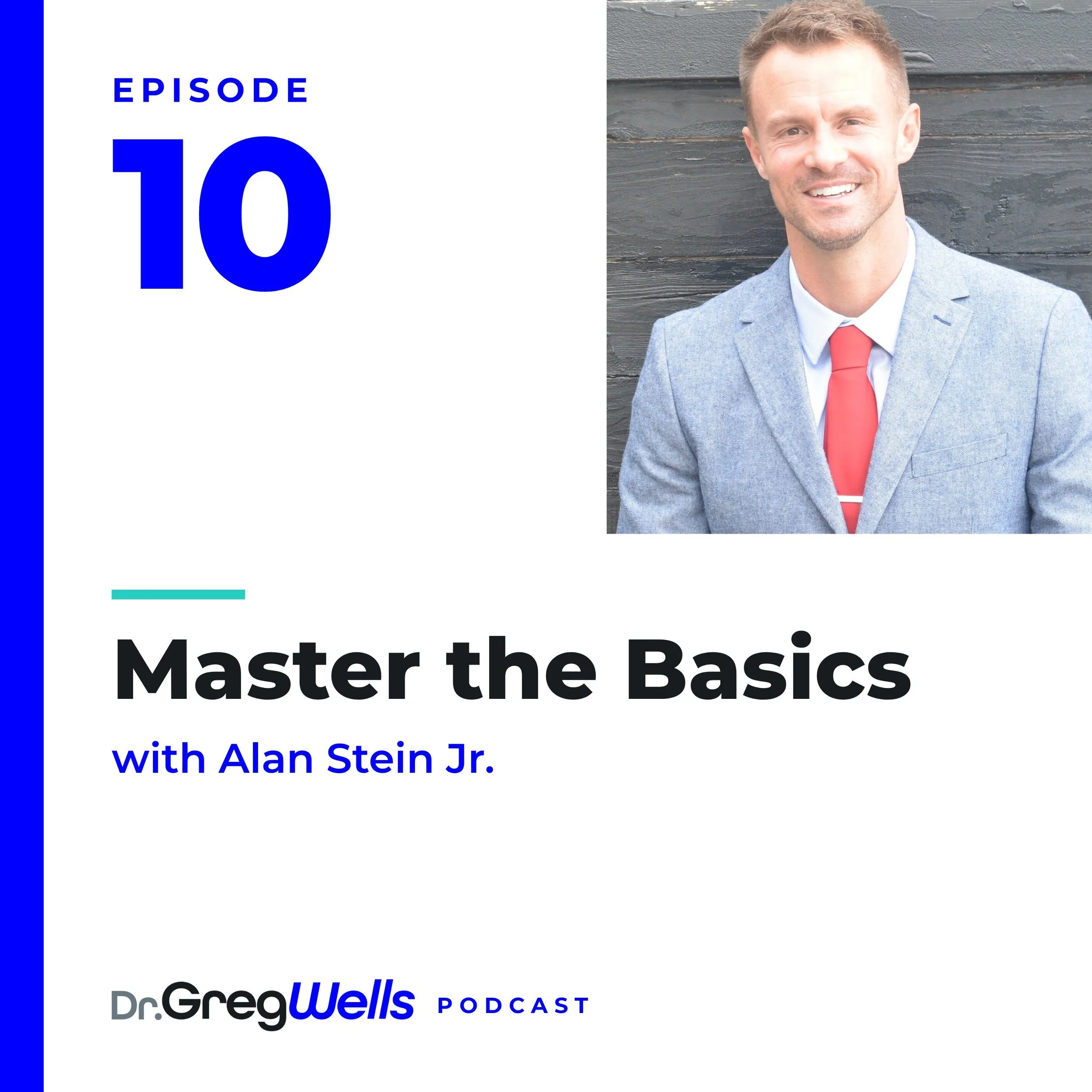
Master the Basics with Alan Stein Jr.
In 2007, Nike launched a series of summer skills academies to put development back at the centre of youth basketball, and the first was built around Kobe Bryant. Alan Stein Jr., then a basketball performance coach, got to watch one of Kobe’s private workouts. The intensity was what he expected. What surprised him was how much of the session Kobe gave to the basics. In a workout of about two and a half hours, Kobe would spend 30 to 45 minutes on fundamentals like footwork and pivots before he moved on to advanced moves. For Alan, that settled it: if the best player in the world commits to mastering the basics every day, the rest of us can too.
Kobe’s focus on the basics is also a lesson in attention. Alan’s rule for living in the present is simple: be where your feet are. Your brain makes that harder than it sounds. When Harvard researchers Matthew Killingsworth and Daniel Gilbert used an iPhone app to sample people’s thoughts in real time, minds were wandering 46.9% of the time, and people were less happy while their minds wandered than while they were focused on what they were doing (Killingsworth and Gilbert, 2010). Every time you bring your attention back to the task in front of you, you practise the same skill Kobe brought to a simple pivot drill.
Master Your Mind with Dr. Ellen Choi
For her PhD, Ellen Choi took mindfulness into a hospital, a place where an unreported mistake can hurt a patient. Staff did an eight-week mindfulness program, an eight-week Pilates program or no training at all, and Ellen studied how they responded when they realized they had made an error. She expected the story to be about attention. What came through in her interviews was emotion. The usual inner voice after a mistake is harsh and fearful: how could I be so stupid, and what will they think of me? People who had trained in mindfulness spoke to themselves in a more human way. They could acknowledge that the mistake was frustrating and that everybody makes them, which left them free to stay with the error, report it and learn from it.
Ellen describes two ways your brain refers to itself. In the default mode, your mind drifts into the past or the future, stays focused on you and tends to be critical. In the experiential mode, your attention rests on what your senses are taking in right now, the way a hockey player in flow feels the stick and reads the ice. Researchers in Toronto saw this split in the brain. After an eight-week mindfulness course, people who focused on present-moment experience showed larger reductions in the midline regions tied to narrative self-talk and more activity in regions that track body sensation (Farb et al., 2007). The kinder inner voice pays off too. In experiments at UC Berkeley, people encouraged to treat a failed test with self-compassion spent more time studying for the next one than people given a self-esteem boost (Breines and Chen, 2012).
Compete Against Yesterday with Jake Thompson
Jake Thompson grew up a smaller kid in Texas, where football is close to a religion, and competition was how he proved he could outwork more talented opponents. Then, like every athlete, he had to retire from the game he loved. For years afterward he compared himself to everyone around him and everyone he saw online, and it drained him. The shift came on a run. He pictured a 100-metre sprinter who glances left and right to check on the rest of the field, and how that glance costs speed. Jake realized he had been spending his life looking into other people’s lanes. He decided to compete against yesterday’s best instead, and that idea became Compete Every Day, a brand he started in 2011 by selling T-shirts out of the trunk of his car behind a CrossFit gym.
Comparison is built into how you judge yourself, and social media turns up the volume. Researchers at the University of Toledo found that people who used Facebook most often had lower self-esteem, and that the link ran through more frequent upward comparisons with people who seemed to be doing better. In a follow-up experiment, simply viewing a profile with an active social life and healthy habits lowered people’s self-esteem in the moment (Vogel et al., 2014). You see the highlight reel of someone else’s life next to the full, unedited version of your own. When you compete against your own yesterday, you compare yourself with someone whose whole story you know, and you control every input.
Build a Better Brain with Dr. Brynn Winegard
A personal trainer Dr. Brynn Winegard knows had clients who simply did not want to exercise, so he stopped asking them to run. He asked them to promise one thing instead. Every day, they would put on their workout clothes, tie their shoes, pull their hair back, put their earbuds in, walk out the front door and stand in the driveway. That was the whole commitment. Brynn loves the story because it captures what she teaches about motivation: starting is the hard part. Once you are dressed and standing in the driveway, the first step comes easily, and a little progress makes the next step easier still.
Brynn applies the same thinking to hard emotions. Rather than repress fear, she suggests you transform it: name it, normalize it and point its energy toward action. Researchers at Harvard tested a version of this with students preparing for the GRE. Students who were told that the physical arousal they feel before a test can help performance scored higher on the math section, both in a practice session and on the real exam one to three months later (Jamieson et al., 2010). Habits build one repetition at a time. In a study of 111 new gym members, it took at least four workouts a week for about six weeks before exercise became a habit, and doing it consistently was the strongest predictor of success (Kaushal and Rhodes, 2015).