In the previous article, we explored how breathing activates the vagus nerve and shifts your nervous system from fight-or-flight to rest-and-recover mode. Now, let's explore another powerful tool for emotional regulation: cold exposure. It sounds counterintuitive, but cold water actually trains your body to handle stress better. The discomfort is the point.
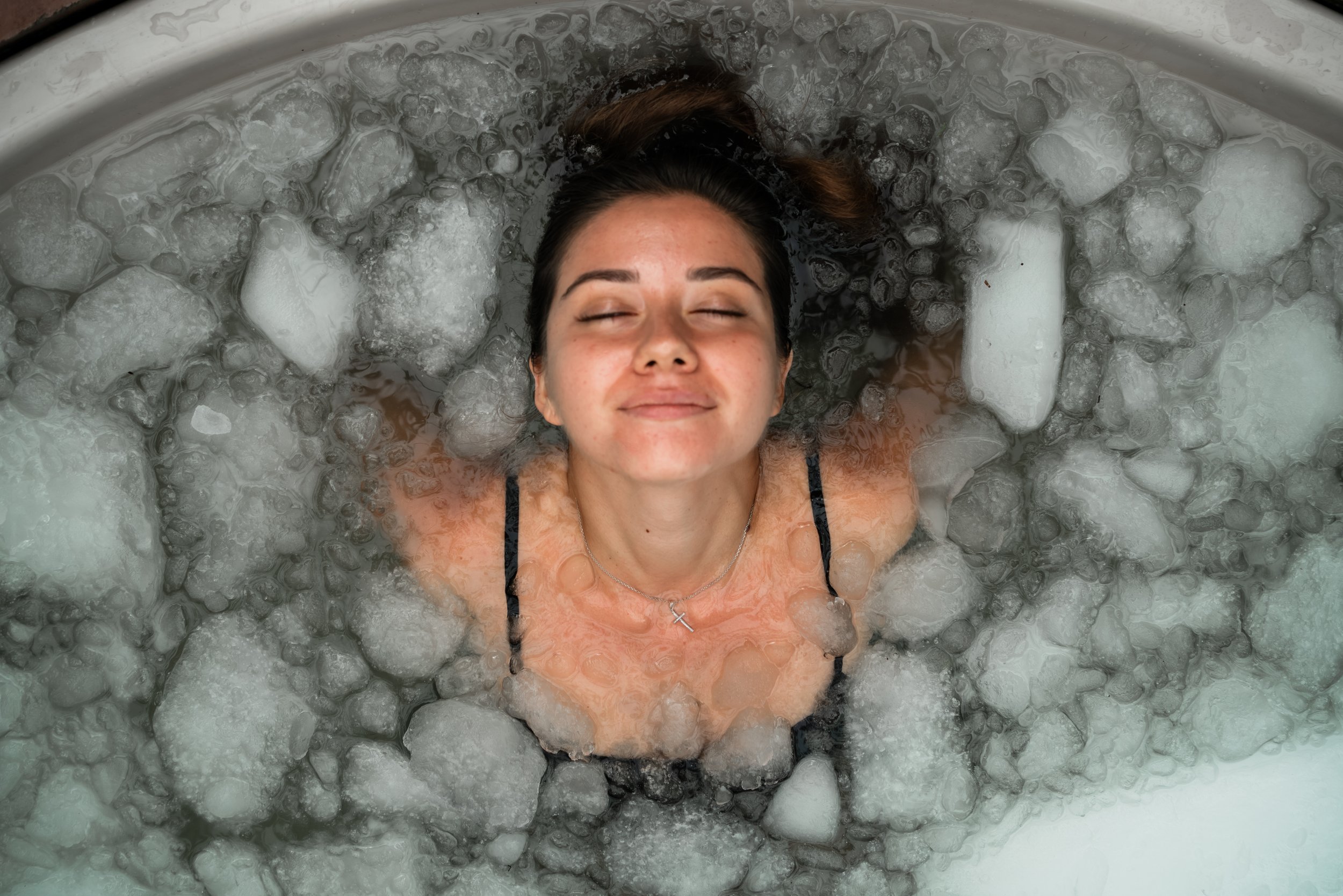
Cold Water Therapy: The Science
The Wim Hof Method combines cold exposure with breathwork and commitment. A 2024 systematic review found that it may reduce inflammation: it raises epinephrine, which increases the anti-inflammatory messenger interleukin-10 and lowers pro-inflammatory cytokines [1]. In a 90-day randomized study, people who took a daily cold shower developed higher antibody levels than people who took hot showers [2]. Cold water also speeds recovery: a meta-analysis of 52 studies found that cold-water immersion after hard exercise restored muscular power faster and reduced muscle soreness 24 hours later [3].
Cold water also trains your stress response. It works through a principle called hormesis: a small, controlled dose of stress, followed by recovery, drives adaptations that leave you better able to handle the next stressor [5]. The same principle explains the benefits of exercise, fasting and heat. A short cold plunge is a dose you can adapt to. Long, extreme exposure does harm.
What Happens to Your Mind and Body During Cold Water Immersion
The moment cold water hits your skin, your body launches into action. Your sympathetic nervous system fires, triggering what researchers call the “cold shock response”: a gasp, rapid breathing and a jump in heart rate [6]. Noradrenaline surges into your bloodstream, which heightens your alertness and sharpens your focus.
In one small study, young men who spent an hour in 14°C water experienced a dramatic neurochemical shift: dopamine rose by 250% and noradrenaline by 530% [7]. But you don’t need to sit in cold water for an hour to benefit (in fact, I strongly recommend against that). Another small study found that just 5 minutes of head-out immersion at 20°C changed how large brain networks interact, and participants felt more active, alert and attentive, and less distressed and nervous [8]. Regular cold exposure also recruits brown fat, a tissue that burns energy to produce heat: ten days of cold acclimation increased brown fat activity and non-shivering heat production [9], and experienced winter swimmers show enhanced cold-induced heat production [10].
Here's where it gets interesting for your stress response. Healthy women who took 20-second plunges in 0 to 2°C water three times a week for 12 weeks adapted in a telling way. From week four onward, their cortisol 35 minutes after a plunge was significantly lower than in week one, while noradrenaline still rose two- to threefold with every plunge [11]. Your body learns to treat the cold as a manageable challenge: the alertness stays, and much of the stress hormone response fades.
How Cold Water Activates the Vagus Nerve and Reduces Stress
The initial response to cold is sympathetic activation. Your heart races. Your breathing quickens. But here's the key: when you slow your breathing in the cold, you practice staying calm while your body is under stress. Combining cold-water immersion with breathwork teaches you how to stay calm when challenged.
Cold water activates the vagus nerve through a pathway called the trigeminal-vagal reflex. When cold contacts your face, particularly the forehead and around the eyes, it stimulates the trigeminal nerve, which in turn activates the vagus nerve, producing bradycardia (a slower heart rate) and shifting your body toward parasympathetic dominance. This is the diving reflex [12].
In a 2022 randomized study of 28 adults under acute psychological stress, those who received a cold stimulus to the face recovered faster: their heart rate and heart rate variability returned sooner, and they released less cortisol [13]. Cold-water immersion also restores vagal heart rate variability after intense exercise, resetting your nervous system toward recovery [4].
How to Start Cold Water Therapy Safely: A Beginner's Guide
Cold exposure is powerful, but it requires respect. Here's how to begin:
Start with cold showers. Add 30 seconds of cold at the end of your showers for one week. In week two, aim for one minute; week three, two minutes. Your body will slowly build tolerance. Expect it to feel uncomfortable at first. With a consistent practice, the cold feels less harsh: after ten days of cold acclimation, people felt more comfortable in the cold and shivered less [9].
Progress gradually to immersion. For recovery after exercise, a meta-analysis found the best results with 11 to 15 minutes in water at 11 to 15°C [14]. Take cold showers for 30 days before trying outdoor cold-water immersion to allow your body to acclimate.
Know the risks. Avoid cold-water immersion if you are immunocompromised, have a heart condition or high blood pressure, or have recently recovered from illness. Excessive exposure can cause cardiac stress and hyperventilation [6]. Always bring a buddy for supervision when swimming outdoors, and warm up gradually afterward.
Use breathwork to build tolerance. Breathing techniques such as tum-mo can increase your tolerance to cold. Experienced tum-mo meditators in Tibet raised their body temperature into the low fever range, up to 38.3°C, using forceful breathing combined with focused visualization [15].
Train Your Stress Response: Breathwork Meets Cold Therapy
You now understand two powerful tools for emotional regulation: breathwork and cold exposure. Both activate the vagus nerve. Both train your nervous system to shift from stress to calm. In the next article, we'll explore what happens when you add heat: hot-cold contrast therapy.
1% TIP: THE 30-SECOND FACE IMMERSION RESET
Don't have access to a cold plunge? No problem. Fill a bowl with ice-cold water and immerse your face for 30 seconds. This triggers the diving reflex, a powerful trigeminal-vagal response that slows your heart rate and activates your parasympathetic nervous system almost instantly. It's one of the fastest ways to calm your nervous system, and you can do it anywhere [12], [13]. Try it before a stressful meeting, after a difficult conversation, or whenever you need to shift from reactive to regulated.
References
[1] O. Almahayni and L. Hammond, “Does the Wim Hof Method have a beneficial impact on physiological and psychological outcomes in healthy and non-healthy participants? A systematic review,” PLoS One, vol. 19, no. 3, p. e0286933, Mar. 2024, doi: 10.1371/journal.pone.0286933.
[2] M. R. M. El-Ansary, A. R. El-Ansary, S. M. Said, and M. A. Abdel-Hakeem, “Regular cold shower exposure modulates humoral and cell-mediated immunity in healthy individuals,” J. Therm. Biol., vol. 125, p. 103971, Oct. 2024, doi: 10.1016/j.jtherbio.2024.103971.
[3] E. Moore et al., “Impact of cold-water immersion compared with passive recovery following a single bout of strenuous exercise on athletic performance in physically active participants: A systematic review with meta-analysis and meta-regression,” Sports Med., vol. 52, no. 7, pp. 1667-1688, Jul. 2022, doi: 10.1007/s40279-022-01644-9.
[4] M. Buchheit, J. J. Peiffer, C. R. Abbiss, and P. B. Laursen, “Effect of cold water immersion on postexercise parasympathetic reactivation,” Am. J. Physiol. Heart Circ. Physiol., vol. 296, no. 2, pp. H421-H427, Feb. 2009, doi: 10.1152/ajpheart.01017.2008.
[5] V. Schirrmacher, “Less can be more: The hormesis theory of stress adaptation in the global biosphere and its implications,” Biomedicines, vol. 9, no. 3, p. 293, Mar. 2021, doi: 10.3390/biomedicines9030293.
[6] M. J. Tipton, N. Collier, H. Massey, J. Corbett, and M. Harper, “Cold water immersion: kill or cure?,” Exp. Physiol., vol. 102, no. 11, pp. 1335-1355, Nov. 2017, doi: 10.1113/EP086283.
[7] P. Šrámek, M. Šimečková, L. Janský, J. Šavlíková, and S. Vybíral, “Human physiological responses to immersion into water of different temperatures,” Eur. J. Appl. Physiol., vol. 81, no. 5, pp. 436-442, Mar. 2000, doi: 10.1007/s004210050065.
[8] A. Yankouskaya, R. Williamson, C. Stacey, J. J. Totman, and H. Massey, “Short-term head-out whole-body cold-water immersion facilitates positive affect and increases interaction between large-scale brain networks,” Biology, vol. 12, no. 2, p. 211, Jan. 2023, doi: 10.3390/biology12020211.
[9] A. A. J. J. van der Lans et al., “Cold acclimation recruits human brown fat and increases nonshivering thermogenesis,” J. Clin. Invest., vol. 123, no. 8, pp. 3395-3403, Aug. 2013, doi: 10.1172/JCI68993.
[10] S. Søberg et al., “Altered brown fat thermoregulation and enhanced cold-induced thermogenesis in young, healthy, winter-swimming men,” Cell Rep. Med., vol. 2, no. 10, p. 100408, Oct. 2021, doi: 10.1016/j.xcrm.2021.100408.
[11] J. Leppäluoto et al., “Effects of long-term whole-body cold exposures on plasma concentrations of ACTH, beta-endorphin, cortisol, catecholamines and cytokines in healthy females,” Scand. J. Clin. Lab. Invest., vol. 68, no. 2, pp. 145-153, 2008, doi: 10.1080/00365510701516350.
[12] W. M. Panneton, “The mammalian diving response: An enigmatic reflex to preserve life?,” Physiology, vol. 28, no. 5, pp. 284-297, Sep. 2013, doi: 10.1152/physiol.00020.2013.
[13] R. Richer, J. Zenkner, A. Küderle, N. Rohleder, and B. M. Eskofier, “Vagus activation by Cold Face Test reduces acute psychosocial stress responses,” Sci. Rep., vol. 12, no. 1, p. 19270, Nov. 2022, doi: 10.1038/s41598-022-23222-9.
[14] A. F. Machado et al., “Can water temperature and immersion time influence the effect of cold water immersion on muscle soreness? A systematic review and meta-analysis,” Sports Med., vol. 46, no. 4, pp. 503-514, Apr. 2016, doi: 10.1007/s40279-015-0431-7.
[15] M. Kozhevnikov, J. Elliott, J. Shephard, and K. Gramann, “Neurocognitive and somatic components of temperature increases during g-tummo meditation: Legend and reality,” PLoS One, vol. 8, no. 3, p. e58244, Mar. 2013, doi: 10.1371/journal.pone.0058244.