Sleep Through the Night: Optimize Your Environment for Deeper Rest
In my previous posts, I explained why sleep matters for your health, immunity, and daily performance. In those articles, I provided practical strategies to fall asleep quickly, like defending your last hour and setting a consistent bedtime. But there’s a missing piece in most sleep advice: the skill of staying asleep all night and maximizing sleep quality for deep, restorative rest.
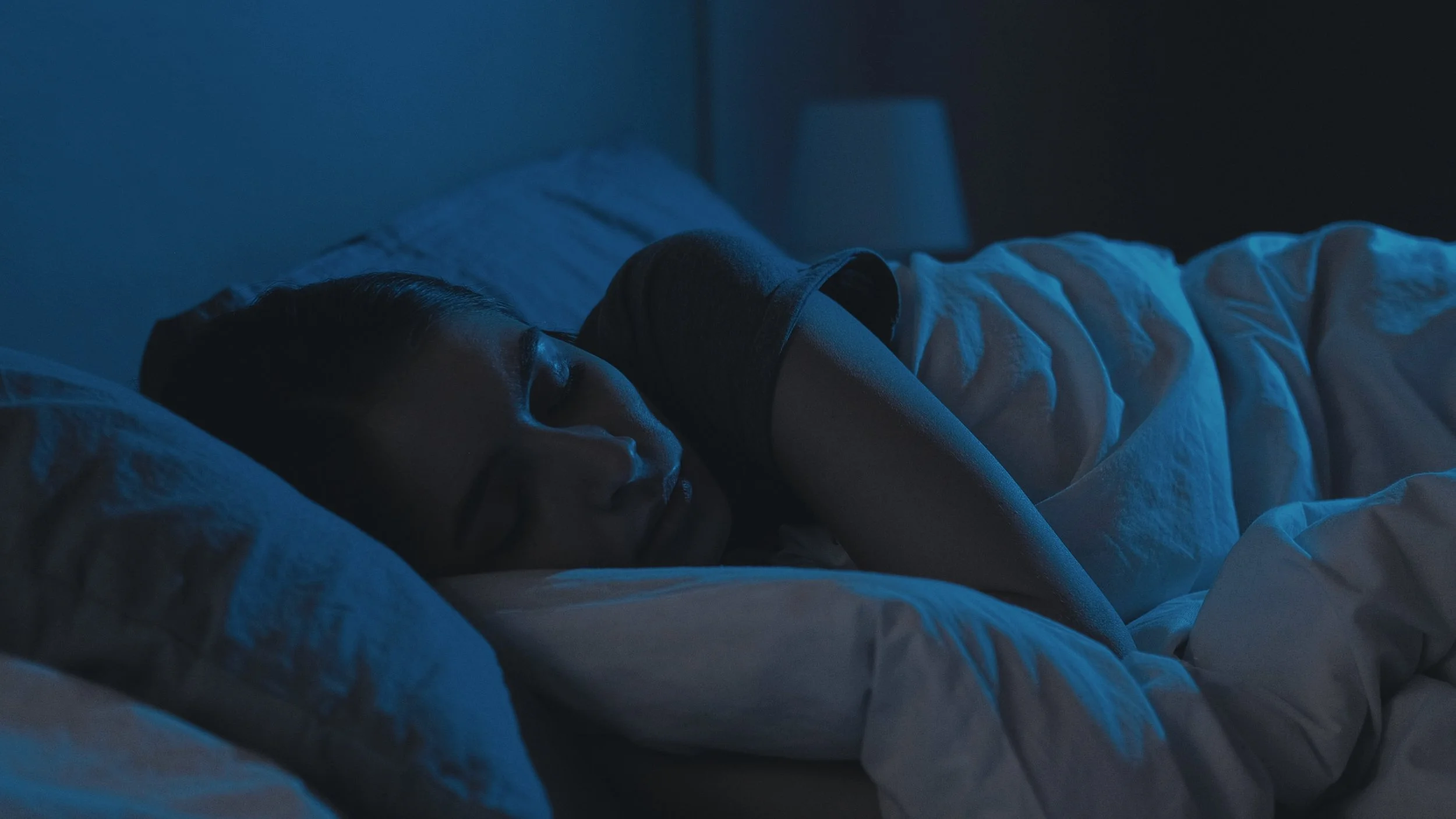
In my work and research, I’ve seen countless people get the basics right, yet still wake up groggy, get stuck with insomnia and middle-of-the-night awakenings, or struggle with true recovery. Let’s shift the focus from sleep quantity to improving sleep quality, leveraging the right sleep hygiene techniques and optimizing your sleep environment, so you can unlock the full power of deep sleep and get more of it.
The Critical Role of Room Temperature
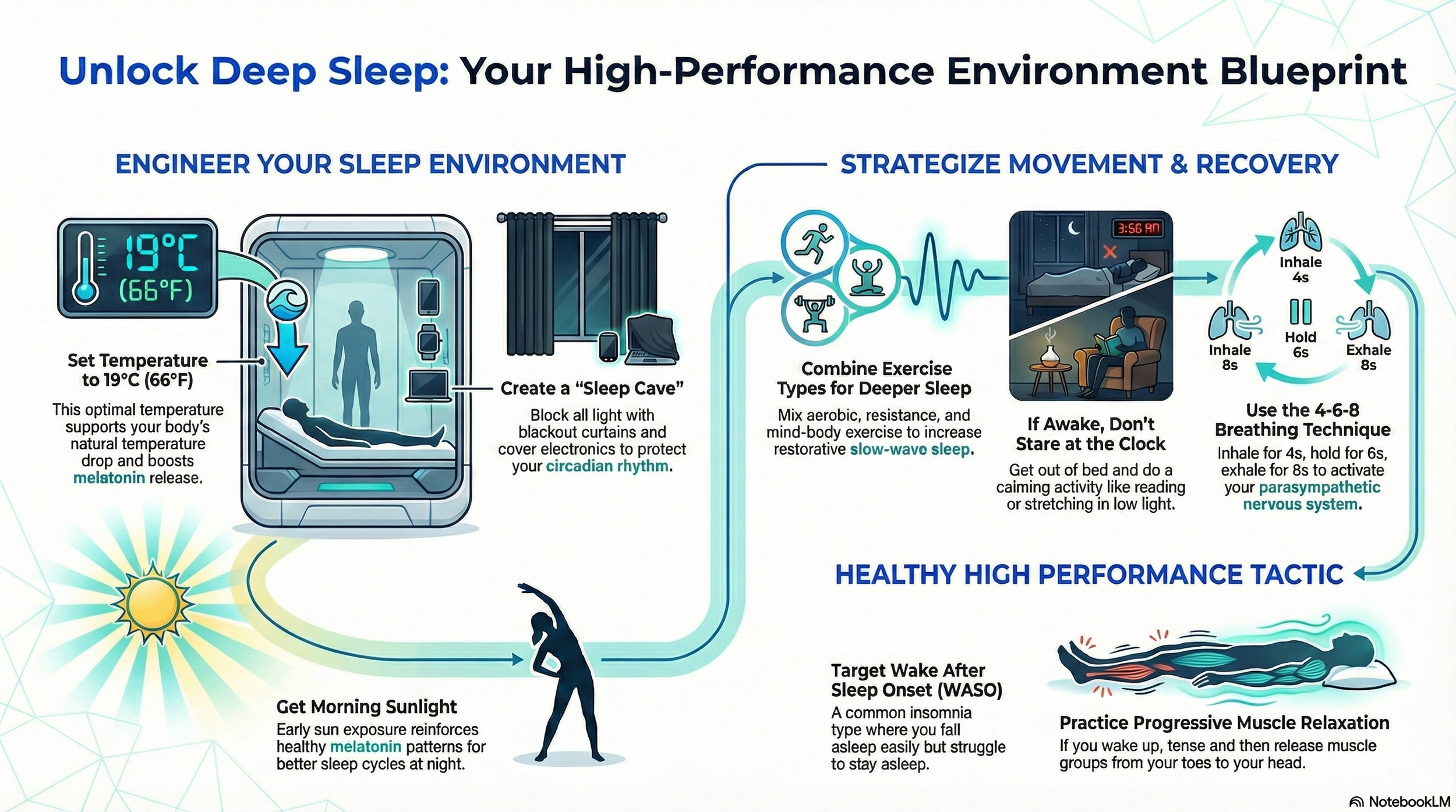
One of the most powerful yet underutilized sleep environment tips is temperature control. Your body’s core temperature naturally drops in the evening, and maintaining the optimal sleep temperature is critical for maximizing deep sleep and sleep maintenance. In research and in my own life, the magic number is about 19°C (66°F), which supports melatonin release and reduces night wakings. If your room is too warm or too cold, you’re far more likely to wake up and have difficulty falling back asleep, as thermoregulation is essential for sleep maintenance and deep, slow-wave sleep.
Strategic Light and Darkness Management
Light management is one of the most critical sleep environment factors. Even small amounts of light can disrupt your sleep cycles all night long, preventing the deep sleep your body needs for recovery. The hormone melatonin, which sets your circadian rhythm and signals restorative sleep, is extremely sensitive to light, particularly blue light from devices, but even a streetlamp through your window or the glow of an alarm clock counts. Create a "sleep cave" by blocking out all sources of light: use blackout curtains, cover LEDs and electronics, and keep your phone facedown. Get outside early in the day for natural light, as morning sunlight helps reinforce healthy melatonin release patterns that protect your sleep cycles at night.
How Exercise Type and Timing Enhance Sleep Quality
The ideal exercise mix for deep sleep includes aerobic activity (like walking, running, swimming, or cycling), mind-body practices (such as yoga, qigong, or tai chi), and resistance training. Regular exercise, even at low-to-moderate intensity, is linked to better sleep quality by helping you fall asleep faster and increasing sleep duration. Aerobic workouts for about an hour a day boost restorative slow-wave sleep, while resistance training helps you fall asleep faster and reduces night wakings [1]. Skip intense workouts in the hour before bed, but combining light aerobics, resistance, or mind-body exercise for 40-60 minutes within three hours of bedtime can help make your sleep less fragmented [2].
Sleep Maintenance Tactics for Insomnia
Occasional wakeups during the night are normal, but how to stay asleep and manage insomnia requires specific strategies. If you find yourself awake at 3am and unable to settle, don’t toss and turn or stare at the clock. Instead, get out of bed and engage in a calming activity in low light, like reading, stretching, or meditating. Slow, deep breathing is another proven tool: inhale smoothly through your nose for 4 seconds, hold for 6 seconds, and exhale slowly through your mouth for 8 seconds, focusing your attention on the movement of your breath. This signals your parasympathetic nervous system to relax, making it easier to return to restful sleep. If you struggle with insomnia, some people find that shifting moderate intensity exercise or resistance training in the early evening can help decrease night wakings and improve overall sleep continuity – just be sure to give yourself at least an hour to wind down before bed [3].
Waking Up Refreshed
High-quality sleep is not just about getting enough hours but also waking at the right time. Your body cycles through sleep stages over approximately 90 minutes, and waking up mid-cycle during deep sleep can result in “sleep inertia”, a type of grogginess that can last for hours. Conversely, waking between cycles (when you are closest to being awake) feels refreshing. Getting five full sleep cycles over 7.5 hours maximizes REM and deep sleep, optimizing recovery and memory consolidation. Having a consistent bedtime and wake time is the key to structuring your nights for the right amount of sleep and, better yet, more restorative sleep quality.
Your Complete Sleep Optimization System
Over the last three articles, you have learned the science of why sleep matters, actionable routines for falling asleep, and strategies for achieving sustained, high-quality rest. By implementing these sleep environment optimization techniques, controlling sleep temperature, managing light and darkness, incorporating exercise for sleep quality, and maintaining consistent sleep hygiene, you complete the trilogy of excellent sleep: getting to sleep, staying asleep, and waking up feeling recharged and energized. To support these habits, set a gentle nightly alarm an hour before bed as your cue to wind down. When you make these small changes and stick to them, you give your body and brain the foundation they need for health, creativity, and peak performance every day.
1% TIP: PROGRESSIVE RELAXATION FOR SLEEP MAINTENANCE
Some people suffer from Wake After Sleep Onset (WASO), a common form of insomnia where people struggle with staying asleep, despite falling asleep easily. If this describes your sleep problem, try progressive muscle relaxation when you wake in the night: tense each muscle group for a few seconds, then slowly release while focusing on your breath. Work from your toes to your head. This simple practice calms the body, eases tension and signals your nervous system to slip back into restful sleep.
1% TIP: CREATE AN EVENING SLEEP RITUAL
Create a ritual that you practice every night to induce deep restorative sleep. For example, starting one hour before bed, do your nightly hygiene, then turn down the lights, do three or four restful yoga poses, take a hot bath followed by a cold shower, meditate for 10 minutes, read some fiction, and turn out the light.
References
[1] S. Gupta, K. Bansal, and P. Saxena, “A clinical trial to compare the effects of aerobic training and resistance training on sleep quality and quality of life in older adults with sleep disturbance.,” Sleep Sci. (Sao Paulo, Brazil), vol. 15, no. 2, pp. 188–195, 2022, doi: 10.5935/1984-0063.20220040.
[2] M. A. Kredlow, M. C. Capozzoli, B. A. Hearon, A. W. Calkins, and M. W. Otto, “The effects of physical activity on sleep: a meta-analytic review.,” J. Behav. Med., vol. 38, no. 3, pp. 427–449, Jun. 2015, doi: 10.1007/s10865-015-9617-6.
[3] T. Yue, X. Liu, Q. Gao, and Y. Wang, “Different Intensities of Evening Exercise on Sleep in Healthy Adults: A Systematic Review and Network Meta-Analysis.,” Nat. Sci. Sleep, vol. 14, pp. 2157–2177, 2022, doi: 10.2147/NSS.S388863.