
Episode 27 · August 13, 2021 · 48 min



Philip McKernan almost didn’t go back. Three years earlier he had visited a project in India for abandoned seniors, and it frightened him. When he returned with a group of clients, 450 older people were living in a shed there, and Philip heard himself volunteer to wash the men who could no longer wash themselves. He washed 50 of them. Everything he usually worried about stopped mattering. He calls it the most humbling thing he has ever done, and it taught him something about fear. The fear he felt in India, and the fear he still feels before every talk he gives, is old. It comes from his own history, and it loosens its grip as he gets to know it.
Philip pushes you to name the real fear, which usually sits underneath the one you talk about, and to have the conversation you keep avoiding. When we recorded this, my daughter, who was eight, had just asked me on vacation, “Daddy, can you please put down your phone?” The research backs her up. Andrew Przybylski and Netta Weinstein had pairs of strangers talk for 10 minutes with either a phone or a notebook sitting nearby, out of direct view. When the conversation was about something personally meaningful, the pairs with the phone nearby felt less close and trusted each other less. The researchers think a phone pulls your mind toward everyone else you could be connecting with, which crowds out the person in front of you.
“What’s the most important conversation we’re simply not having?”
Key takeaways
Name the real fear. Ask why, then ask again. The fear on the surface, like public speaking, usually stands for something deeper, like the fear of not being loved.
Get to know your fear. Philip still feels fear before every talk. Getting to know it, instead of fighting it, is what loosens its grip.
Question your own story. Assume you are less aware than you think and less happy than you say. That honesty is where change starts.
Have the conversation you are avoiding. Ask yourself which conversation matters most right now, with someone you love or someone you work with, and have it this week.
Think about your one last talk. If you had 15 minutes to share a part of your story the world has never heard, what would you say? Your impact starts with the few people closest to you.
Your 1% Tip
Tonight at dinner, leave your phone in another room and ask the person beside you a question that matters.
About Philip
Philip McKernan is an Irish speaker, author, filmmaker and coach who works with entrepreneurs, leaders and athletes around the world who know there is more and want to live more courageously. He created One Last Talk, an event and book that invite people to share a part of their personal truth as if it were the last talk they would ever give. He runs experiential retreats at BraveCastle, the 500-year-old castle he restored in Ireland.
Resources
philipmckernan.com: Philip’s workshops, retreats and the BraveClan community.
One Last Talk: the stage where people share a part of their truth in public for the first time.
Przybylski and Weinstein, 2013: how the presence of a mobile phone affects face-to-face conversation, published in the Journal of Social and Personal Relationships.
988 Suicide Crisis Helpline: this episode discusses suicide. If you or someone you know is struggling, call or text 988 any time in Canada. In the US, call or text 988 to reach the 988 Suicide & Crisis Lifeline.
Get the science in your inbox
Wells Performance Insights is my newsletter. I take the science of your body and brain and turn it into a 1% Tip you can use the same day. Sign up for Wells Performance Insights.
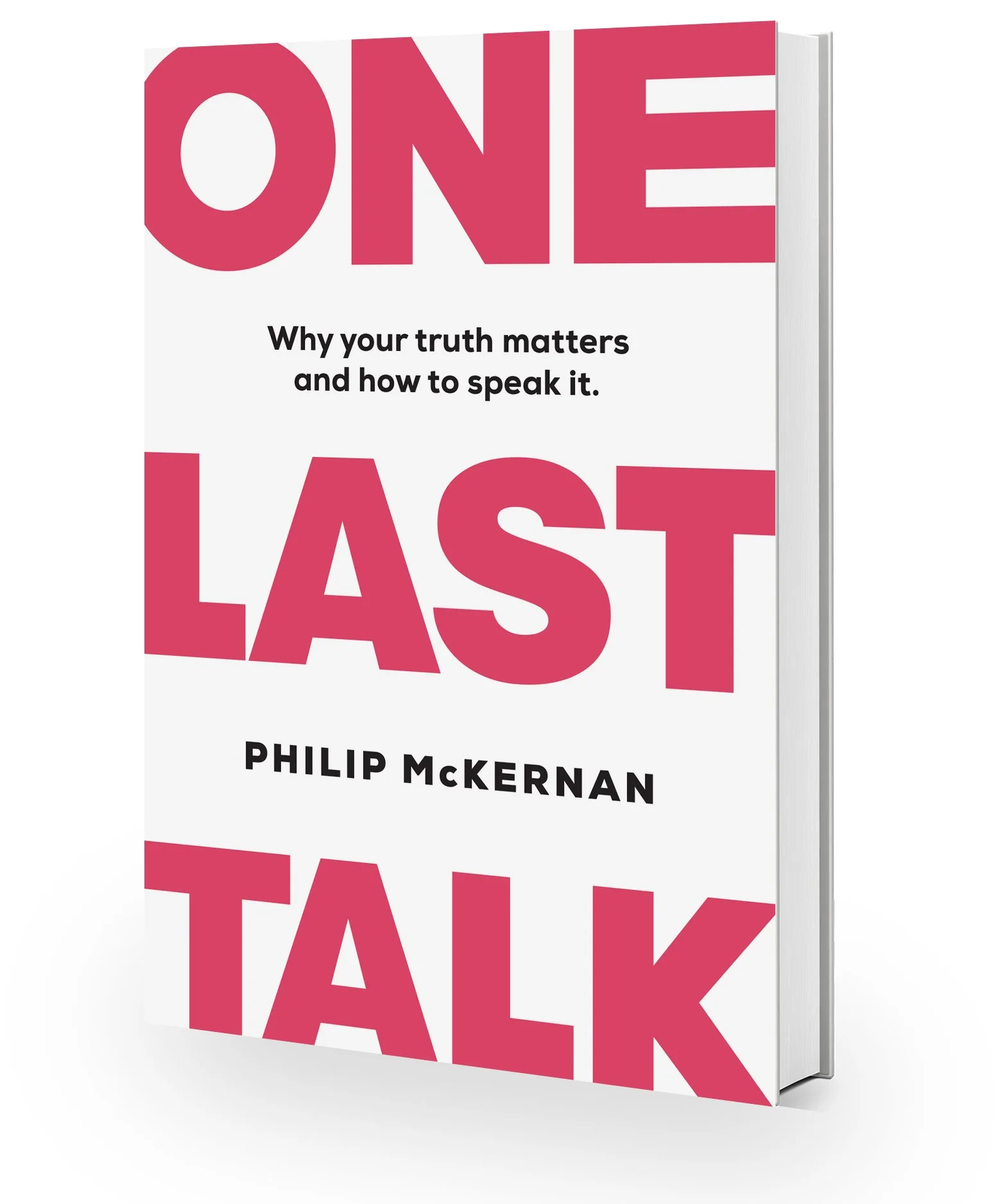
The book
One Last Talk is Philip’s guide to finding and crafting the talk you would give if it were your last, whether or not you ever deliver it on a stage. Find the book.
Dr. Greg Wells is a human physiologist, five-time bestselling author, Senior Scientist Emeritus at SickKids and author of 70+ peer-reviewed papers.
This podcast contains advice and information relating to health and wellness. It should be used to supplement rather than replace the advice of your doctor or another trained health professional. If you know or suspect that you have a health problem, seek your physician’s advice before embarking on any medical program or treatment. All efforts have been made to assure the accuracy of the information contained in this podcast / interview / article as of the date of publication. The author and publisher disclaim liability for any medical or other outcomes that may occur as a result of applying the methods suggested in this material.
