
Episode 266 · May 15, 2026 · 40 min



On whitewater trips with his friends, Alex Hutchinson is often the most experienced canoeist in the group, and the most likely to say he will portage around the rapid. He loves the unknown and has no desire to drown. Alex is a science journalist, a former national team runner and the author of Endure and The Explorer’s Gene. In this conversation we explore what really limits your performance, why you crave hard things, and how to find adventure close to home.
The physiology is fascinating. Your brain folds fuel, core temperature, mental fatigue and even your self-talk into one feeling of effort, and that feeling decides whether you push on or back off. When you change any of those inputs, from a swig of sports drink to the words you tell yourself eight reps into a ten-rep set, you change what you can do.
“There are things we value not in spite of the fact that they’re hard, but because they’re hard.”
Key takeaways
Your brain sets the limit using everything it knows. Fuel, core temperature, mental fatigue and self-talk all feed one subjective sense of effort. The better you tune in to how you feel, the closer you get to what your body and mind can actually do.
Fuel and stay cool to ease the brakes. A swig of sports drink can make you feel better before it reaches your muscles, because your brain knows fuel is on the way. Heat works the other way: your brain tracks your core temperature closely and dials you back as it climbs.
Mental fatigue slows your decisions without you noticing. In studies with soccer players, mental fatigue left sprint speed intact but slowed reaction time and led to more wrong decisions. Protect your focus before the work that matters most to you.
Prepare your self-talk before you need it. Anticipate how the last reps or the last kilometres will feel, and have true, personal lines ready: “I’ve trained for this. This is what it’s supposed to feel like.” When you change the words, you change your perception of effort.
Value hard things, and find adventure close to home. Research on the effort paradox suggests we value some things because they are hard. Adventure means discovering what is new to you, which can be a different route to work, a winter ravine with your kids or a new book.
Your 1% Tip
The next time you work out, notice what you tell yourself three-quarters of the way through a set or a run. Write down the line you hear most, then write a true replacement you believe, such as “This is what I trained for.” Use it in your next session.
About Alex
Dr. Alex Hutchinson is a National Magazine Award-winning science journalist and the New York Times bestselling author of Endure: Mind, Body, and the Curiously Elastic Limits of Human Performance. His newest book is The Explorer’s Gene, on the science of curiosity and exploration. He writes the long-running Sweat Science column for Outside, and his work has appeared in The New York Times and The New Yorker. Before journalism he earned a PhD in physics and ran middle and long distance for Canada’s national team. He lives in Toronto.
Resources
Endure and The Explorer’s Gene by Alex Hutchinson.
The effort paradox: effort is both costly and valued (Inzlicht, Shenhav and Olivola, Trends in Cognitive Sciences, 2018).
The IKEA effect: when labor leads to love (Norton, Mochon and Ariely, Journal of Consumer Psychology, 2012).
Get the science in your inbox
Wells Performance Insights is my newsletter. I take the science of your body and brain and turn it into a 1% Tip you can use the same day. Sign up for Wells Performance Insights.
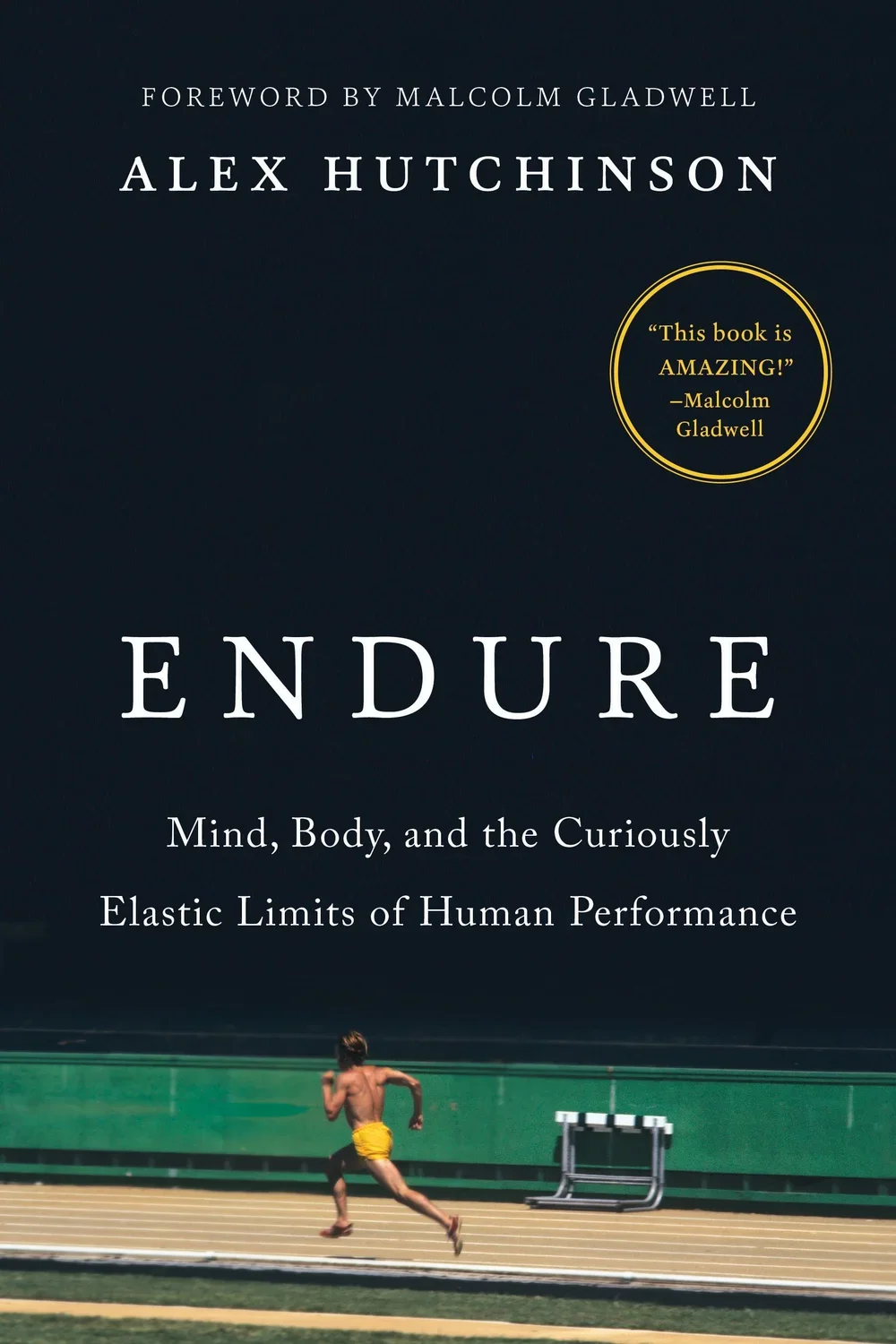
The book
Endure: Mind, Body, and the Curiously Elastic Limits of Human Performance is Alex’s deep dive into the research on what really limits your endurance, and how your brain decides when to slow you down.
Dr. Greg Wells is a human physiologist, five-time bestselling author, Senior Scientist Emeritus at SickKids and author of 70+ peer-reviewed papers.
This podcast contains advice and information relating to health and wellness. It should be used to supplement rather than replace the advice of your doctor or another trained health professional. If you know or suspect that you have a health problem, seek your physician’s advice before embarking on any medical program or treatment. All efforts have been made to assure the accuracy of the information contained in this podcast / interview / article as of the date of publication. The author and publisher disclaim liability for any medical or other outcomes that may occur as a result of applying the methods suggested in this material.
