
Episode 272 · August 7, 2026 · 120 min



In 2012, my daughter brought home a cold from daycare. She got better. I ended up in the cardiac ward at Toronto General with viral myocarditis. Lying there with a swollen, painful heart, I looked around: nobody was sleeping, breakfast was the same food that causes heart disease, nobody was moving and the stress was palpable. I registered for an Ironman from my hospital bed, started with laps of the ward pushing my IV pole, and twelve months later I crossed the finish line.
That year became the framework for my book The Ripple Effect: sleep, eat, move and think better. In this live masterclass I walk through the physiology behind each one. Take sleep: while you sleep, the space between your brain cells expands by about 60%, and cerebrospinal fluid washes through to clear out waste, which is why your deep sleep shapes how well you think the next day.
“We move to think.”
Key takeaways
Defend your last hour. Try the 20-20-20 protocol: three things for 20 minutes each before bed, such as a hot bath, a few minutes of journaling and a novel. Keep a consistent bedtime, aim for about five 90-minute sleep cycles, and remember that alcohol cuts into deep sleep while caffeine can affect you for up to eight hours.
Nap with a plan. A power nap of 3 to 20 minutes with an alarm clears fatigue from your brain. A full 75- to 90-minute cycle without an alarm restores your brain and body. Waking 30 to 60 minutes into a nap leaves you groggy, so avoid that window.
Eat to heal. Think of food as healing as well as fuel. Eat the rainbow of fruits and vegetables, build each meal around protein, fibre-rich carbohydrates and healthy fats, and sip water through the day. Coffee in the morning, green tea at midday and herbal tea in the evening keeps you hydrated without wrecking your sleep.
Sprinkle in your steps. Every kind of movement counts, from walking and gardening to swimming and housework. Three to five sessions a week of about 45 minutes is linked to the lowest burden of poor mental health, and it does not need to happen all at once. A walk on the way home works as a transition ritual that helps you arrive calmer for the people you love.
Defend your attention. Turn off the audio notifications on your devices, run a media audit of everyone who has access to your brain, and try my 30-30-1 protocol: 30 minutes a day, for 30 days, on your one most important priority. Build a playlist for your life to lift your mood and protect your focus.
Your 1% Tip
Tonight, give the last hour before bed to three 20-minute blocks: a hot bath or shower, a few minutes of journaling to park the day, and a novel. Keep screens out of that hour. When you let your brain decompress, you fall asleep faster and protect the deep sleep that happens early in the night.
About this episode
This masterclass was recorded live at the Ontario Dental Association and covers the four pillars of my book The Ripple Effect: sleep, eat, move and think better. It pairs with the Rest, Refocus, Recharge Masterclass (Episode 269), from the afternoon session of the same day.
Resources
The Ripple Effect by Dr. Greg Wells: the book behind this masterclass.
The Science of Creatine with Dr. Scott Forbes: the full episode on creatine that I mention in the Q&A.
Get the science in your inbox
Wells Performance Insights is my newsletter. I take the science of your body and brain and turn it into a 1% Tip you can use the same day. Sign up for Wells Performance Insights.
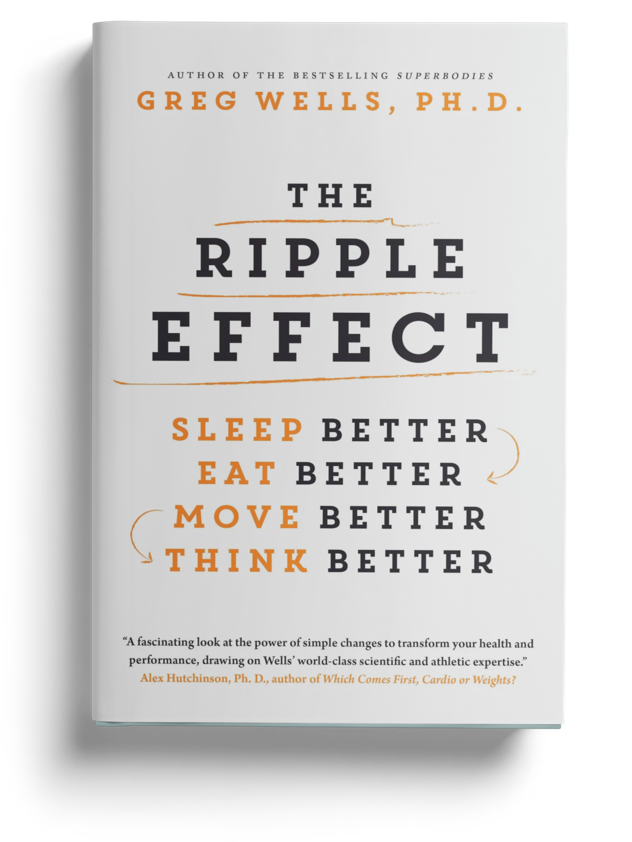
The book
The Ripple Effect: Sleep Better, Eat Better, Move Better, Think Better is my guide to how small changes in four areas of your life ripple out into your health, your work and your relationships.
Dr. Greg Wells is a human physiologist, five-time bestselling author, Senior Scientist Emeritus at SickKids and author of 70+ peer-reviewed papers.
This podcast contains advice and information relating to health and wellness. It should be used to supplement rather than replace the advice of your doctor or another trained health professional. If you know or suspect that you have a health problem, seek your physician’s advice before embarking on any medical program or treatment. All efforts have been made to assure the accuracy of the information contained in this podcast / interview / article as of the date of publication. The author and publisher disclaim liability for any medical or other outcomes that may occur as a result of applying the methods suggested in this material.
