

The Dr. Greg Wells Podcast



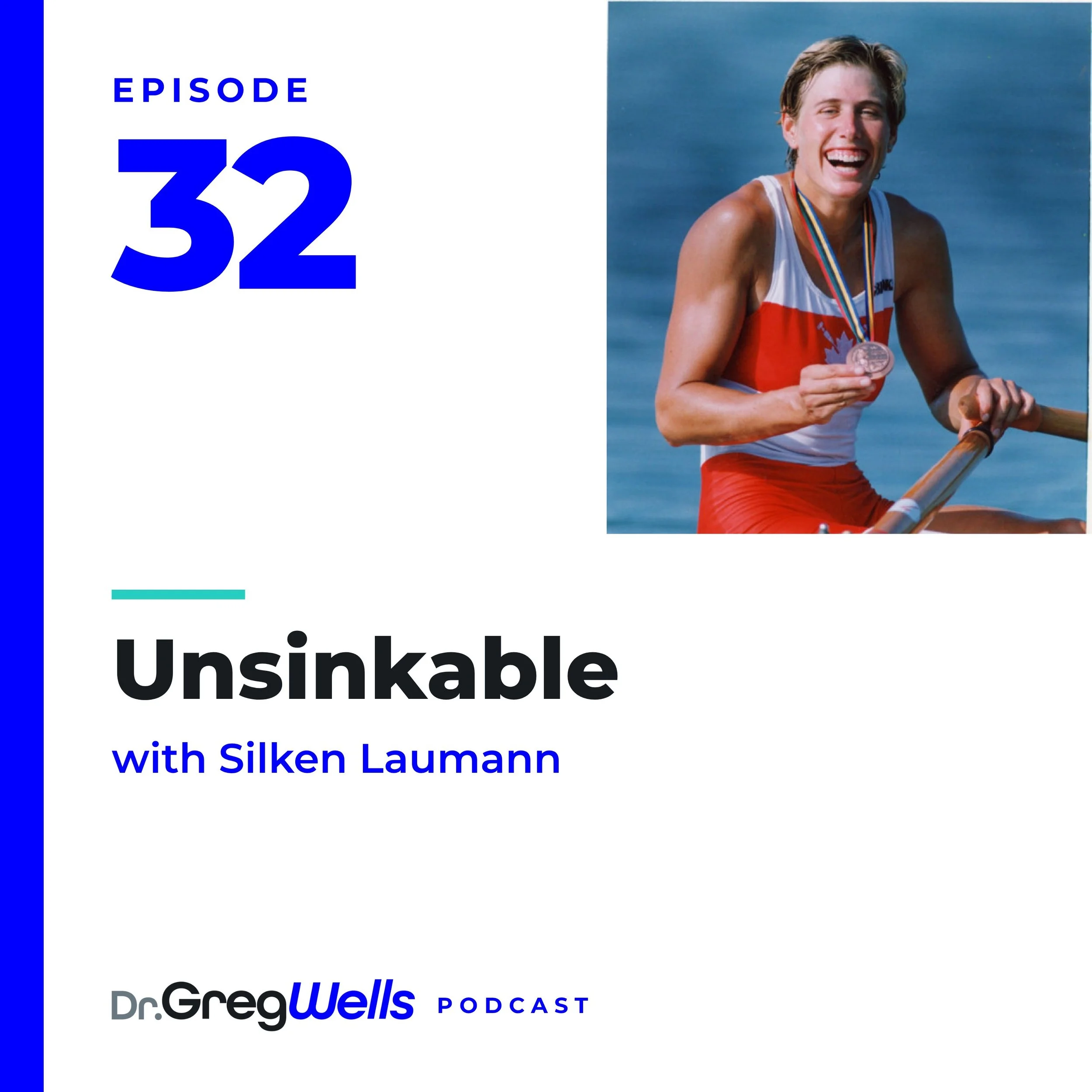
Unsinkable with Silken Laumann
In 1992 I didn’t make the Olympic team, so I went to Barcelona to work with CTV, and I watched Silken Laumann do something that still challenges what I know about physiology. Ten weeks before the Games, while she was the reigning world champion in single sculls, another boat hit hers at a regatta in Germany. Her wooden boat shattered and drove about 200 pieces of wood into her lower right leg, breaking her ankle and shredding the muscle. Her doctor told her she might never row competitively again. After five operations and a skin graft she was still on crutches three weeks before the Olympics, and she walked with a cane in Barcelona. Then she raced and won the bronze medal.
Silken also talks openly about her mental health and the day she finally reached out to a friend, who connected her with a counsellor. Today she watches her mind the way she watches her body. When a stressful phone call pushes her stress up, she tunes in and names it: I am feeling angry. Naming a feeling has a measurable effect in your brain. Matthew Lieberman and his colleagues at UCLA scanned people while they looked at angry and fearful faces. When people chose a word to label the emotion they saw, activity in the amygdala, your brain’s alarm system, dropped, and activity rose in the right ventrolateral prefrontal cortex. When you put a feeling into words, your prefrontal cortex helps quiet the alarm, which gives you a moment to choose your next move.