
Episode 32 · September 17, 2021 · 42 min



In 1992 I didn’t make the Olympic team, so I went to Barcelona to work with CTV, and I watched Silken Laumann do something that still challenges what I know about physiology. Ten weeks before the Games, while she was the reigning world champion in single sculls, another boat hit hers at a regatta in Germany. Her wooden boat shattered and drove about 200 pieces of wood into her lower right leg, breaking her ankle and shredding the muscle. Her doctor told her she might never row competitively again. After five operations and a skin graft she was still on crutches three weeks before the Olympics, and she walked with a cane in Barcelona. Then she raced and won the bronze medal.
Silken also talks openly about her mental health and the day she finally reached out to a friend, who connected her with a counsellor. Today she watches her mind the way she watches her body. When a stressful phone call pushes her stress up, she tunes in and names it: I am feeling angry. Naming a feeling has a measurable effect in your brain. Matthew Lieberman and his colleagues at UCLA scanned people while they looked at angry and fearful faces. When people chose a word to label the emotion they saw, activity in the amygdala, your brain’s alarm system, dropped, and activity rose in the right ventrolateral prefrontal cortex. When you put a feeling into words, your prefrontal cortex helps quiet the alarm, which gives you a moment to choose your next move.
“Drop the idea that it’s ever going to be perfect because it’s not.”
Key takeaways
Name what you feel. When stress rises, pause and say it plainly: I am feeling angry, or I am feeling anxious. Then pick one small response, like a few slow breaths or two minutes outside.
Reach out through someone you trust. Silken called a friend who had been to counselling, and that friend made the connection. You do not have to find help alone.
Aim for balance over time. Some days you will miss a workout or an evening with your family. Look at the whole week and make sure the important things add up.
Protect your first hour. Silken spends most mornings meditating and writing Julia Cameron’s Morning Pages before the day starts. Keep your phone and social media out of that time.
Share your story. We Are Unsinkable collects stories from people who have come through hard times, because hearing how someone else got through gives you a roadmap.
Your 1% Tip
Tomorrow morning, before you open your phone, write one sentence that names how you feel.
About Silken
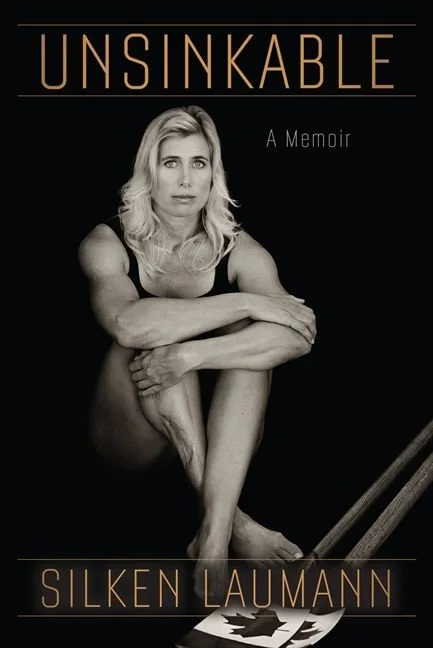
Silken Laumann is a four-time Olympian and a three-time Olympic medallist in rowing, with one silver and two bronze medals. She is the author of the memoir Unsinkable, a keynote speaker and the founder of We Are Unsinkable, a national mental health organization in Canada.
Resources
silkenlaumann.com: Silken’s speaking, her podcast and her memoir Unsinkable.
We Are Unsinkable: the mental health organization Silken founded, with stories from people who have overcome hard times.
Lieberman et al., 2007: putting feelings into words reduces amygdala activity, published in Psychological Science.
988 Suicide Crisis Helpline: if you or someone you know is struggling, call or text 988 any time in Canada. In the US, call or text 988 to reach the 988 Suicide & Crisis Lifeline.
Get the science in your inbox
Wells Performance Insights is my newsletter. I take the science of your body and brain and turn it into a 1% Tip you can use the same day. Sign up for Wells Performance Insights.
The book
Unsinkable: My Untold Story is Silken’s memoir of her Olympic career and the life behind the headlines. Find the book.
Dr. Greg Wells is a human physiologist, five-time bestselling author, Senior Scientist Emeritus at SickKids and author of 70+ peer-reviewed papers.
This podcast contains advice and information relating to health and wellness. It should be used to supplement rather than replace the advice of your doctor or another trained health professional. If you know or suspect that you have a health problem, seek your physician’s advice before embarking on any medical program or treatment. All efforts have been made to assure the accuracy of the information contained in this podcast / interview / article as of the date of publication. The author and publisher disclaim liability for any medical or other outcomes that may occur as a result of applying the methods suggested in this material.
