

The Dr. Greg Wells Podcast



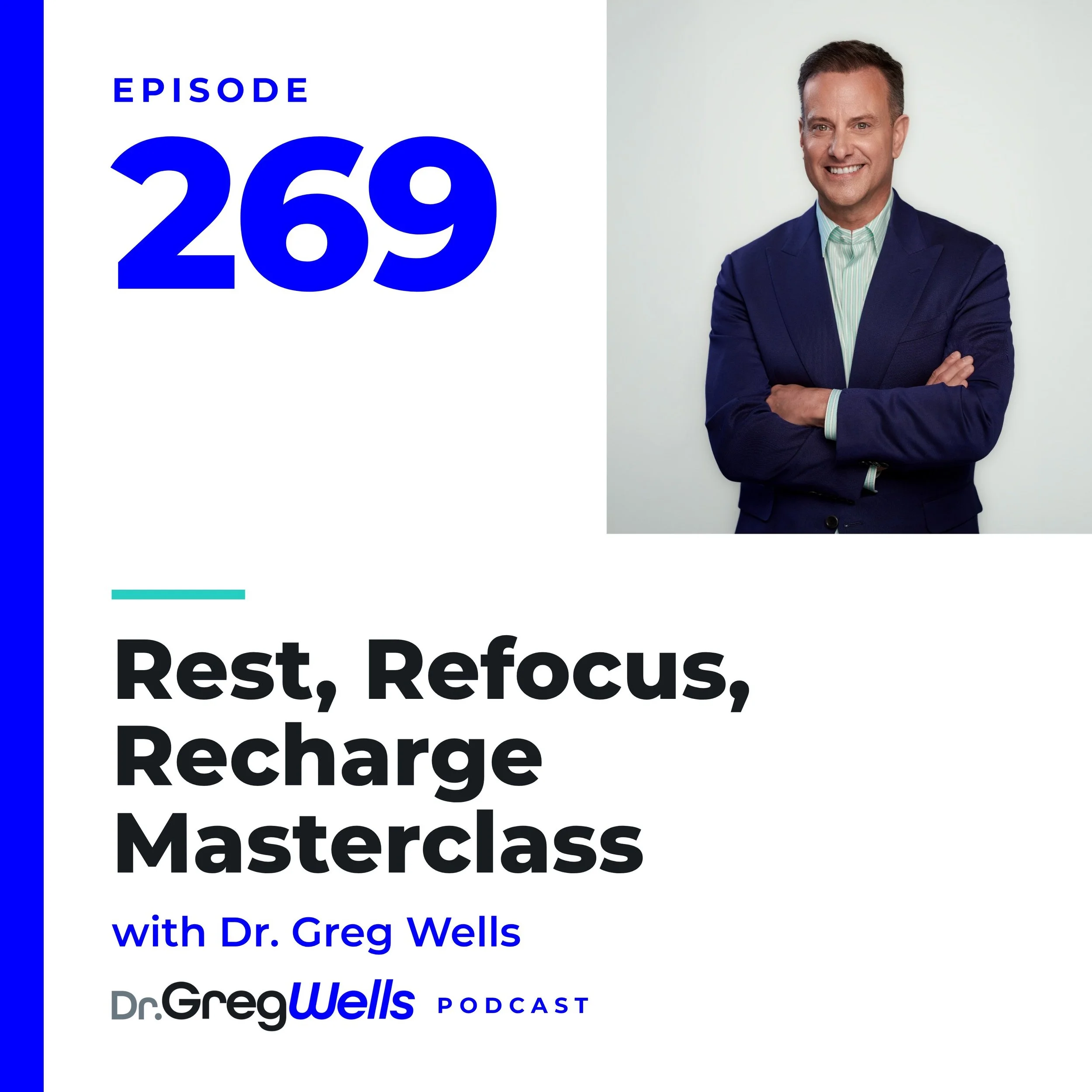
Rest, Refocus, Recharge Masterclass
On a walking safari in South Africa, I climbed onto a mound of earth and found myself face to face with a rhinoceros. We both froze, its ears locked onto me, and I took one photo before my guide moved us out of there. That night, flipping through my shots, I realized I had completely missed the second rhino standing right beside it, and the green parrots in the tree above. This masterclass, recorded live at a dental conference, explains why that happens and what you can do about it.
When you sense a threat, your amygdala switches on your stress response, your focus locks onto the danger and you lose your peripheral vision, and with it your peripheral thinking. When you calm down, your vision and your options open up again. In this session, built on my books Rest, Refocus, Recharge and Powerhouse, I walk through the brainwave states you move through each day and the practices that help you shift between them.
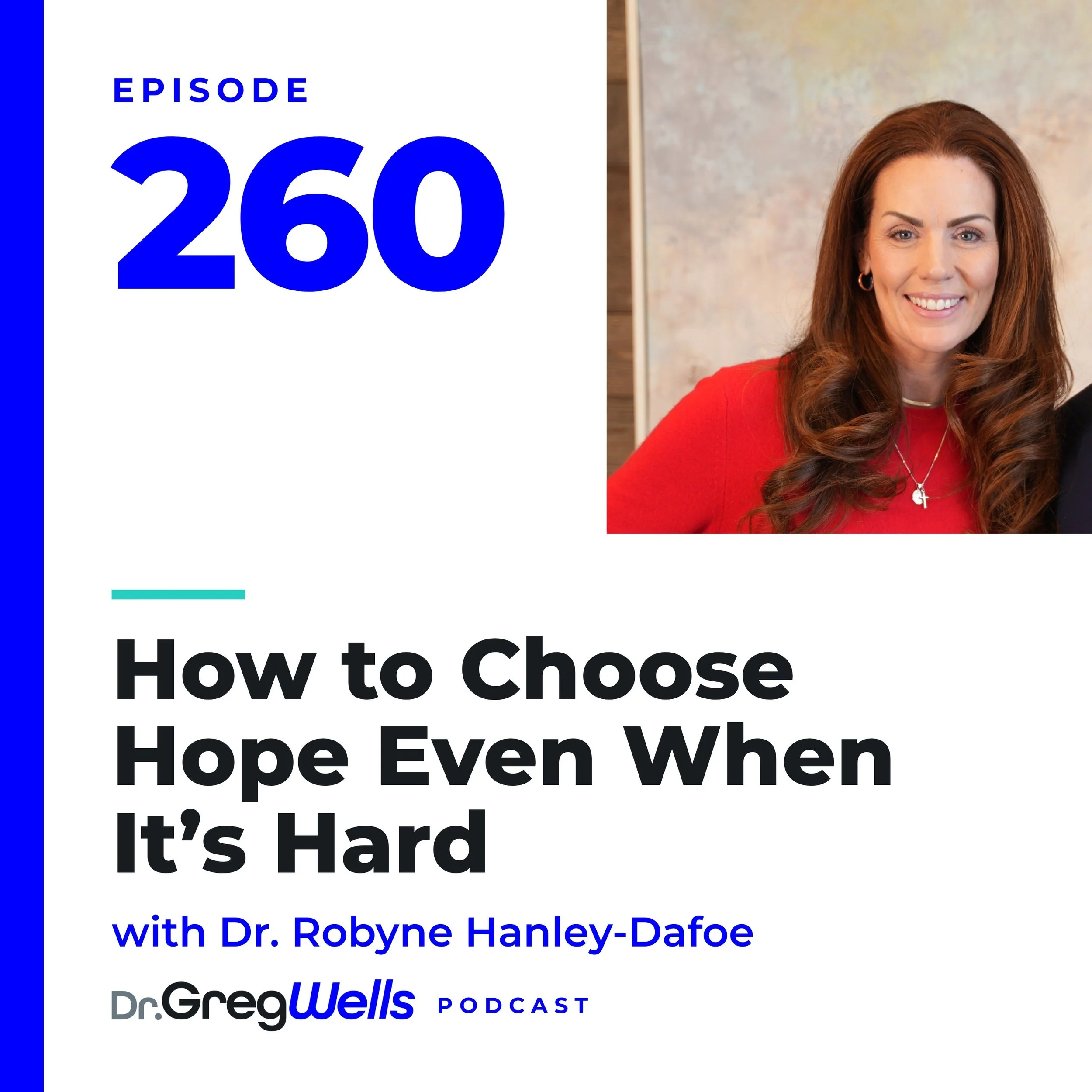
How to Choose Hope Even When It’s Hard with Dr. Robyne Hanley-Dafoe
A while ago, Dr. Robyne Hanley-Dafoe’s speaking business hit a strange season. She sent me a text to say she was going through it and asked whether I was open to a conversation. I called her back, and it turned out my business was in a strange season too, so we worked through it together and both moved forward. Robyne is an award-winning psychology and education expert, a high school dropout turned university professor and the bestselling author of Calm Within the Storm and Stress Wisely. Her new book is I Hope So: How to Choose Hope Even When It’s Hard.
As a physiologist, I appreciate how practical her approach is. She builds on C. R. Snyder’s hope theory, which describes hope as two skills you can train: pathway thinking, where you identify possible next steps, and agency thinking, where you recognize the decisions that are yours to make. When you are in crisis, your stress response narrows what you can see, so Robyne starts with your physiology: sleep, food, a short walk and one trusted person.