
Episode 3 · February 26, 2021 · 45 min



When Nike set out to break two hours in the marathon, it spent tens of millions of dollars on the attempt, including pacemakers who ran in an arrowhead formation tested in a wind tunnel so the runners could draft. Alex Hutchinson, a former national-team runner who spent a decade writing his book on endurance, went back and looked at photos from the last four marathon world records. In every one, the record-setters were running beside their pacemakers, out of the draft. What they wanted from those pacemakers was company. Alex lives this himself. With precious little free time, he and his wife spend their Saturday mornings driving across Toronto to do their hardest workout of the week with a group of friends.
Researchers at Oxford put a number on that pull. Twelve rowers from the Oxford squad each rowed hard for 45 minutes on rowing machines, once alone and once alongside their teammates, synchronized as a virtual boat. Their pain thresholds rose after both sessions, and they rose about twice as much after rowing together, a sign of a bigger surge of endorphins (Cohen et al., 2010). Your environment shapes you too. In Toronto, researchers matched more than half a million street trees with health data from over 31,000 residents and found that having 10 more trees on a city block was linked to better health perception, comparable to a $10,000 raise or being seven years younger (Kardan et al., 2015).
“The barriers that we experience as physical are controlled a lot in the mind.”
Key takeaways
Your mind shapes your limits. The barriers you feel as physical are controlled by your brain more than most of us realize. Notice your self-talk, and relax your face when the effort gets hard.
Do your hardest work with others. Training alongside people you are bonded with can raise your tolerance for discomfort. Save your toughest sessions for the group.
Keep easy days easy and hard days hard. Endurance athletes across sports do most of their training at an easy, conversational pace and a small share very hard. Most of us drift into the middle, so cap your heart rate or pace on easy days.
Get outside and under the trees. A run in a park or along a river trail gives your attention a chance to rest. Alex goes out of his way to run where he is surrounded by trees.
Your 1% Tip
This week, invite a friend to join your hardest workout, and do your easy session on your own at a pace where you can hold a full conversation the whole way.
About Alex
Dr. Alex Hutchinson is a journalist and author who writes about the science of endurance and fitness, including his Sweat Science column for Outside. He holds a PhD in physics from the University of Cambridge and competed in national and world championships as a middle- and long-distance runner for more than a decade. He lives in Toronto.
Resources
Dr. Alex Hutchinson: Alex’s website, with his writing and books.
Cohen et al., 2010: synchronized rowing and elevated pain thresholds, published in Biology Letters.
Kardan et al., 2015: neighbourhood trees and health in Toronto, published in Scientific Reports.
Get the science in your inbox
Wells Performance Insights is my newsletter. I take the science of your body and brain and turn it into a 1% Tip you can use the same day. Sign up for Wells Performance Insights.
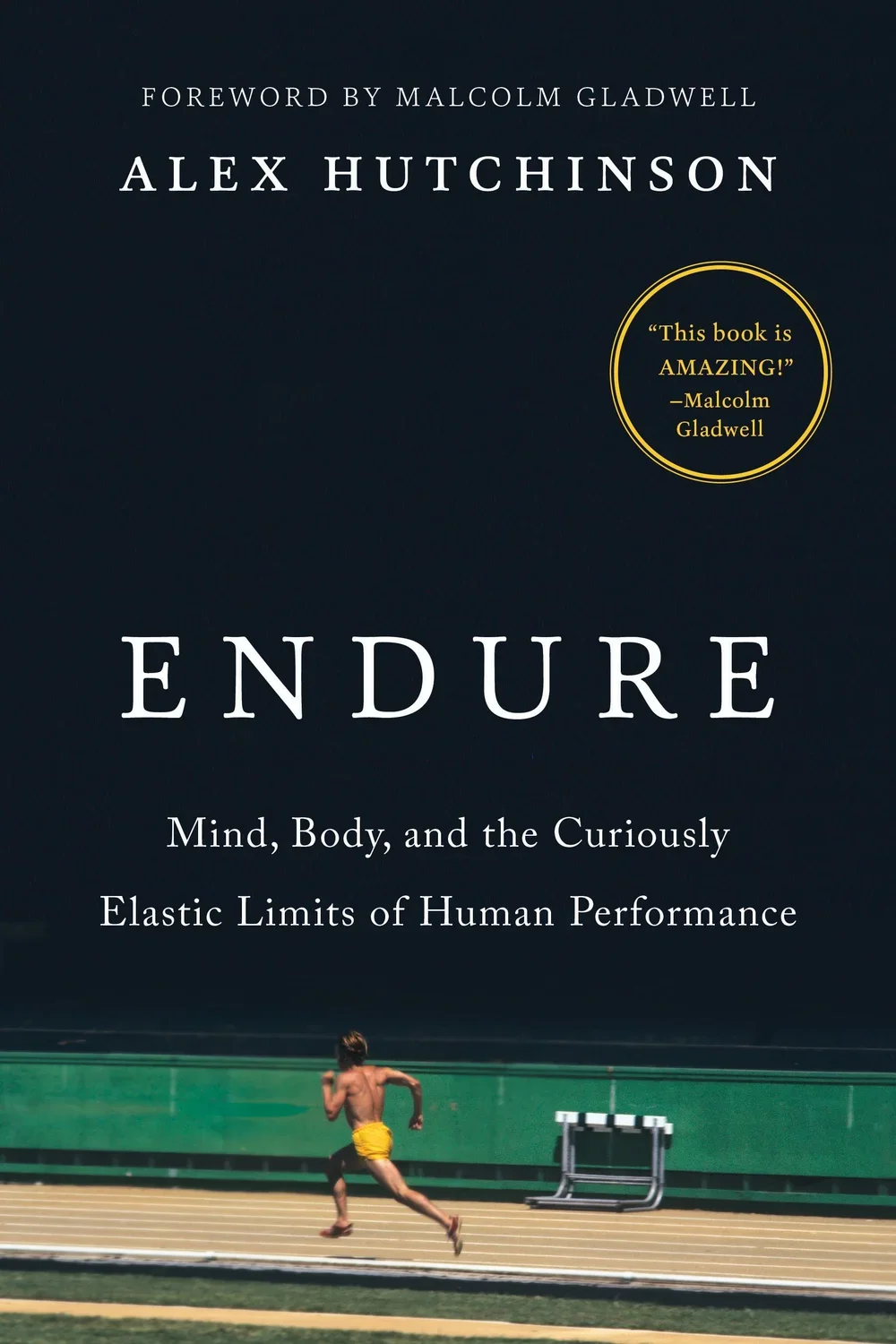
The book
In Endure: Mind, Body, and the Curiously Elastic Limits of Human Performance, Alex explores how your brain and body work together to set your limits, from heat and pain to oxygen and fuel, and what that means for how far you can push. Find the book.
Dr. Greg Wells is a human physiologist, five-time bestselling author, Senior Scientist Emeritus at SickKids and author of 70+ peer-reviewed papers.
This podcast contains advice and information relating to health and wellness. It should be used to supplement rather than replace the advice of your doctor or another trained health professional. If you know or suspect that you have a health problem, seek your physician’s advice before embarking on any medical program or treatment. All efforts have been made to assure the accuracy of the information contained in this podcast / interview / article as of the date of publication. The author and publisher disclaim liability for any medical or other outcomes that may occur as a result of applying the methods suggested in this material.
