
Episode 107 · February 24, 2023 · 45 min



When I have a morning workout planned, I put my gym clothes on the floor beside my bed. When I sit up and put my feet down, they land on my shoes, and I have to walk over my gym gear to get out of bed. It is exactly the kind of design Dr. Lisa Bélanger teaches. Lisa is a behavioural medicine researcher and the CEO of ConsciousWorks, and her work closes the gap between what you intend to do and what you actually do.
Lisa’s point is that you do most things because they are easy and attractive, far more often than because you feel motivated. Choice architecture research supports her. In a large hospital cafeteria at Massachusetts General Hospital, researchers stocked bottled water in every beverage refrigerator at eye level and added baskets of water around the room, and water sales rose by about a quarter with no extra education at all. When you remove the friction from the behaviour you want, your brain takes the path of least effort, and that path now leads where you want to go. Lisa applies the same thinking to recovery: short breaks that connect you with yourself, other people or nature, and a ritual that separates your workday from your home.
“Can you make the habit you desire, the easiest, most attractive thing to do? And you’ll probably do it.”
Key takeaways
Make it easy and attractive. Put the cue for the habit you want directly in your path, and put a barrier in front of the one you want to stop. Lisa’s example: move the TV remote out of reach.
Lower the bar for starting. In one of Lisa’s exercise research programs, the only commitment was to come in. Once people were there, most decided to train anyway. Make showing up the goal.
Take breaks that connect. Lisa sorts effective breaks into three kinds: connecting with yourself, with other people or with nature. Getting off your screen for a few minutes counts.
Build a doormat ritual. Mark the start and end of your workday with a habit that separates work from home. Lisa walks her dog for 15 minutes so she can gear down and be fully present with her family.
Practise attention with something you enjoy. Lisa practises mindfulness over her morning coffee. She brings her five senses to the cup, notices when her mind drifts to her to-do list, and brings it back.
Your 1% Tip
Tonight, set out your clothes and shoes for tomorrow’s workout where you will step on them first thing in the morning.
About Lisa
Dr. Lisa Bélanger is the CEO and founder of ConsciousWorks, a consulting firm that helps leaders and teams apply behavioural science to performance and wellbeing. She holds a PhD in behavioural medicine and is a certified exercise physiologist. She founded Knight’s Cabin, a national charity offering wellness programming to cancer survivors, and she is the author of Inspire Me Well and A Cup of Mindfulness.
Resources
Dr. Lisa Bélanger: Lisa’s speaking, writing and podcast.
Thorndike et al., 2012: the Massachusetts General Hospital cafeteria study in which making water easier to reach raised water sales by 25.8%, published in the American Journal of Public Health.
Get the science in your inbox
Wells Performance Insights is my newsletter. I take the science of your body and brain and turn it into a 1% Tip you can use the same day. Sign up for Wells Performance Insights.
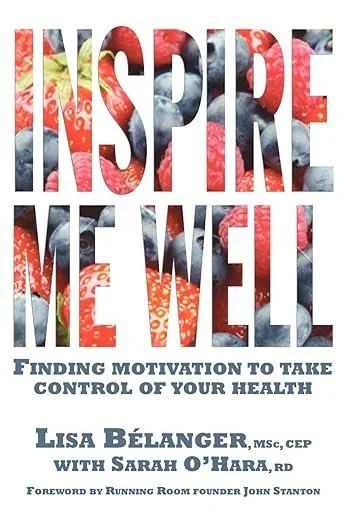
The books
Inspire Me Well: Finding Motivation to Take Control of Your Health is Lisa’s first book. Her second, A Cup of Mindfulness: For the Busy and the Restless, offers short daily practices for focus and research-based strategies for taking breaks.
Dr. Greg Wells is a human physiologist, five-time bestselling author, Senior Scientist Emeritus at SickKids and author of 70+ peer-reviewed papers.
This podcast contains advice and information relating to health and wellness. It should be used to supplement rather than replace the advice of your doctor or another trained health professional. If you know or suspect that you have a health problem, seek your physician’s advice before embarking on any medical program or treatment. All efforts have been made to assure the accuracy of the information contained in this podcast / interview / article as of the date of publication. The author and publisher disclaim liability for any medical or other outcomes that may occur as a result of applying the methods suggested in this material.
