
Episode 106 · February 17, 2023 · 49 min



I remember the finish of the men’s triathlon at the Sydney 2000 Olympics. Simon Whitfield came from the middle of the field and passed the leader, Stephan Vuckovic of Germany, less than 300 metres from the line to become the first Olympic champion in men’s triathlon. What struck me most was how happy all three medalists were at the finish. Simon told me that by race day he had seen it unfold so many times in his mind’s eye that the race felt like a story he had already watched. Years earlier, he had written two words in his training log: imagine if.
Mental rehearsal is a skill you can train. When you rehearse a race, a presentation or a hard conversation in detail, you practise the decisions before you face them, so that on the day you recognize the situation and respond. A meta-analysis in the Journal of Applied Psychology found that mental practice has a positive and significant effect on performance, with the strongest effects on tasks that involve a lot of thinking and decision-making. Simon pairs it with what he calls the do-nothing defense: when you feel the urge to react, you take one more slow breath through your nose. That breath steadies you long enough to choose your move.
“It wasn’t without its hiccups, but through it all I just had this wonderful attitude of, “imagine if.””
Key takeaways
Write down your imagine if. Simon wrote imagine if in his training log years before Sydney. Put the outcome you are working toward in writing where you will see it every day.
Rehearse the race in your mind. Simon noticed that the Olympic champions he interviewed had grown up reading fiction, painting pictures in their own minds. Picture the scenarios ahead of you and solve them before they happen.
Build the plan with your team. After finishing 11th in Athens, Simon and his team built a new plan for Beijing in which teammate Colin Jenkins raced as a domestique to keep the leaders close on the bike. Simon won silver.
Use the do-nothing defense. When you feel the urge to react, take another breath through your nose before you speak or move. Keeping control of your breath keeps you on the board.
Find your time on the water. Paddling is Simon’s secret weapon for unwinding. A few quiet minutes alone on his board at the end of the day lets him go home present with his family.
Your 1% Tip
Before your next important meeting or workout, close your eyes for two minutes and run through it from start to finish, including one thing that could go wrong and how you will respond.
About Simon
Simon Whitfield won the first Olympic gold medal in men’s triathlon at Sydney 2000 and a silver medal at Beijing 2008. He earned more than 14 ITU World Cup victories and 12 national championships, and he was inducted into the ITU Hall of Fame and Canada’s Sports Hall of Fame in 2017. He holds honorary doctorates from the University of Guelph and the University of Victoria, and after his racing career he became a certified stand-up paddling and kayaking guide.
Resources
Driskell, Copper and Moran, 1994: the meta-analysis showing that mental practice improves performance, published in the Journal of Applied Psychology.
Get the science in your inbox
Wells Performance Insights is my newsletter. I take the science of your body and brain and turn it into a 1% Tip you can use the same day. Sign up for Wells Performance Insights.
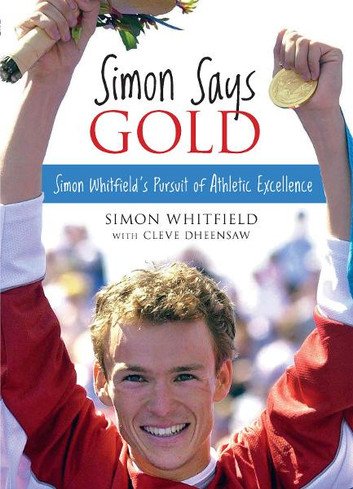
The book
In Simon Says Gold: Simon Whitfield’s Pursuit of Athletic Excellence, Simon tells the story of his gold medal in Sydney, his race in Athens in 2004 and his comeback to win silver at the 2008 Beijing Games.
Dr. Greg Wells is a human physiologist, five-time bestselling author, Senior Scientist Emeritus at SickKids and author of 70+ peer-reviewed papers.
This podcast contains advice and information relating to health and wellness. It should be used to supplement rather than replace the advice of your doctor or another trained health professional. If you know or suspect that you have a health problem, seek your physician’s advice before embarking on any medical program or treatment. All efforts have been made to assure the accuracy of the information contained in this podcast / interview / article as of the date of publication. The author and publisher disclaim liability for any medical or other outcomes that may occur as a result of applying the methods suggested in this material.
