
Episode 108 · March 3, 2023 · 52 min



I read Todd Stottlemyre’s book The Observer in one night. Todd grew up going to work with his dad at Yankee Stadium, and he went on to pitch 15 seasons in the major leagues and win three World Series, two of them with the Toronto Blue Jays. In 1989, after the Blue Jays sent him down to the minor leagues for the second year in a row, he drove six hours through the night from Toronto to Syracuse in total silence, close to quitting. When he opened his eyes in the empty stadium parking lot at dawn, he decided to go all in. Thirty days later he was back in the major leagues.
The tool that changed the rest of Todd’s life came later, from a mentor who gave him a seven-day challenge: no reacting to his thoughts or emotions, only observing them and writing them down. There is a clear mechanism behind that practice. When you put a feeling into words, activity in your amygdala, the region that triggers your threat response, drops, and activity rises in your right ventrolateral prefrontal cortex, which helps regulate emotion. Matthew Lieberman’s team at UCLA showed this with brain imaging in healthy adults: labeling the emotion in a face calmed the amygdala more than other ways of processing the same image. Naming what you feel opens a gap between the stimulus and your response, and that gap is where you get to choose.
“Balance is only possible through presence. That’s the only way you can stay balanced.”
Key takeaways
Choose your environment. Todd grew up watching champions at Yankee Stadium, and he believes you become the environment you are in. Spend your time around people who expect more of you.
Treat failure as part of the game. Todd hates losing more than he enjoys winning, because a loss tells him what to fix. Study each setback for the lesson, then move on.
Go all in at the wall. Every big goal brings you to a moment where quitting feels easier than continuing. Todd’s answer in 1989 was to be the first one to the stadium and the last one to leave.
Run the seven-day observer challenge. For one week, write down your thoughts, your emotions and the reaction you would normally have, without acting on them. Your patterns become clear enough that you can choose a different response.
Be fully where you are. When Todd is with his family, his phone is away, and when he is working, he is all in on the work. He finds balance by being present in each moment.
Your 1% Tip
Today, the next time you feel a strong reaction, pause before you respond. Write down the thought, name the emotion in one word, and note what you would normally do. Then choose your response.
About Todd
Todd Stottlemyre pitched 15 seasons in Major League Baseball after making his debut with the Toronto Blue Jays in 1988, and he won three World Series titles. He went on to build a career in business and now works as a keynote speaker and mindset coach on performing under pressure. He is the author of The Observer, a modern fable about mastering your thoughts and emotions.
Resources
Todd Stottlemyre: Todd’s speaking, coaching and podcast.
The Observer: Todd’s book on mastering your thoughts and emotions.
Lieberman et al., 2007: the UCLA brain imaging study showing that putting feelings into words calms the amygdala, published in Psychological Science.
Get the science in your inbox
Wells Performance Insights is my newsletter. I take the science of your body and brain and turn it into a 1% Tip you can use the same day. Sign up for Wells Performance Insights.
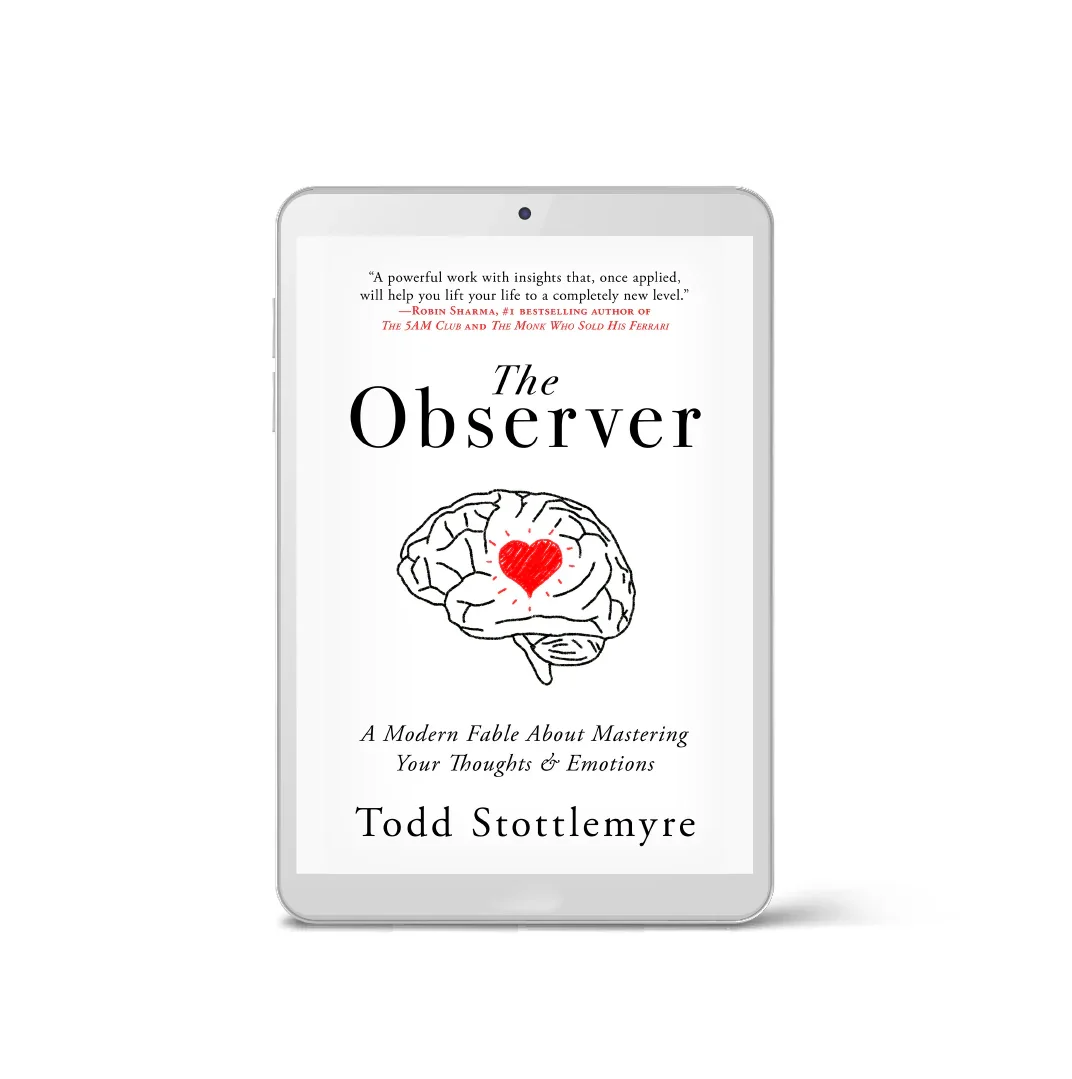
The book
The Observer is Todd’s modern fable about mastering your thoughts and emotions, built on the practice of observing before reacting that he has used since 1993.
Dr. Greg Wells is a human physiologist, five-time bestselling author, Senior Scientist Emeritus at SickKids and author of 70+ peer-reviewed papers.
This podcast contains advice and information relating to health and wellness. It should be used to supplement rather than replace the advice of your doctor or another trained health professional. If you know or suspect that you have a health problem, seek your physician’s advice before embarking on any medical program or treatment. All efforts have been made to assure the accuracy of the information contained in this podcast / interview / article as of the date of publication. The author and publisher disclaim liability for any medical or other outcomes that may occur as a result of applying the methods suggested in this material.
