
Episode 264 · April 17, 2026 · 47 min



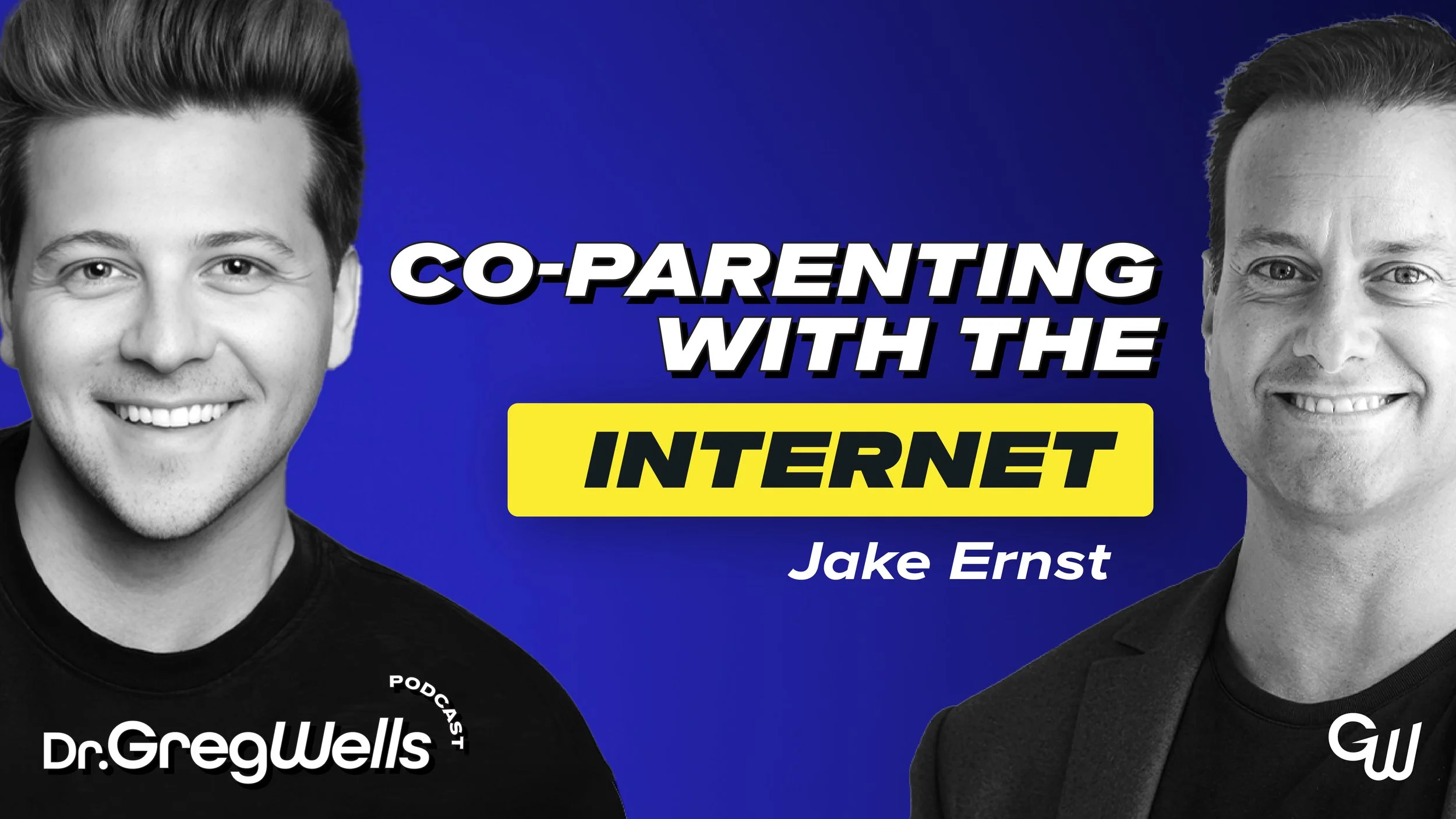
In 2019, soon after he opened his clinic in Toronto, Jake Ernst walked a distractible nine-year-old boy back out to the waiting room. The boy’s mom sat at the table with a baby on her lap and a smartphone in her hand, and nearby a girl of about two was bent over a magazine, swiping at the page as if it were an iPad. That moment changed how Jake works: he stopped treating one child and started working with the whole family. Jake is a registered social worker and psychotherapist, and his core message is that today’s parents are co-parenting with the internet.
As a physiologist, I was struck by how directly this shows up in the brain. When you spend hours inside an algorithm, you use your prefrontal cortex less, the region you rely on for planning, empathy and good decisions, and your reactions shift toward faster, more emotional circuits deeper in the brain. Jake makes the case that kids and adults rebuild those skills through co-regulation, the steadying that happens when you spend real time with calm, present people.
“Parents are not just raising kids by themselves, they’re also co-parenting with the internet. And it turns out that the internet is a really lousy co-parent.”
Key takeaways
Read behavior as communication. Jake describes kids as the thermometer of their family. When a young person shows big thoughts, big feelings or big behaviors, he treats it as a signal to look at the whole family, starting with a careful assessment, before anyone puts a label on the child.
Own your attention. Apps and algorithms are designed to hold your attention, and Jake believes the healthiest people over the next decade will be the ones who own theirs. Searching for content you chose is an active use of social media; letting the feed decide for you is the zone that deserves a closer look.
Solve problems face to face. Jake’s most common advice to teens right now is to stop fighting over text message. Conflicts with friends get resolved in person, where eye contact and facial expression help you co-regulate, and middle school is when kids learn how to function in groups.
Let them be bored. When you are bored, your brain’s default mode network switches on, and Jake links that state to better emotion regulation and stress management. Time spent waiting or staring out a window gives kids practice tolerating discomfort, so ask whether a struggle is discomfort or danger, and step in for danger.
Set clear guardrails at home. Jake’s baseline is no phones in bedrooms after 10 p.m. and no more than two hours a day inside algorithms for kids, with parents modelling the habits they want to see. If a decision about an app is not working, you are allowed to change your mind and try again later.
Your 1% Tip
Tonight, charge every phone in the house outside the bedrooms from 10 p.m., yours included. Jake calls 10 p.m. digital dark, and when the phones sleep in the kitchen, you remove the last scroll of the night and give your brain a cleaner run into sleep. Your kids watch you do it, which teaches more than any rule you could set.
About Jake
Jake Ernst, MSW, RSW, is a registered social worker, psychotherapist and relational therapist based in Toronto. He is the Clinical Director at Straight Up Health, a family mental health clinic, where he works with young people and their families and provides clinical supervision to a team of therapists. He speaks to schools, community health agencies and conferences about how technology shapes the way we think, feel and relate. His book, Connection Crash: How Co-Regulation Rebuilds the Relationship Skills Technology Took From Us (and Our Kids), comes out in January 2027.
Resources
Connection Crash by Jake Ernst: his book on co-regulation and relationships in the digital age (January 2027).
Straight Up Health: Jake’s family mental health clinic in Toronto.
Get the science in your inbox
Wells Performance Insights is my newsletter. I take the science of your body and brain and turn it into a 1% Tip you can use the same day. Sign up for Wells Performance Insights.
Dr. Greg Wells is a human physiologist, five-time bestselling author, Senior Scientist Emeritus at SickKids and author of 70+ peer-reviewed papers.
This podcast contains advice and information relating to health and wellness. It should be used to supplement rather than replace the advice of your doctor or another trained health professional. If you know or suspect that you have a health problem, seek your physician’s advice before embarking on any medical program or treatment. All efforts have been made to assure the accuracy of the information contained in this podcast / interview / article as of the date of publication. The author and publisher disclaim liability for any medical or other outcomes that may occur as a result of applying the methods suggested in this material.
